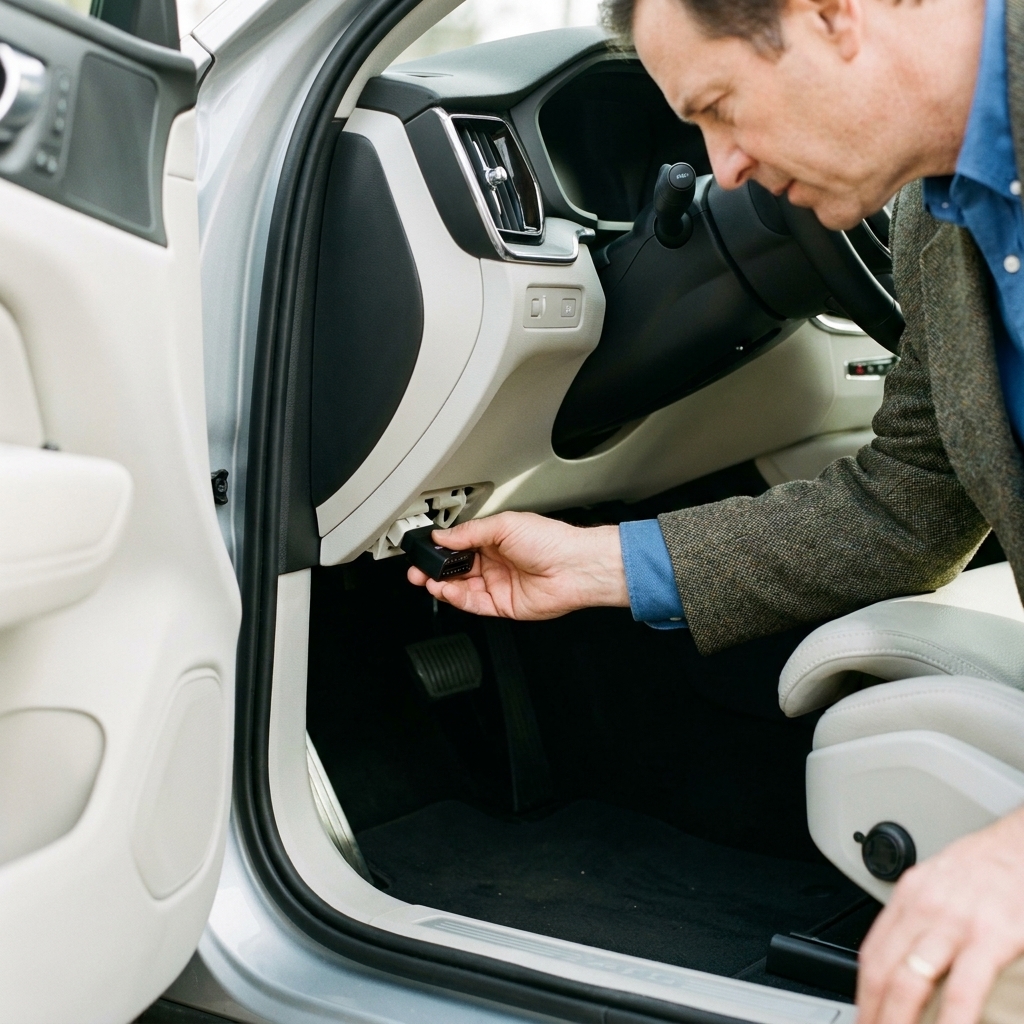
A step-by-step guide to scanning a used car with an OBD2 tool: stored and pending codes, readiness monitors, live data checks, and red flags that can save yo...
Used Car Buying Guide
16 Questions to Ask Before and After a Test Drive
Ask these 16 straight-shooting questions before and after a test drive to uncover maintenance gaps, accident history, title issues, recalls, and deal-breaking red flags before you buy.

Ben Sullivan
Ben Sullivan is a former ASE-certified mechanic with over 15 years of experience inspecting, repairing, and appraising used vehicles. He contributes to Car Wise Guide to help everyday buyers navigate the used car market with confidence, armed with the knowledge to spot hidden red flags and negotiate fair prices.
Published October 18, 2026
Updated October 18, 2026
Most “bad used car” stories I’ve seen did not happen because the buyer skipped the test drive. They happened because nobody asked the right questions around the test drive. A seller can talk fast, a car can feel smooth for 15 minutes, and you can still end up with a money pit.
Here are the 16 questions I’d ask if I were standing next to you in the parking lot. Use them with a private seller or a dealership. The goal is simple: make the car prove itself, then make the paperwork prove the rest.
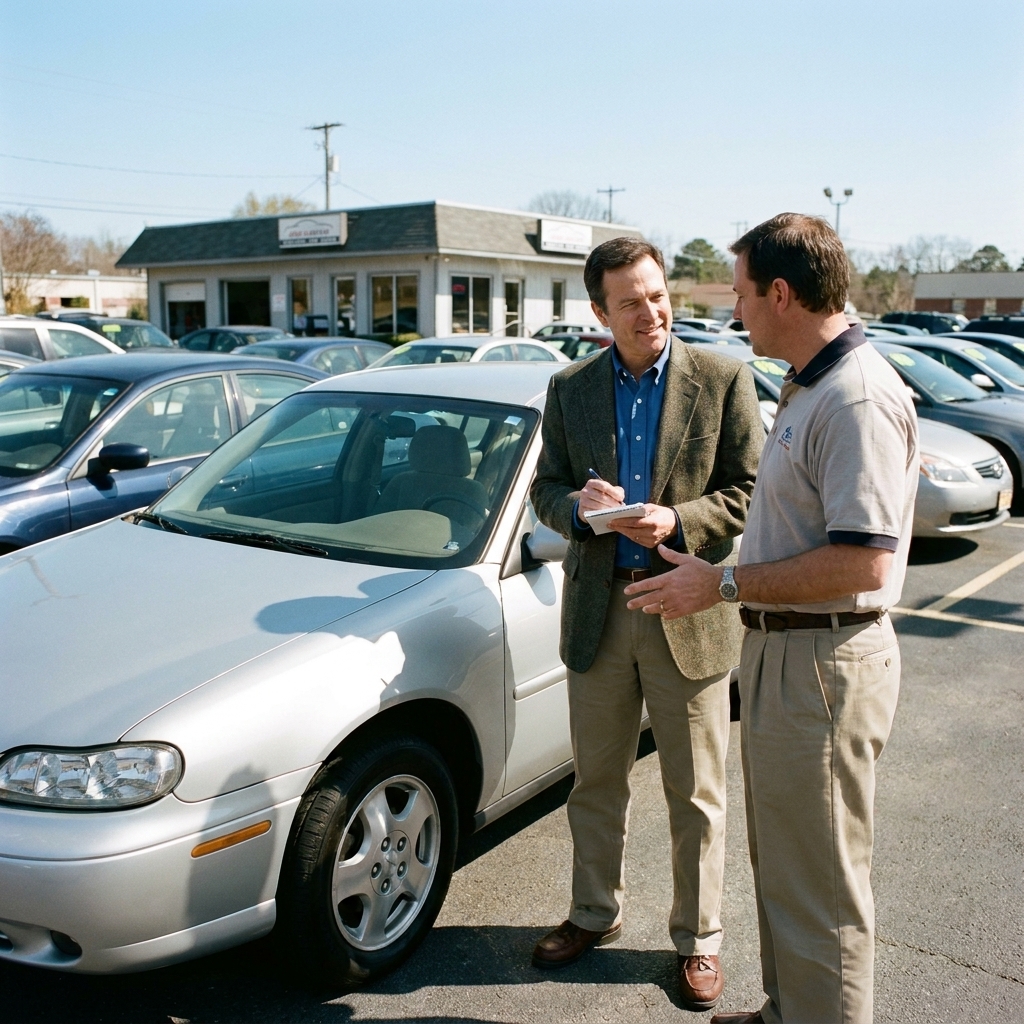
Before the test drive: 11 questions
Ask these before you put the car in gear. The answers shape what you look for, what you verify, and whether the test drive is even worth your time.
1) “How long have you owned it, and where has it been driven?”
Why it matters: Short ownership can mean the seller is flipping it or trying to dump a problem. Location and driving type matter too. A coastal car can have hidden rust. A city car can have more brake and suspension wear.
Listen for: Clear timelines. “I’ve had it three years, commuting 20 miles each way” is better than “Not long, but it’s been great.”
2) “Why are you selling it?”
Why it matters: You’re not judging their life story. You’re checking whether the reason lines up with the car in front of you.
Good answers: Downsizing, job change, growing family, moving, bought a newer vehicle.
Answers that require extra proof: “It only needs something small” without any invoices, or vague answers paired with recently cleared codes or signs the ECU was recently reset.
3) “Do you have the title in your name, and is it clean?”
Why it matters: Title problems can waste weeks or kill a deal entirely. Also, “clean title” is usually informal marketplace language. What matters is what the state-issued title actually shows, including any brands or designations, and whether you can transfer it without surprises.
What you are trying to avoid: Any branded title, such as salvage, rebuilt, flood, or buyback brands (in places that use them).
Follow-ups if needed:
- If there’s a lien: “What bank, and what’s the exact payoff process?” (For private sales, a safe move is often to meet at the lender or follow their payoff and release steps exactly.)
- If it’s rebuilt: “What caused the brand, and can I see before-and-after photos and repair records?”
- If the name on the title is not the seller: pause and verify. Proceed only if they can document legal authority to sell and you can transfer the title cleanly in your state. Otherwise, walk away.
4) “Can I see the VIN so I can run a vehicle history report?”
Why it matters: The report is not perfect, but it can reveal big items like title brands, recorded accidents, odometer flags, and registration patterns. It can also miss unreported accidents and repairs, so use it as a tool, not a verdict.
Tip: Get the VIN from the dash at the windshield and confirm it matches the door jamb sticker and the title. If anything looks off, ask questions before you go further.
5) “Any open recalls? Let’s check by VIN.”
Why it matters: Recalls happen, even on well-kept cars. You want to know what is outstanding and whether the fix is available. You can check by VIN on the NHTSA site or the manufacturer’s recall page. Very new campaigns can take a bit to show up everywhere, so if something seems unclear, verify with a dealer service department.
Listen for: “I had them done, here are the records” or “Let’s look it up.” If they get weird about a simple VIN recall check, treat that as useful information.
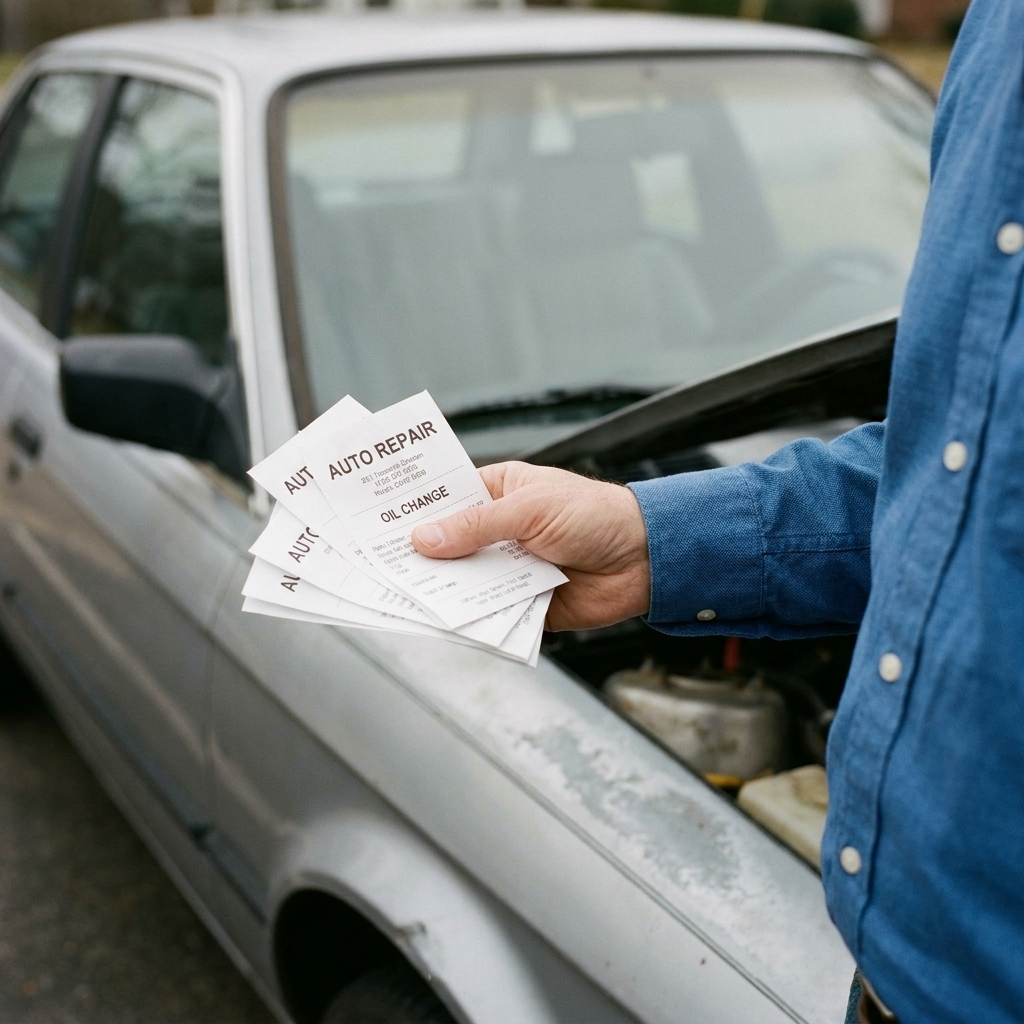
6) “What maintenance has been done in the last 12 months? Do you have receipts?”
Why it matters: “It’s been maintained” is not the same as documented maintenance. Receipts tell you what was actually done, when, and by whom.
What you want to see: Oil changes, tires, brakes, battery, alignment, and any major services that are due by mileage (timing belt, transmission service, spark plugs, coolant).
7) “When were the tires and brakes last replaced?”
Why it matters: Tires and brakes are common negotiation points because they are expensive and easy to verify.
Quick reality check: If they say tires are new, look at the tread depth and the DOT date code on the tire sidewall. If brakes are new, ask which parts were replaced: pads only, or pads and rotors.
8) “Has it ever overheated, had a coolant leak, or had head gasket work?”
Why it matters: Overheating events can shorten engine life. Some sellers will describe a serious incident as “just a thermostat.” Sometimes it was. Sometimes it was not.
What to ask next: “What failed, what parts were replaced, and who did the work?” Then verify with invoices.
9) “Has it ever been in an accident, and what was repaired?”
Why it matters: Not every accident is a dealbreaker. Poor repairs are. You want to know what panels were replaced, whether airbags deployed, and whether there was any structural damage.
On the walkaround: Look for mismatched paint, overspray on trim, uneven gaps between panels, and headlights that look newer than the rest of the car.
10) “Any warning lights on, or lights that come on sometimes?”
Why it matters: “It’s not on right now” is a common line. Intermittent faults can be the most expensive kind.
Practical move: Ask them to start the car cold while you watch the dash. Many cars illuminate multiple telltales briefly at key-on, then they should go out. If something looks missing or suspicious, ask why and plan to verify with a scan.
11) “What doesn’t work perfectly right now?”
Why it matters: This question invites honesty, and it often reveals the stuff sellers do not think you will check, like a weak A/C, a flaky power window, or a backup camera that cuts out.
Best-case scenario: They tell you small issues up front. Worst case: “Nothing” and you later discover three things that “just started happening.”
After the test drive: 5 questions
The test drive gives you leverage. If something feels off, now is the time to pin it down. Do not argue. Do not accuse. Just ask targeted questions and let the answers guide your next step.
12) “Has it been doing that for you, or is this new today?”
Why it matters: You’re documenting symptoms and seeing whether the seller is aware. Shaking under braking can mean warped rotors, worn suspension, or tire issues. Pulling can mean alignment, tires, or brake drag.
What to do next: If it pulls, ask to check tire pressures and look for uneven tire wear. If braking shakes, ask when rotors and pads were last replaced.
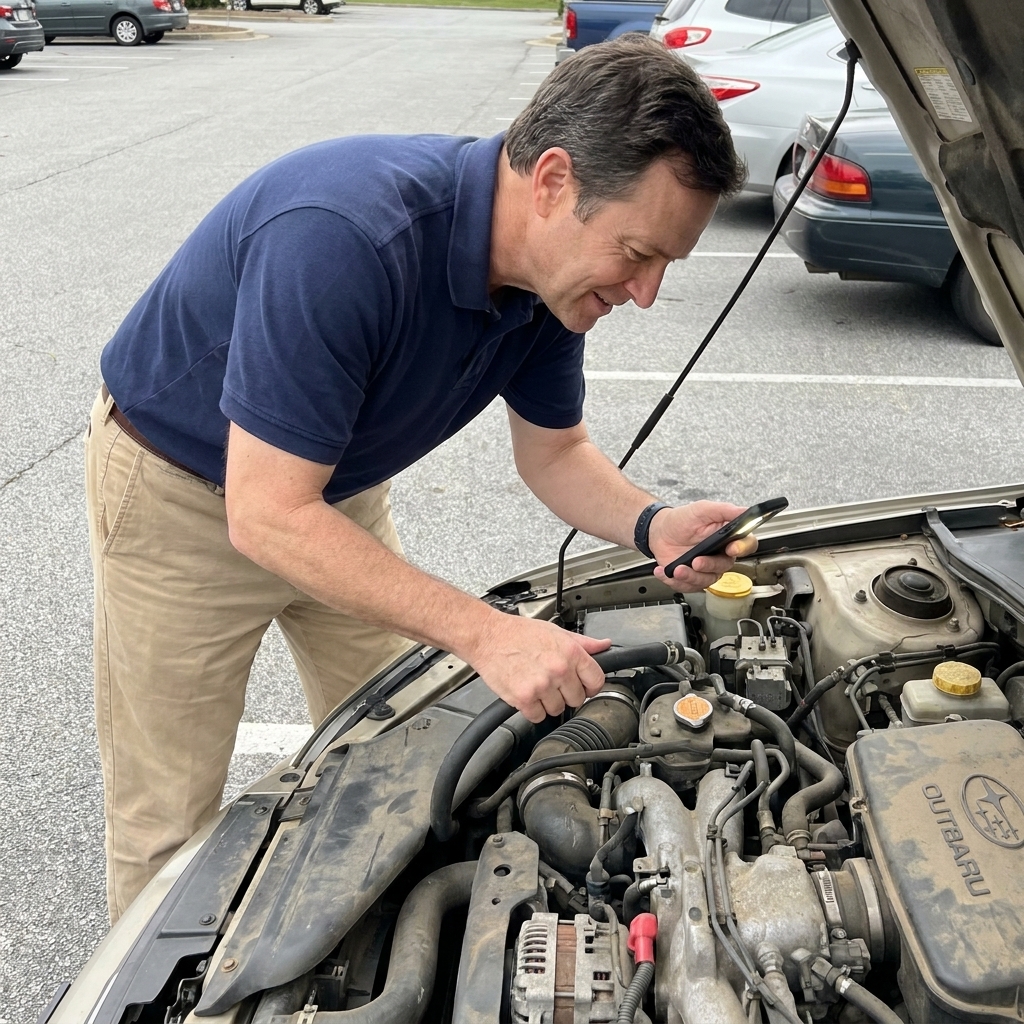
13) “Can we let it idle a few minutes while I check for smells or leaks?”
Why it matters: Some problems show up after the engine warms up and heat builds under the hood: coolant smells, oil seepage, power steering leaks, or an electric radiator fan that never kicks on.
What you’re checking: Sweet coolant odor, burning oil smell, fuel smell, wet spots underneath, and a stable idle.
14) “Can I plug in an OBD-II scanner to check codes and readiness?”
Why it matters: A check-engine light can be cleared temporarily. Readiness monitors can reveal if the car was recently reset. That is not proof of wrongdoing by itself. A battery disconnect, a dead battery, or recent repair can reset things too. Also, which monitors exist and how quickly they set can vary by model year and powertrain. You’re not diagnosing every possible issue in the lot. You’re checking for obvious games and deciding whether a deeper inspection is worth it.
One more nuance: Emissions inspection rules vary by state. Some programs allow a certain number of “not ready” monitors and some do not. If emissions testing applies where you live, compare what you see to your local requirements.
If they refuse: Treat it as a yellow flag, not an instant conviction. Some dealers have policies against customers plugging anything into the car. A reasonable compromise is a printed scan from their service department, or, better, moving straight to a pre-purchase inspection.
15) “If I pay for a pre-purchase inspection, are you comfortable with that?”
Why it matters: This is the best reality check you can buy. A PPI catches what a test drive will not: hidden fluid leaks, bad prior repairs, failing suspension joints, and computer data you cannot see from the driver’s seat.
How to phrase it: Calm and normal. “I like the car. My next step is a PPI at a shop I choose. If it checks out, we can finalize.”
If they say no: Consider walking away. There are legitimate reasons (tight dealer schedules, insurance rules, location limits), but a serious seller should offer a workable alternative, like allowing a mobile inspector on-site or letting you take it to a nearby shop with an appointment.
16) “What would it take to buy it today, out-the-door, and what’s included?”
Why it matters: You’re clarifying the real number and what comes with the car. At a dealer, this helps you avoid surprises. With a private seller, it clarifies what is staying with the vehicle, and reminds you that taxes and DMV fees are usually handled separately in your state.
Confirm what’s included:
- Number of keys and key fobs
- Wheel lock key
- Floor mats, cargo cover, spare tire and jack
- Any extra wheels or original parts
Dealer add-ons to watch for: Documentation fees, mandatory “packages,” paint or fabric protection, VIN etching, nitrogen, and other extras that quietly inflate the out-the-door price. Keep pulling the conversation back to the out-the-door total.
Quick script
If you get flustered in the moment, use this simple flow:
- History: Why selling? How long owned? Any accidents? Any overheating? Any open recalls?
- Paper: Title in your name? Any liens? VIN for a report? Maintenance receipts?
- Condition: What doesn’t work? Any lights? Tires and brakes done when?
- After drive: Can we idle and check for leaks? Can I scan it (or get a printout)? Are you OK with a PPI? What is the out-the-door number and what’s included?
My bottom line
A test drive tells you how the car feels. These questions tell you whether the car is telling the truth. If a seller is transparent, answers directly, and supports the story with paperwork, you’re usually dealing with a vehicle worth taking seriously.
If they dodge, rush, or get weird about basic verification, believe that behavior. It’s the cheapest warning sign you’ll ever get in used car shopping.