From sneaky transmission behavior to brake shudder and weird smells, these subtle test drive signs can help you avoid buying a lemon.
Used Car Buying Guide
Used Car Test Drive Checklist
A step-by-step used car test drive checklist from an experienced inspector: what to check before you drive, what to listen for on the road, and the red flags that should make you walk away.

Ben Sullivan
Ben Sullivan is a former ASE-certified mechanic with over 15 years of experience inspecting, repairing, and appraising used vehicles. He contributes to Car Wise Guide to help everyday buyers navigate the used car market with confidence, armed with the knowledge to spot hidden red flags and negotiate fair prices.
Published October 18, 2026
Updated October 18, 2026
I’ve inspected a lot of used cars over the years, and I can tell you this: many expensive problems only show themselves when the car is cold, under load, or trying to stop from speed. A quick spin around the block with the radio on will miss the stuff that empties your wallet later.
This checklist walks you through a real test drive, step by step, in plain English. Use it at a dealership, a private seller’s driveway, or even when you’re test-driving a certified pre-owned car. The goal is the same: figure out what the car is actually doing, not what it looks like sitting still.
Safety note: obey local laws, stay within speed limits, and skip any test that is not safe for traffic and road conditions.
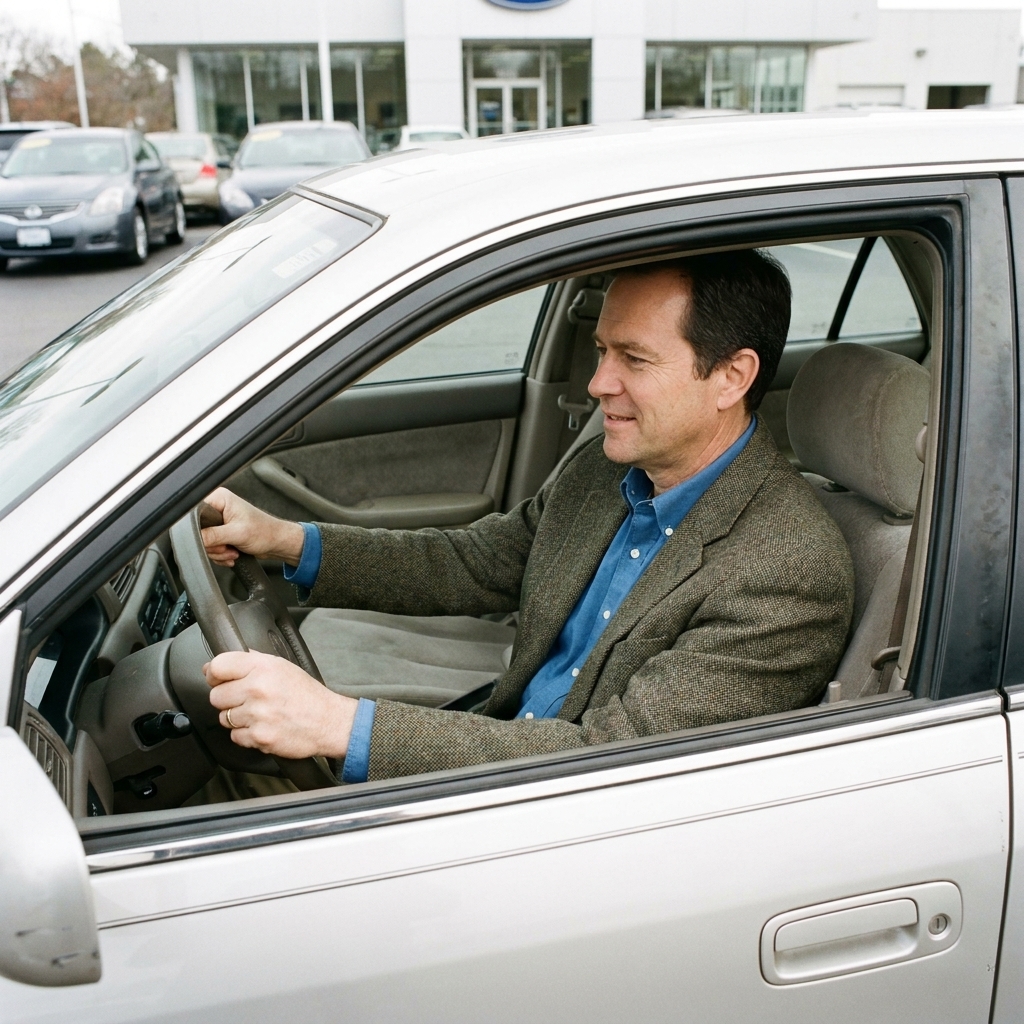
Before you start: set up to catch problems
Bring a few simple tools
- Your phone (use the flashlight, take photos, record sounds if needed).
- A small notepad (or notes app) to write down what you feel and when it happens.
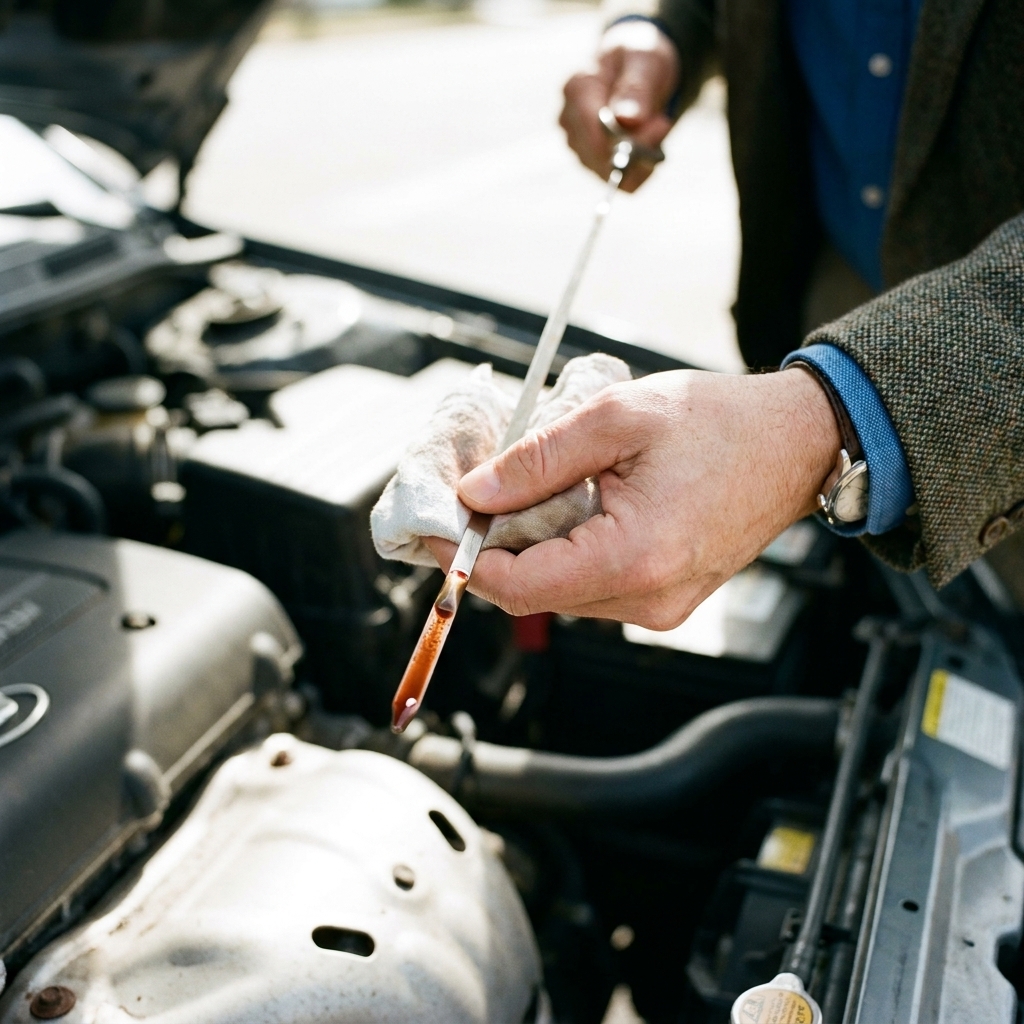
- A paper towel (for checking fluid color on a dipstick and wiping your hands).
- A cheap OBD2 scanner if you have one (optional, but helpful).
Quick paperwork and basics
- Match the VIN: check the VIN on the dash and the driver door sticker against the title/registration.
- Ask about keys: make sure you get all keys/fobs. Replacements can be expensive.
- Look at maintenance records if they exist. Even a few oil change receipts tell you a lot.
- Check for open recalls on your phone if you can (quick VIN search).
Make these ground rules for the drive
- Start it cold if you can. Ask the seller not to warm it up. Cold starts expose weak batteries, timing chain rattle, lifter noise, and rough idle problems.
- Plan a 20 to 30 minute route. You want neighborhood streets, rough pavement, a stretch at 45 to 55 mph, and highway speeds if possible.
- Keep it quiet at first. No music, fan low. Listen for what the car is telling you.
- Test everything yourself. Sellers love to “explain” quirks away. Let the car speak.
Walkaround checks (2 minutes)
Tires tell the truth
Tires are a snapshot of alignment, suspension health, and how the car has been maintained.
- Uneven wear on one edge can mean bad alignment, worn suspension parts, or accident damage.
- Cupping or scalloped wear often points to worn shocks or struts.
- Mismatched tire brands or sizes can hint at penny-pinching maintenance or, on AWD, potential drivetrain strain.
- Check the tire DOT date (four digits, like 3121). Older tires can look fine but drive badly and be unsafe.
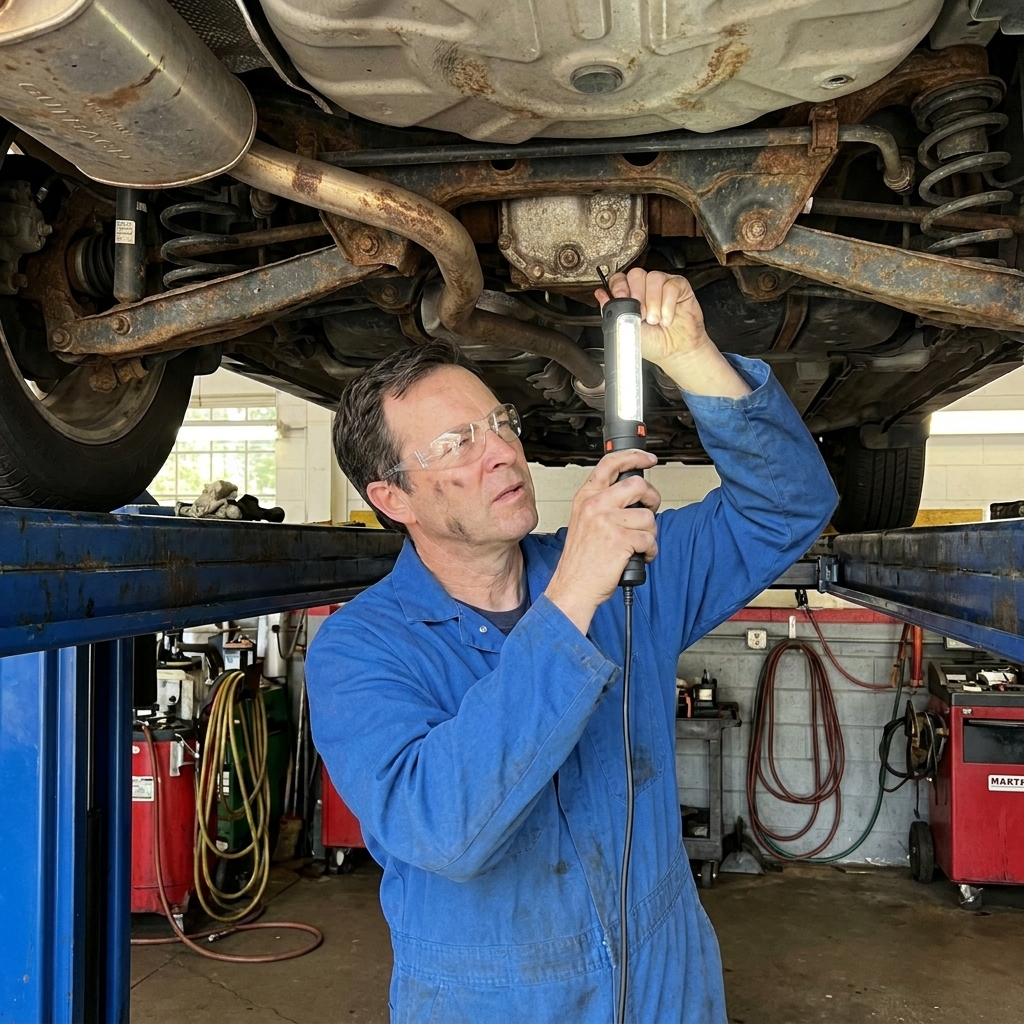
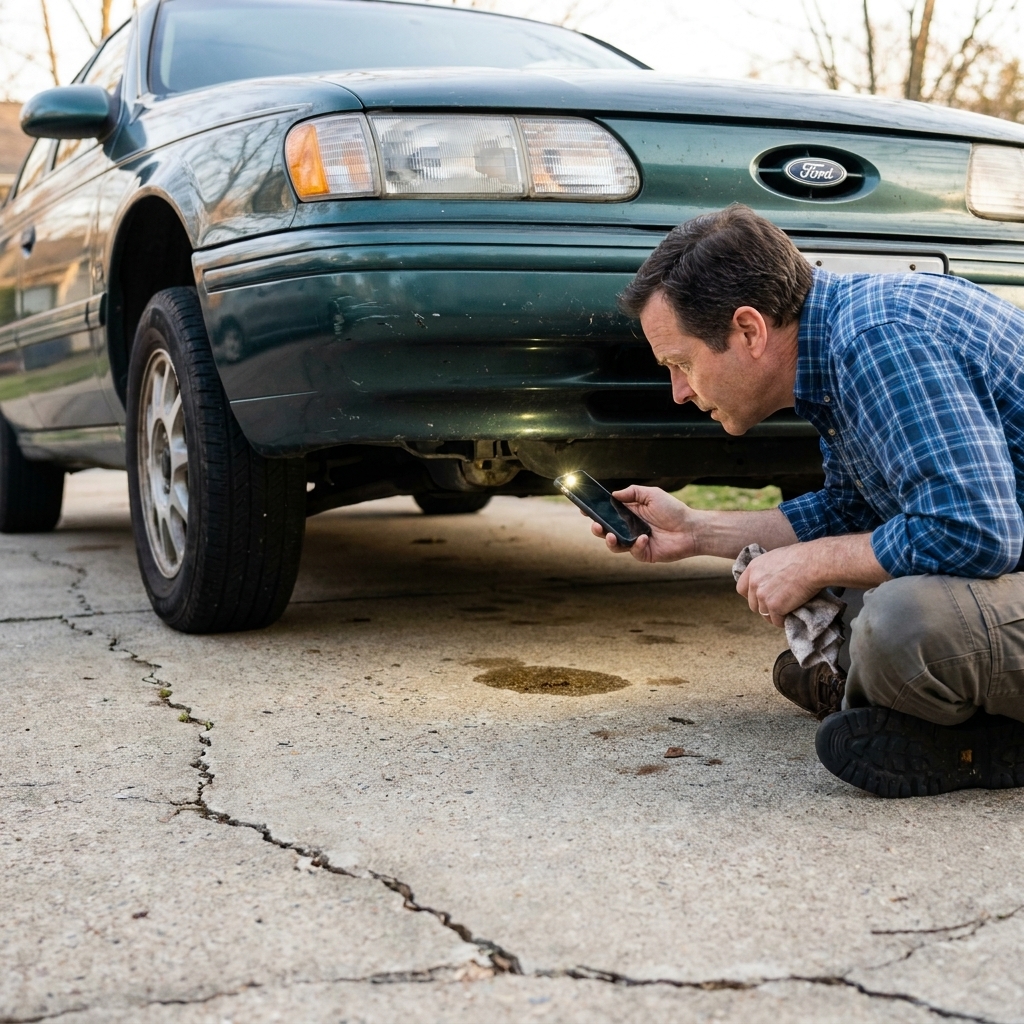
Look under the car before you fall in love
- Wet, fresh fluid is more concerning than dusty old seepage.
- Oil leaks tend to be darker brown or black.
- Coolant is often pink, orange, or green and has a sweet smell.
- Transmission fluid leaks can be red or dark brown depending on age.
Cabin checks before moving
Smells and moisture
- Musty odor, foggy windows, damp carpet can mean a water leak, past flood damage, or a clogged sunroof drain.
- Strong air freshener is sometimes used to mask smoke, mildew, or coolant smell.
Key-on warning lights
Before starting, turn the key to ON (or press Start without your foot on the brake, depending on the car). Most vehicles will briefly illuminate the dash lights as a self-check, but the exact behavior varies by make and model.
- If the check engine light does not appear during the self-check, do not panic, but be cautious. If in doubt, scan for codes.
- Make sure ABS, airbag/SRS, and traction control lights come on briefly (on many cars), then go out after starting.
- Also check the infotainment for stored warnings or messages. Some cars surface faults there that you will miss on the cluster.
Try the essentials
- Windows, locks, mirrors
- Wipers and washer spray
- Headlights, brake lights, turn signals
- Heater and AC (AC that only gets cold when driving can point to airflow or fan problems, or refrigerant, compressor, or condenser issues)
- Seatbelts: tug them, latch them, and make sure they retract smoothly
Cold start: listen like a mechanic
How it should behave
Most cars start quickly, idle a bit higher for a moment, then settle down smoothly.
Red flags on startup
- Long cranking: battery, starter, fuel pressure, or sensor issues.
- Rattling for 1 to 3 seconds: can be normal on some models, but can also indicate timing chain tensioner wear. If it is loud, repeatable, or lasts longer, take it seriously.
- Knocking that follows engine speed: walk away unless you are ready for engine work.
- Rough idle or shaking: misfires, vacuum leaks, dirty throttle body, worn mounts, or bigger issues.
Watch the exhaust (quietly, from a safe distance)
- Blue smoke: oil burning (rings, valve seals, turbo issues).
- Thick white smoke that lingers: coolant burning (possible head gasket issue).
- Black smoke: running rich (fueling issues).
First minutes driving: low-speed checks
Steering feel at parking-lot speeds
- Clunk when turning: CV joints, tie rods, ball joints, strut mounts.
- Groaning or whining: power steering issues (hydraulic systems), low fluid, or an electric power steering problem.
- Steering wheel not returning smoothly: alignment or binding suspension components.
Brakes at 5 to 15 mph
- Pedal feels spongy: air in the system, old fluid, or hydraulic issues.
- Pedal sinks at a stop: possible master cylinder problem.
- Squeal or grind: worn pads, glazed pads, or metal-on-metal rotors.
Transmission behavior in a neighborhood
Use gentle throttle first.
- Hard shift, flare (engine revs jump between gears), or delay going into gear can mean transmission wear or maintenance neglect.
- On a CVT, watch for shudder or rubber-band revving that feels excessive.
City speeds: 25 to 45 mph
Listen for suspension and body noises
Find a slightly rough road. Drive with the windows cracked.
- Clunk over bumps: sway bar links, struts, control arm bushings.
- Metallic rattle: heat shield, exhaust hangers, loose brackets.
- Hollow thump: worn shocks or loose suspension hardware.
Does it track straight?
On a flat road, hold the wheel gently.
- Pulling left or right: alignment, tire issue, or brake drag.
- Steering wheel off-center: alignment or prior suspension work done poorly.
Check engine temperature behavior
It should climb steadily and then settle. A gauge that swings, spikes, or creeps upward in traffic is a big deal.
One caveat: some modern cars use “buffered” temperature gauges that stay in the middle across a wide range of temperatures. Watch for warning lights, messages, or a cooling fan that is running constantly.
Highway checks: 55 to 75 mph
Vibration diagnosis by where you feel it
- Steering wheel vibration at speed: often front tire balance, bent wheel, or worn front-end parts.
- Seat or floor vibration: rear tire balance, driveshaft issues, or sometimes engine mounts.
- Vibration only while braking: rotor issues (runout or thickness variation) and sometimes suspension play.
Wind noise and whistles
- Excessive wind noise can suggest poor door seals, prior body work, or misaligned panels.
- Whistling can be a windshield seal issue, sometimes after a replacement.
Engine power under load
Find a safe on-ramp or hill and give it moderate throttle.
- Hesitation or bucking: ignition, fueling, sensors, or transmission.
- Check engine light flashing: active misfire. Stop the test drive.

Brake test (do it safely)
Only do this when traffic is light and the road is clear and straight.
One medium stop from 45 to 55 mph
- Pulsation in the pedal: rotor issues, or sometimes ABS activation on rough pavement.
- Steering wheel shake while braking: front rotor issues, worn suspension, or loose components.
- Pulling under braking: uneven brake pressure, stuck caliper, or tire problem.
Parking brake check
With the car stopped on a safe incline, set the parking brake and gently see if it holds. A weak parking brake is usually fixable, but it also tells you how the car has been maintained.
Quick handling check
You are not autocrossing. You are just verifying the car responds predictably.
- Light lane change at speed: should feel stable, not floaty or delayed.
- Excessive bouncing after a bump: worn shocks/struts.
- Nose dives hard under braking: can also point to worn front struts.
AC, heat, and defrost
- With AC on max, the air should get cold quickly at idle. If it only gets cold while driving, suspect airflow or fan issues, or refrigerant, compressor, or condenser problems.
- With heat on, the air should get hot once warmed up. Weak heat can be low coolant, thermostat issues, or heater core problems.
- Defrost should blow strongly and clear the windshield. Weak airflow can be a clogged cabin filter or failing blower motor.
After the drive: checks most buyers skip
Idle check after heat soak
Let it idle for a minute after driving. Some cars only start misbehaving once warm.
- Rough idle when warm: vacuum leaks, misfires, dirty injectors, worn mounts.
- Cooling fans should cycle on as needed. Overheating in the parking lot is a big red flag.
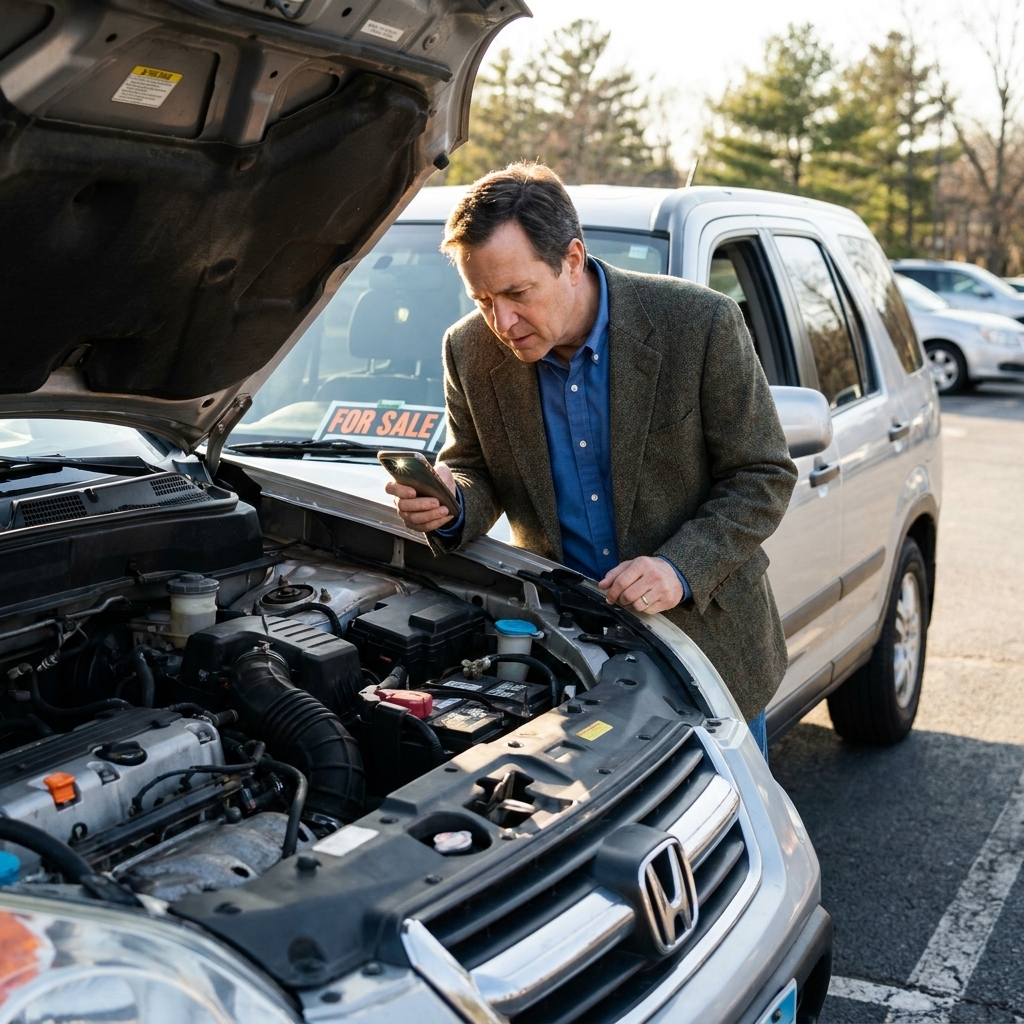
Look and smell under the hood
- Burning oil smell: leaks onto hot exhaust components.
- Sweet smell: coolant leak.
- Fresh wetness that appears after the drive: active leaks.
Check for new drips
Move the car, then look where it was parked. New drops after a drive matter more than old stains.
OBD2 quick scan (optional, worth it)
If you brought a basic OBD2 scanner, use it. Even cheap tools can catch problems a test drive will not.
- Check for stored and pending codes. Pending codes matter, even if the check engine light is off.
- Look at readiness monitors. If many monitors show “not ready,” the codes may have been cleared recently.
- Watch for a recently reset system (some tools show “time since codes cleared”). A fresh reset is not proof of dishonesty, but it should trigger more questions.
Hybrids and EVs (quick extra checks)
- Warning messages matter: any hybrid system, EV system, or high-voltage warnings should be treated as serious.
- Regen braking feel: it should feel smooth and predictable. A grabby handoff from regen to friction braking can be normal on some models, but harshness or surging is worth inspection.
- Cooling systems still exist: hybrids and EVs have pumps, valves, and cooling loops. Loud pump noises, overheating warnings, or heat that quits can point to expensive issues.
- Charging behavior (EVs and plug-in hybrids): confirm it starts charging normally and does not throw errors.
What symptoms often mean
Common feel complaints and likely causes
- Car shimmies at 60 to 70 mph: tire balance, bent wheel, worn suspension, alignment.
- Thunk when shifting from Park to Drive: worn mounts, driveline slack, sometimes normal, but loud clunks need inspection.
- Clicking while turning: CV axle joint wear.
- Growling that changes with speed: wheel bearing.
- Humming that changes with road surface: tires, not always a mechanical failure, but can mean cheap or cupped tires.
- High-pitched whine that rises with speed: transmission or differential, sometimes power steering depending on vehicle.
Common look clues during the drive
- Temperature warning or gauge acting odd: cooling system problems.
- Oil pressure warning (if equipped): stop the drive.
- Battery light: charging system problem.
- ABS or traction lights: can be anything from a wheel speed sensor to a costly module. Treat it as a real issue.
Deal-breakers vs. leverage
Usually a walk-away
- Overheating, temperature warnings, or unstable temperature behavior
- Check engine light flashing or active misfire
- Transmission slipping, harsh banging shifts, or delayed engagement
- Loud knocking from the engine
- Brakes that pull hard or feel unsafe
- Strong flood or mold evidence (musty smell, wet carpet, corrosion in odd places)
Often negotiable (but still needs a price adjustment)
- Tires near end-of-life or old by date code
- Brake pads and rotors that are worn but functioning
- Minor suspension clunks that an inspection confirms are links or bushings
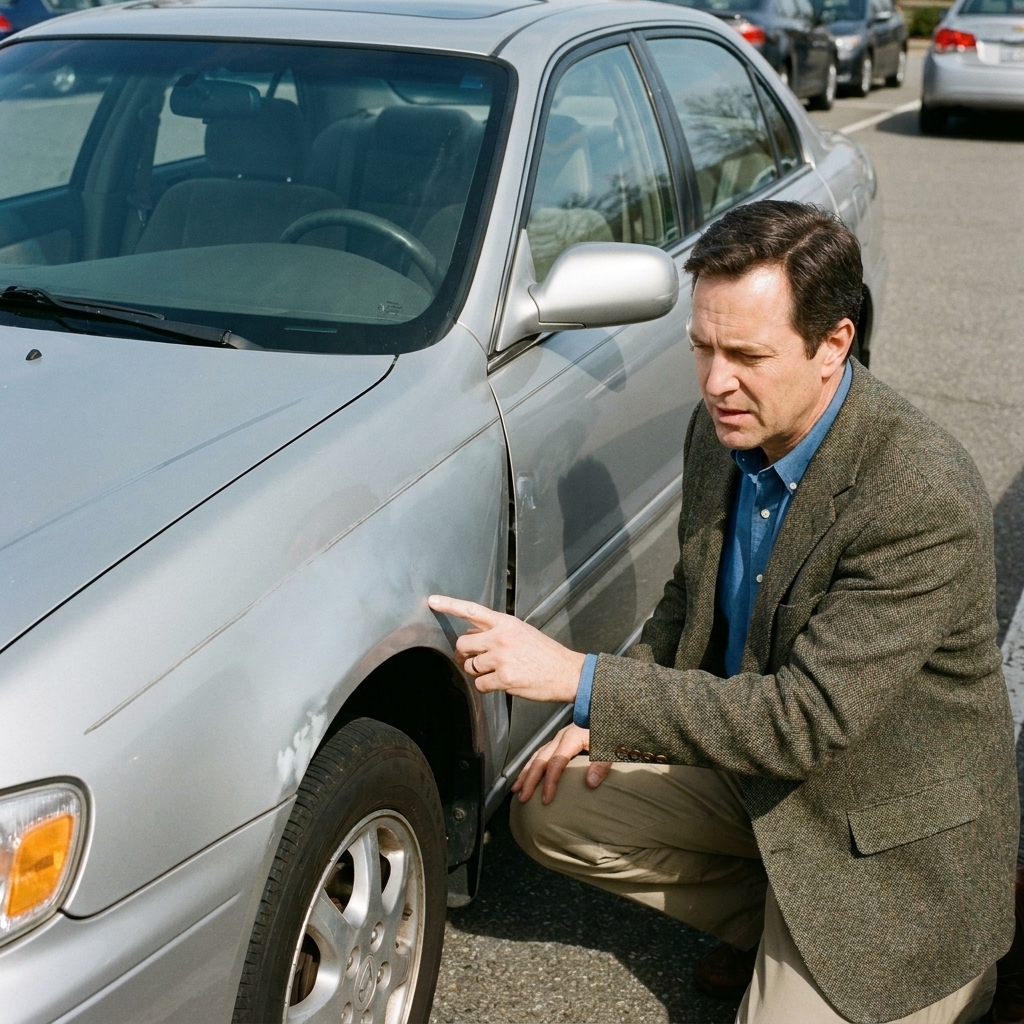
- Cosmetic flaws: curb rash, small dents, worn interior trim
- Weak battery (confirmed by age and testing)
A repeatable test drive route
If you want a no-thinking plan, use this:
- 2 minutes: parking lot maneuvers, full-lock turns, gentle braking.
- 8 minutes: neighborhood streets, bumps, stop-and-go, light acceleration.
- 10 minutes: 45 to 55 mph steady cruise, then a few moderate accelerations.
- 8 minutes: highway speeds, lane changes, one medium stop if safe.
- 2 minutes: idle after the drive, quick under-hood sniff and leak check.
FAQ
How long should a used car test drive be?
Long enough for the drivetrain to warm up and for you to hit a few different road conditions. I like 20 to 30 minutes. If the seller insists on five minutes only, that is a red flag on the process alone.
Should I test drive a car on the highway?
Yes, if you can do it safely. Highway speed is where you catch wheel bearing noise, vibration, alignment drift, and marginal cooling systems.
Is it okay to test drive with the seller in the car?
It is normal, especially at dealerships and private sales. Just keep it quiet at first so you can focus on what you are hearing and feeling.
If the car drives fine, do I still need a pre-purchase inspection?
Yes. A good test drive can catch a lot, but it will not reliably spot hidden crash repairs, weak compression, pending trouble codes, or underbody rust in the way a lift inspection can. Think of the test drive as your first filter, not the final verdict.
Final advice
Take your time. Ask for the cold start. Drive it on rough pavement and at speed. Keep it quiet and listen. Most “surprise repairs” give you hints if you know when to look for them.
If you want, take notes during your drive and compare two or three cars back-to-back. The best used car is rarely the prettiest one. It is the one that behaves consistently, stays quiet under load, stops straight, and does not try to hide anything.