
A mechanic’s step-by-step playbook for negotiating private-party used cars: what to say, what to bring, how to use inspection findings, scam red flags, and...
Used Car Buying Guide
7 Hidden Red Flags During a Used Car Test Drive
A used car can feel fine for 10 minutes and still be hiding expensive problems. Here are 7 subtle test drive red flags, what they may mean, and what to do next.

Ben Sullivan
Ben Sullivan is a former ASE-certified mechanic with over 15 years of experience inspecting, repairing, and appraising used vehicles. He contributes to Car Wise Guide to help everyday buyers navigate the used car market with confidence, armed with the knowledge to spot hidden red flags and negotiate fair prices.
Published October 18, 2026
Updated October 18, 2026
I have watched a lot of good people fall in love with a used car that “drove great,” only to come back a week later with a flashing warning light and a sinking feeling. The tricky part is that many serious problems do not announce themselves with a loud bang. They show up as little quirks that are easy to ignore when you are focused on the paint, the monthly payment, or the excitement of getting a new ride.
Here are seven hidden red flags to watch for during a test drive, plus what each one can mean and how to double-check it before you buy.
Quick safety note: Only try the driving checks below where it is safe, legal, and you can do them without distracting yourself or other drivers. If conditions are not right, skip that step and lean harder on a pre-purchase inspection.

Before you move: set up the drive
Quick setup makes a huge difference. A car can mask issues once it is warmed up, or if you only drive it gently around the block.
Start cold if you can. Ask the seller not to warm it up first. Cold starts can reveal weak batteries, rough idle problems, and certain timing or valvetrain noises. Also keep in mind that some ticking at cold start can be normal on some engines (especially direct injection), so focus on loud rattles, grinding, or noises that do not settle down.
Turn everything off at first. Radio off, HVAC fan low, windows up. You want to hear the car.
Plan a route. You need a neighborhood street, a bumpy stretch, a steady 45 to 65 mph cruise, and a few safe stops.
1) A “smooth” transmission that slips
One of the easiest mistakes to make is calling a lazy or slipping transmission “smooth.” A healthy transmission shifts cleanly, without hesitation, without flaring RPM, and without feeling like it is thinking about it.
What it feels like
Delay when shifting into Drive or Reverse, especially when cold.
RPM flare during an upshift (engine revs jump up, then the gear catches).
Hunting between gears on light hills or at steady speeds.
Shudder around 30 to 50 mph under light throttle (often torque converter related).
What it can mean
Low or dirty fluid, internal clutch wear, valve body problems, or torque converter issues. Any one of these can turn into a big repair bill.
What to do right then
From a stop, do a few gentle takeoffs, then one moderate takeoff. Pay attention to shift timing and RPM behavior.
At 40 to 55 mph, hold a steady throttle. If it shudders or keeps searching for a gear, treat it as a major warning.
If the model has a dipstick (many do not), check the fluid after the drive. Burnt smell or very dark fluid is a bad sign. If it does not have a dipstick, do not assume you can check it correctly in a parking lot. Many “sealed” transmissions require a specific temperature and procedure to check level properly.

2) Brake shudder that is not just rotors
People love to shrug off steering wheel shake during braking as a simple brake job. Sometimes it is. But brake vibration can also point to stuck calipers, overheated components, worn suspension parts, and even wheel bearing issues.
What it feels like
Pulsation in the brake pedal on a normal stop.
Steering wheel shake when braking from 50 to 70 mph.
Car pulls left or right when you apply the brakes.
What it can mean
Rotor thickness variation, seized caliper slide pins, uneven pad wear, contaminated pads, worn control arm bushings, or loose front-end components.
What to do right then
Find a safe stretch of road and do two medium stops from 45 to 55 mph. You are not trying to activate ABS, just feel for smoothness.
After a stop, on a straight road, lightly relax your grip and see if it tracks straight. If it drifts, you may be looking at alignment or suspension wear.
Smell for a burning brake odor near a wheel after the drive. A dragging caliper can cook a rotor quickly.
3) Clunks that point to suspension wear
On a quick test drive, a clunk can sound like “just something loose in the trunk.” Sometimes it is. But repeated clunks over small bumps are often worn suspension parts that affect safety and tire wear.
What it sounds like
Single clunk when transitioning from brake to gas.
Rattle on washboard roads or potholes.
Knock when turning into a driveway or over a speed bump.
What it can mean
Worn sway bar links, bad struts, loose top mounts, worn control arm bushings, failing ball joints, or engine and transmission mounts. In rust-belt areas, it can also be subframe rust that is getting structural.
What to do right then
Drive slowly through a rough patch with the radio off and listen for consistency. A suspension clunk is usually repeatable.
In a parking lot, turn the wheel fully left and right while creeping. Clicking or popping can point to CV joint issues on front-wheel-drive and AWD vehicles.
After the drive, do a quick look behind the wheels for wet shocks/struts or uneven tire wear.
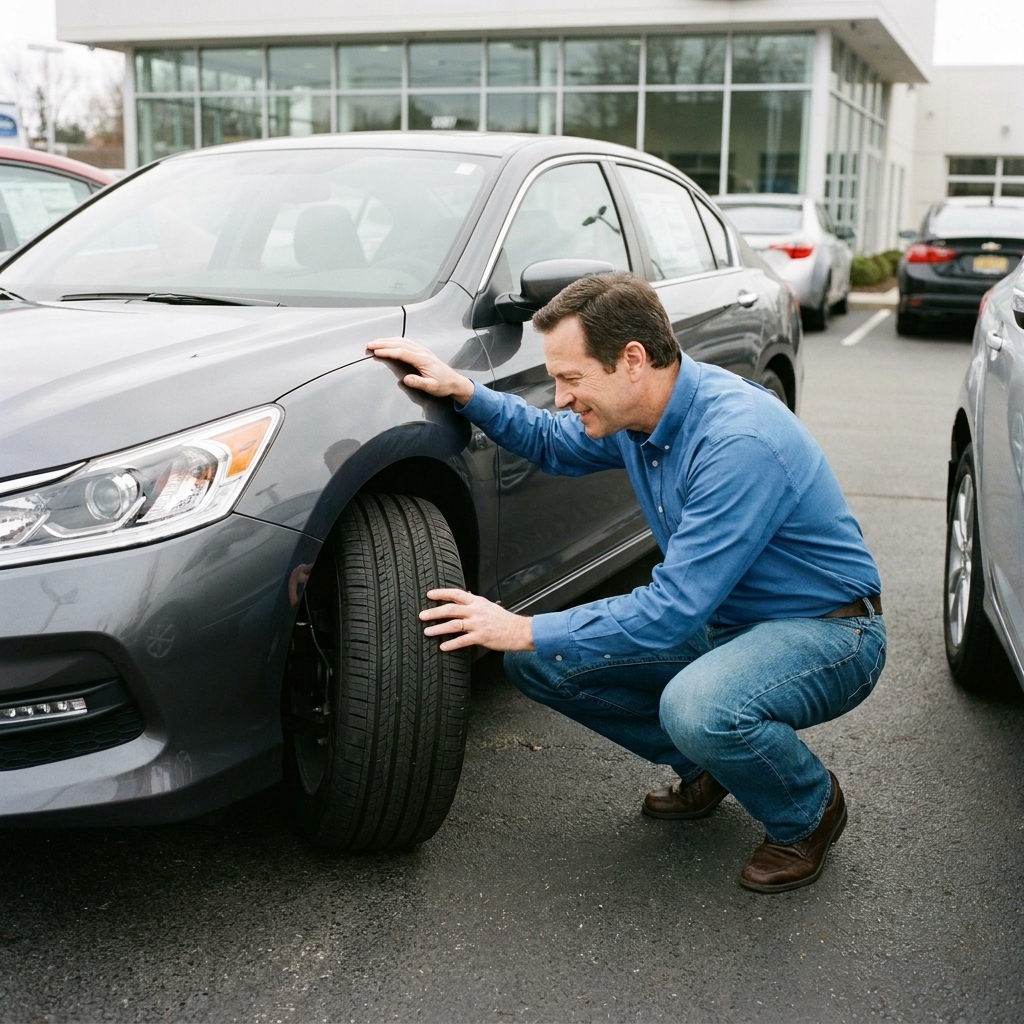
4) Steering that feels inconsistent
Good steering feels predictable. It returns to center smoothly after a turn. It does not fight you, and it does not feel notchy. Inconsistent steering is one of those subtle red flags that people talk themselves out of. It is hard to describe. But it matters.
What it feels like
Notchy sensation turning through center.
Heavy steering at low speed, then suddenly light at higher speed.
Car does not self-center well after a turn.
Vibration in the wheel at 55 to 75 mph that changes when you gently turn left or right.
What it can mean
Power steering pump or rack issues, alignment problems, bent components, uneven tires, wheel bearing wear, or an electronic steering system acting up.
What to do right then
On a straight road, keep a light grip and see if it tracks straight without constant correction.
At highway speed, if you feel vibration, do a gentle lane-position change only where it is safe and legal. If vibration changes when loading one side, suspect tire or bearing issues. It is a clue, not a verdict.
In a parking lot, do a few full-lock turns. Groaning, jerking, or binding is a warning.
5) Smells that show up after 15 minutes
Your nose is an underrated diagnostic tool. Some expensive problems announce themselves as a smell after the drivetrain is hot.
Common smells and what they can mean
Burnt oil: oil leak dripping onto a hot exhaust, valve cover leak, or turbo oil seep.
Burning plastic or electrical: overheated wiring, failing blower motor resistor, battery charging issues, or aftermarket wiring problems.
Sweet syrup smell: coolant leak, heater core seep, or coolant burning off somewhere hot.
Rotten egg: catalytic converter running hot, misfires, or fuel control issues. In some cases it can also be fuel quality or a brief sulfur smell under heavy load, so treat it as a prompt to investigate, not automatic proof of a bad catalyst.
What to do right then
After the drive, pop the hood and sniff carefully from above, not down by the fans. A strong smell under the hood is usually not a great sign.
Run the heater for a minute. A sweet smell inside the cabin can mean heater core trouble.
If you smell fuel, end the drive and step away. Fuel leaks are a safety issue.
6) Warning lights and recently cleared codes
I am going to be blunt here: if someone tells you a warning light is “just a sensor,” treat that as unproven until you verify it. Sometimes it really is a minor sensor. A lot of times, it is a symptom of something more expensive.
Sneaky versions of this red flag
Check engine light is off, but the car runs slightly rough and the readiness monitors may not be set because codes were cleared.
ABS, traction, or airbag light on. These systems can be pricey to diagnose and repair.
Battery light flickers at idle with accessories on, hinting at alternator problems.
What to do right then
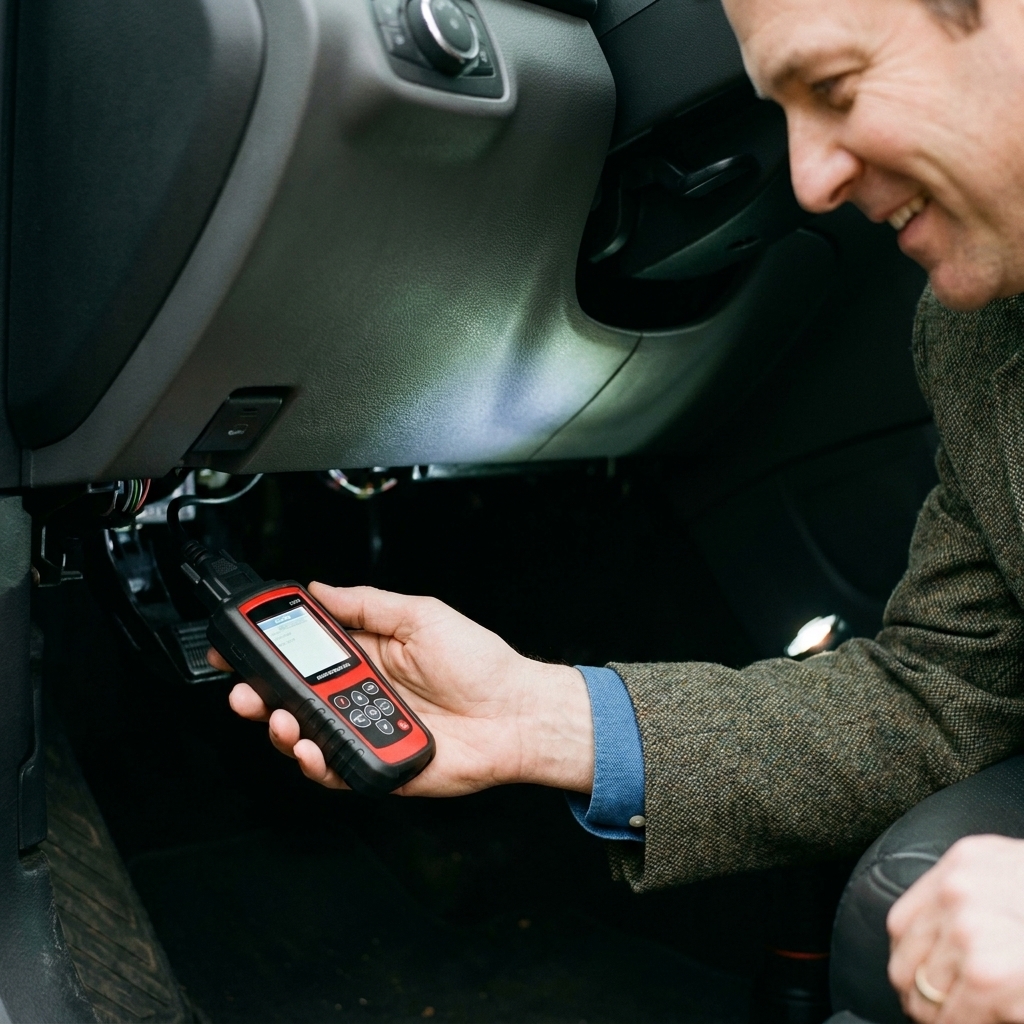
Bring a basic OBD2 scanner or stop at an auto parts store nearby if possible. Scan for stored and pending codes, and check readiness monitors if your scanner shows them.
Ask to see the dash with the key on before starting. You should see the warning lights illuminate briefly as a bulb check, then go off. If one never lights up at all, that is a question worth asking.
If any safety system light stays on, factor professional diagnosis into your decision before you buy.
7) Noises that change with speed
Road noise is normal. But certain noises tell stories. The key is whether the sound changes with speed, with turning, or with braking. Those changes help you narrow down whether you are hearing tires, wheel bearings, drivetrain, or brakes.
What to listen for
Humming or growling that increases with speed: often a wheel bearing.
Whirring that changes on acceleration versus coasting: can be transmission or differential related.
Rhythmic thumping: tire damage, separated belt, or an out-of-round wheel.
Clicking on turns: commonly outer CV joint wear.
What to do right then
At 35 to 55 mph, only where safe and legal, make a very gentle left-right sweep within your lane. If the noise gets louder when turning one direction, it can point to a bearing on the opposite side. This is a clue, not a definitive diagnosis.
Coast in gear from 45 mph down to 25 mph (when traffic allows). If the pitch changes dramatically between throttle and coast, pay attention.
When parked after the drive, look for uneven tire wear and feel for cupping by running your hand across the tread blocks.
One test drive flow
If you want a practical order of operations, this is what I recommend to friends and family:
Cold start: listen for loud rattles, grinding, a high idle that never settles, or obvious exhaust leaks.
Parking lot: full-lock turns, gentle brake checks, feel for steering bind.
City speeds: watch shift behavior, clunks, and low-speed brake feel.
45 to 65 mph cruise: steering vibration, gear hunting, hums.
Two medium stops: check for brake shudder and pulling.
HVAC check: test AC and heat. Weak AC at idle, musty smells, or clicking behind the dash can hint at compressor, blend-door, or actuator issues that are not always cheap.
Temperature check: watch the temp gauge. It should be stable once warmed up. After you park, look for coolant smell or signs of overflow. Do not open a hot radiator cap or expansion tank.
Post-drive sniff and look: under-hood smells, leaks, and any fresh drips.
What to say when you find a red flag
You do not have to accuse anyone of anything. Keep it simple and calm.
Ask for proof: “Can we see the service record for that?”
Ask for a pre-purchase inspection: “I like the car, but I’m only moving forward if my shop can inspect it.”
Be willing to walk: If the seller refuses an inspection or keeps brushing off a clear safety issue, that is usually the answer.
Even if the drive feels clean, I still recommend a pre-purchase inspection. It is the cheapest way I know to catch expensive surprises. And before you sign anything, take five minutes to verify the title status and run a vehicle history report, then check for open recalls.
Most solid cars will pass a careful test drive without drama. Your job is not to find a perfect car. Your job is to spot the expensive surprises before you sign.