Practical, no-fluff negotiation tactics: out-the-door pricing, comps, timing, fees, trade-ins, deposits, inspections, and scripts that keep you in control.
Used Car Buying Guide
Negotiating with Private Used Car Sellers
Learn how to negotiate with private used car sellers on Craigslist and Facebook Marketplace without burning bridges. Scripts, safety tips, inspection leverage, common scams, and deal-making mistakes to avoid.

Ben Sullivan
Ben Sullivan is a former ASE-certified mechanic with over 15 years of experience inspecting, repairing, and appraising used vehicles. He contributes to Car Wise Guide to help everyday buyers navigate the used car market with confidence, armed with the knowledge to spot hidden red flags and negotiate fair prices.
Published October 18, 2026
Updated October 18, 2026
Private-party deals can be the best bargains in used cars. They can also be the fastest way to buy a headache if you show up unprepared, get emotionally attached, or negotiate like you are trying to “win.” My goal is simple: help you pay a fair price for a solid car, while keeping the conversation respectful enough that the seller actually wants to work with you.
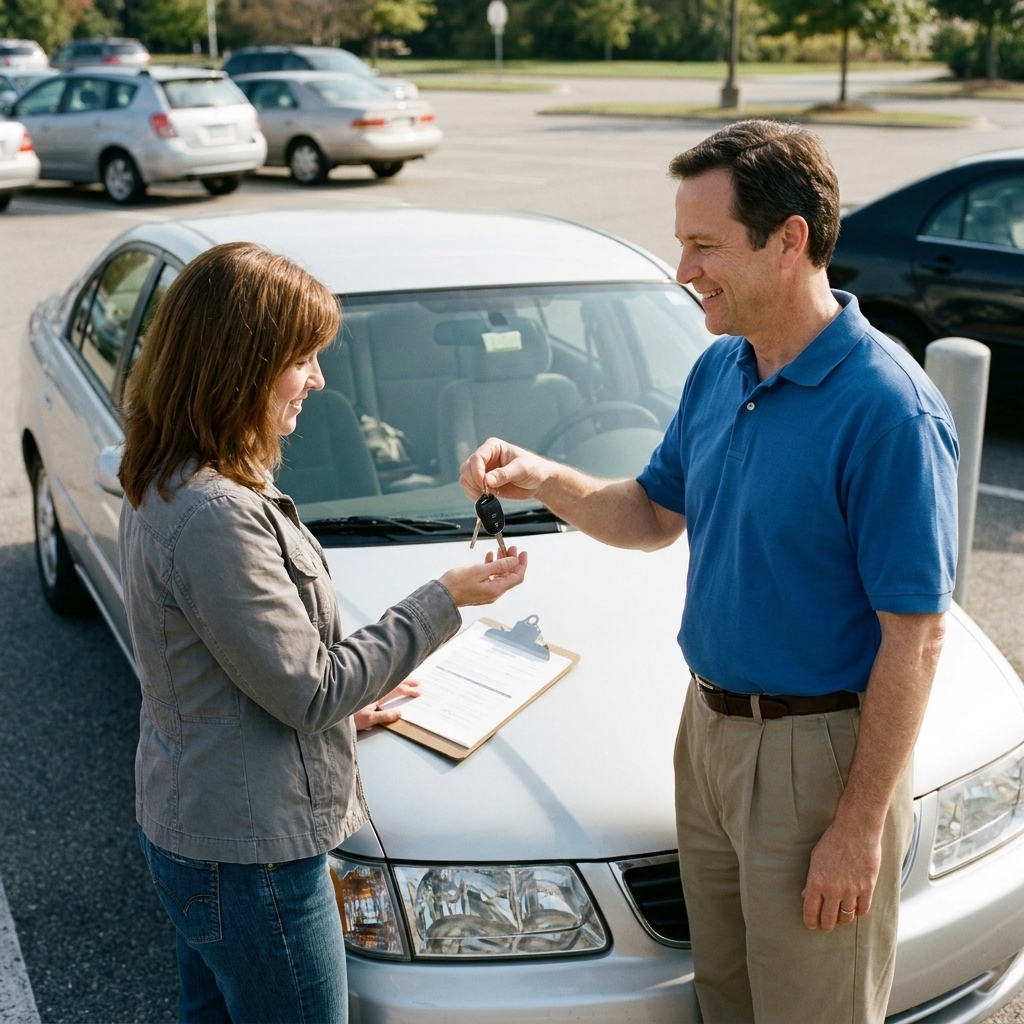
Private sellers think differently
If you negotiate like you are at a dealership, you will spook or irritate a private seller. Here is what is usually true:
- It is their personal car. Criticizing it too aggressively can feel personal, even if your points are valid.
- They hate wasting time. Many sellers have dealt with “Is this available?” messages all week.
- They are not set up to “finance the deal.” Many expect payment the same day, typically cash or a cashier’s check. Some will also consider bank transfers, but plenty will not because of scams and reversals on certain platforms.
- They often price emotionally. New tires last month, a fresh detail, or “it’s always been good to me” can inflate their number.
That means the best negotiations are calm, evidence-based, and efficient.
Know fair value first
Your leverage starts before the first text. You need a realistic price range so your offer is grounded in reality, not gut feel alone.
Build a price range in 15 minutes
- Check multiple sources. Kelley Blue Book and Edmunds are solid baselines. For real-world local pricing, scan comparable listings on Marketplace and Craigslist.
- Match the details. Same model year, similar mileage, same drivetrain (AWD vs FWD), similar trim, and similar condition.
- Assume “asking price” is not “selling price.” Many private listings have room built in, but not always.
My rule: Walk in with three numbers written down: a “great deal” price, a “fair deal” price, and your firm walk-away maximum.
Message without insulting
The first message sets the tone. You are trying to communicate two things: you are serious, and you are easy to work with.
A first message that gets replies
Example script:
“Hi, I’m interested in the 2016 Honda Accord you listed. Is it still available? Any issues you know of (warning lights, leaks, AC, transmission)? If it checks out, I can come see it Tuesday at 4 p.m. I’m ready to buy if it matches the description.”
Questions that matter
- How long have you owned it?
- Why are you selling?
- Do you have the title in your name and in hand?
- Any recent repairs or known needs?
- Any accidents or insurance claims you know about?
- Are there any warning lights on?
If the seller dodges basic questions or gets aggressive right away, that is useful information. You can move on without wasting a Saturday.
Meet safely
Private-party buying has a safety component. You are meeting a stranger and potentially carrying money. Treat it like a transaction, not a hangout.
Where to meet
- Best: a police station “safe exchange zone” or a busy bank parking lot in daylight.
- Good: a busy shopping center parking lot with cameras.
- Avoid: isolated areas, nighttime meetups, or “my cousin will meet you” setups.
Bring the right stuff
- Flashlight
- Paper towels or shop rags
- OBD2 scanner (even a basic one)
- Tire tread gauge (cheap and useful)
- Magnet (helps spot body filler in some cases)
- Your driver’s license and proof of insurance for a test drive
Test drive logistics: It is normal for a seller to take a photo of your license or hold your keys while you drive. What is not normal is a seller insisting you hand over cash as “collateral” just to test drive.
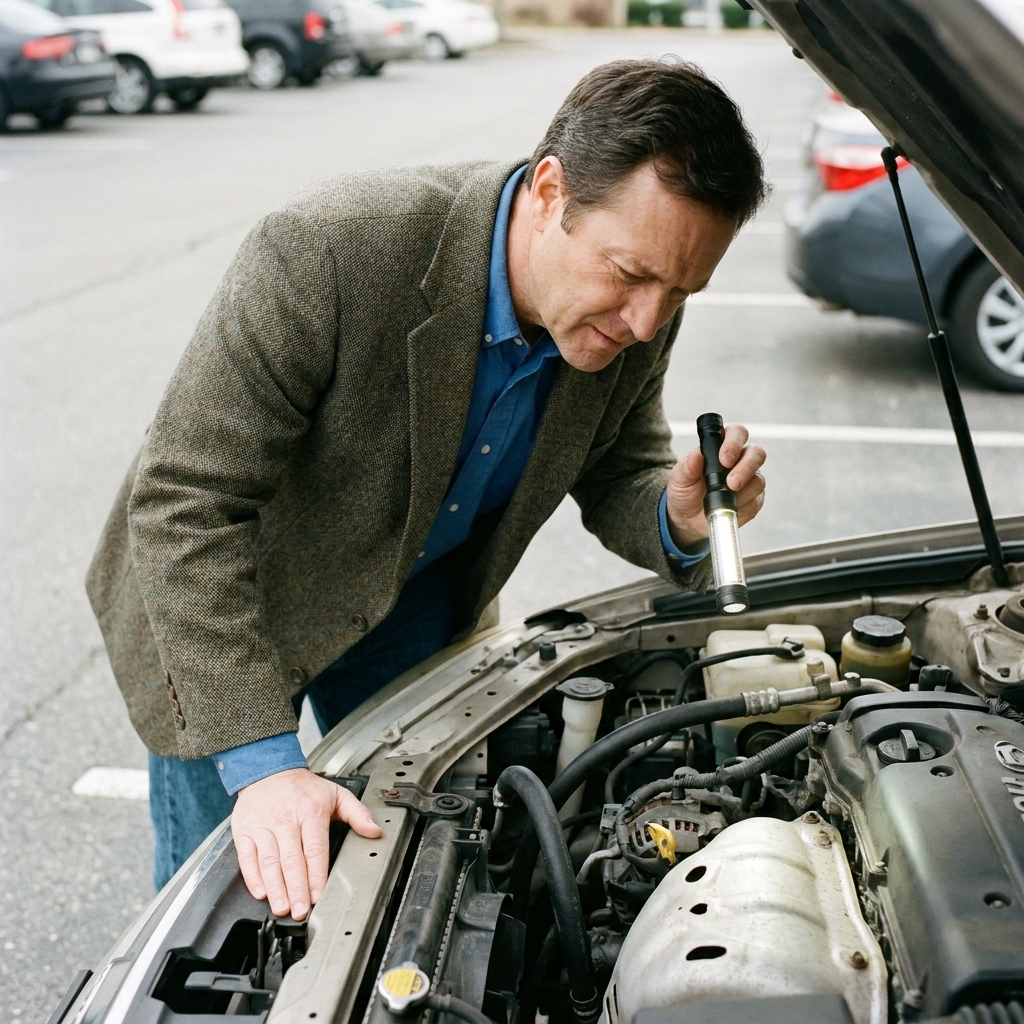
Inspect, then negotiate
If you start negotiating before you have seen the car, you are negotiating blind. The inspection is where you earn the right to ask for money off.
A quick walkaround
- Tires: Uneven wear can mean alignment or suspension issues. Mismatched tires can signal cheap maintenance.
- Panel gaps and paint mismatch: Not always a dealbreaker, but it can indicate prior bodywork.
- Rust: Surface rust is common in some regions. Structural rust, rotted brake or fuel lines, or crusty suspension mounts are negotiation (or walk-away) territory.
- Fluids: Low oil, milky oil, low coolant, or a sweet coolant smell can mean expensive problems. Also check the underside of the oil cap and filler neck for beige sludge or emulsion.
- Dashboard lights: Any warning light is a real cost, even if the car “drives fine.”
The test drive
- Cold start behavior (hard starts, rattles, smoke)
- Transmission shifts (flare, slam, delayed engagement)
- Braking (pulsation, pulling, grinding)
- Steering and suspension (clunks over bumps, wandering)
- HVAC (AC cold, heat hot, fan speeds work)
Pro tip: If the seller insists you cannot drive it, that is usually a no. At minimum, they should be willing to drive it with you as a passenger.
Use a PPI
If you want the cleanest, least awkward negotiation, get an independent pre-purchase inspection (PPI). A good shop will document leaks, worn brakes, tire condition, codes, and safety issues.
Here is how to propose it without sounding accusatory:
Example script: “I like the car. Before I commit, I’d like to have my mechanic do a quick pre-purchase inspection. If it checks out, I’m ready to buy the same day. Are you comfortable meeting there?”
If the seller refuses any inspection at all, treat it as a meaningful risk signal. It does not prove the car is bad, but it raises the odds you are walking into a surprise.
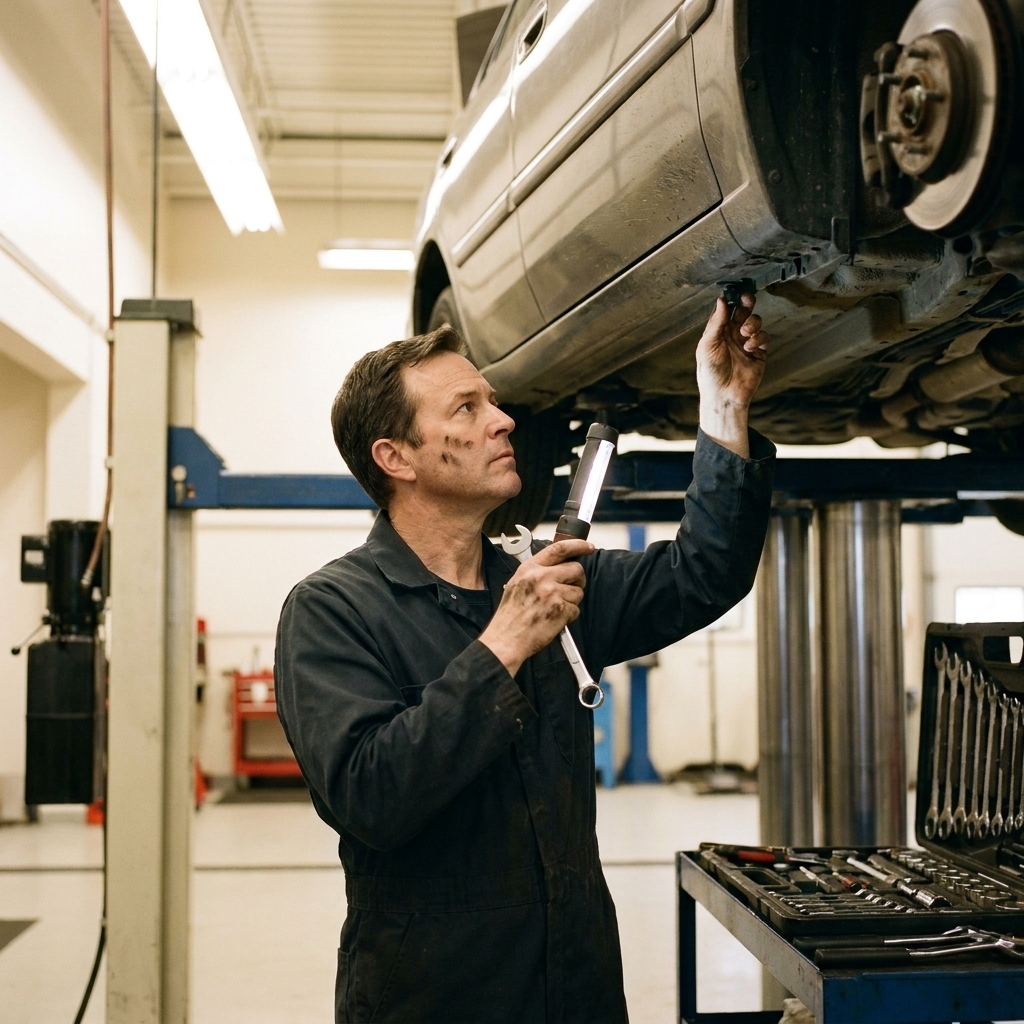
A negotiation formula
This is the backbone of nearly every successful private-party negotiation I have watched in real life:
1) Compliment honestly
Find something true: clean interior, strong service history, smooth drive. People soften when they feel seen.
2) State concerns with facts
Use neutral language and point to specifics.
- Good: “Front tires are at 3/32 and the right front is wearing on the inside.”
- Bad: “Your tires are trash and you didn’t take care of it.”
3) Put a number on the problem
You do not need to be perfect. You need to be reasonable, and you should assume costs vary by vehicle, shop rates, and region.
- Two mid-range tires mounted and balanced often land around $250 to $450, depending on size and brand.
- Brake pads and rotors on many common cars are commonly $300 to $800 per axle at a shop, sometimes more on trucks and performance models.
- A check-engine diagnosis and repair might be $150, or it might be $1,500. That uncertainty matters when you are making an offer.
4) Make a clear offer
Example script: “You’re asking $8,500. Based on the tires and the brake vibration, I’m at $7,600 today. If that works, I can handle payment and paperwork right now.”
Notice what that does. It is respectful, specific, and time-bound.
How far below asking?
There is no magic percentage. It depends on price point, condition, and how the car is priced relative to the market. But here are practical guidelines:
- If it is priced fairly and clean: expect smaller discounts, often a few hundred dollars.
- If it is priced high but still reasonable: you may have room for 5 to 10 percent.
- If it has clear needs (tires, brakes, windshield, warning light): your offer should reflect those costs, not an arbitrary “lowball.”
- If it is already the cheapest comparable listing: tread carefully. The discount might be zero, or the cheap price might be hiding problems.
If your offer is dramatically below asking, you need a paper trail of reasons. Otherwise, expect to be ignored.
When they say “I know what I have”
This phrase usually means the seller is anchored to their number. Do not argue. Re-anchor calmly.
Example script: “Totally fair. I’m not saying it’s a bad car. I’m just pricing in what I’m going to fix right away. If you can do $7,600, I can buy today. If not, I understand.”
Then stop talking. Silence is powerful when you are being reasonable.
When to walk away
I have seen too many good people talk themselves into bad deals because “it’s close to home” or “I already took the day off.” Here are hard lines:
- Title problems: not in seller’s name, “lost title,” lien not released, or “bill of sale only” (rules vary by state, but this is often trouble).
- Seller refuses a test drive or won’t let you verify basics.
- Obvious signs of odometer or identity weirdness: VIN plate tampering, mismatched VIN stickers, inconsistent mileage in records.
- Overheating, coolant smell, or mixing oil and coolant.
- Severe rust in structural areas.
- Check-engine light plus a seller who says, “It’s probably nothing.”
Walking away is not losing. Walking away is how you keep your savings intact.
Common scams to avoid
- Deposit requests: “Hold it for me” deposits are where a lot of Marketplace scams start. If you have not seen the car and verified the title, do not send money.
- Curbstoners posing as owners: The “seller” is really a flipper who never titled it. Ask to see the title and confirm the name matches their ID.
- Title washing and paperwork games: Missing lien release, out-of-state title weirdness, or a story that keeps changing are all reasons to slow down.
- Pressure lines: “I have ten buyers on the way” may be true, or it may be a tactic. Stay calm and stick to your process.
Close the deal
When you do agree on a price, shift into “clean transaction mode.”
Payment that keeps it simple
- Meet at a bank. Many sellers feel safest watching you withdraw cash or complete a cashier’s check there.
- Cash can work, but be careful. Count it in a bank lobby, not in a secluded lot.
- Be picky about transfers. Some instant transfer methods are associated with scams, and some payments can be disputed. If you use a transfer, do it in person and make sure both sides agree on the platform and confirmation steps.
- Cashier’s checks are not magic. They can be counterfeited. The safest move is to meet at the issuing bank and have the teller verify or issue it on the spot.
- Avoid unusual payment methods. Gift cards, crypto, and “my friend will pay you later” should be a hard no.
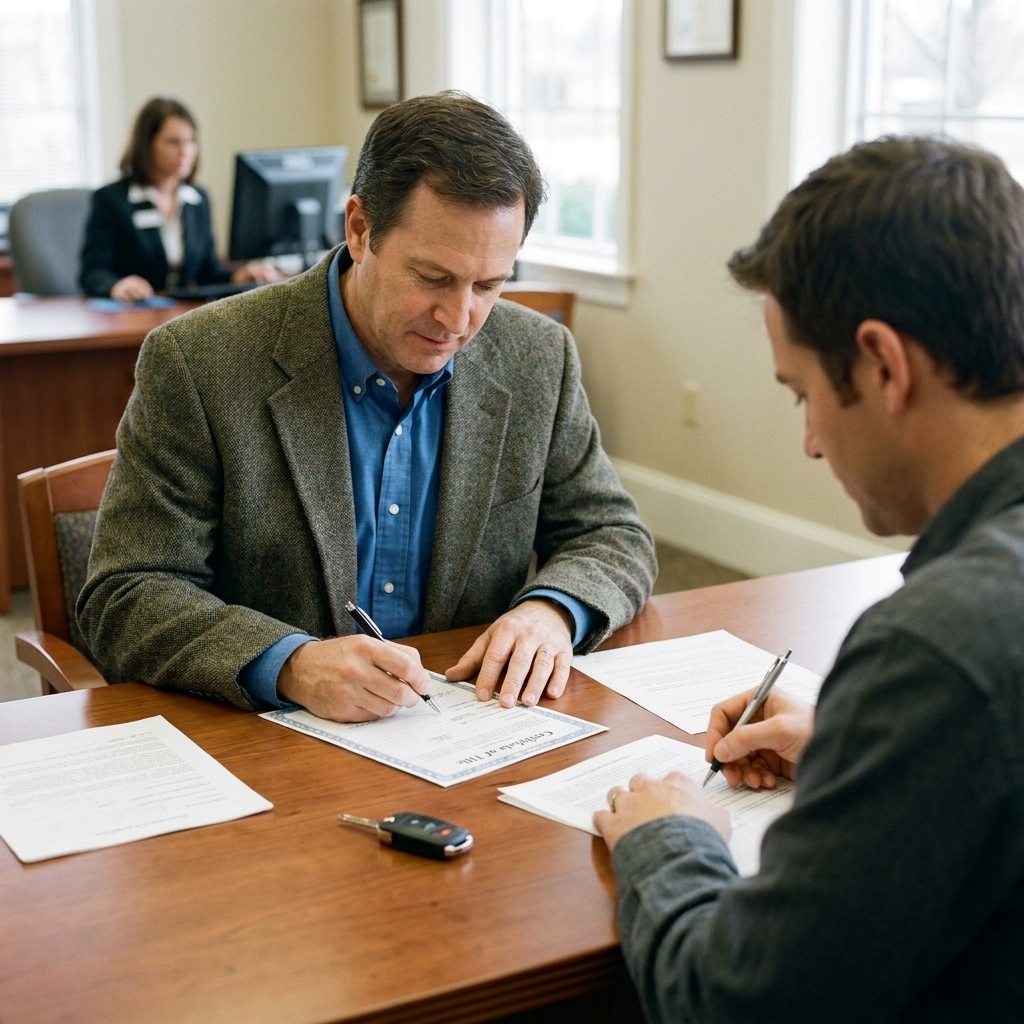
Paperwork checklist
- Signed title (follow your state’s requirements for buyer and seller sections)
- Bill of sale (even if not required, it helps)
- Release of liability or notice of sale (often done online)
- Any maintenance records, spare keys, wheel lock key, and owner’s manual
State rules matter: Some states require notarization, emissions or smog documentation, VIN verification, or specific title transfer steps. Before you meet, look up your DMV requirements so you do not end up with a car you cannot register.
Quick VIN check: Verify the VIN on the title matches the VIN on the dash and driver door jamb before money changes hands.
Common mistakes
- Negotiating before seeing the car. You lose credibility and you lose leverage.
- Talking too much. State your offer, justify it briefly with facts, then pause.
- Acting offended by normal wear. Every used car has wear. Focus on safety issues and big-ticket items.
- Falling in love with a specific car. That is how you overpay.
- Letting “I drove an hour” pressure you. The drive is already sunk cost. Bad deals cost more.
Quick scripts
If the seller won’t budge
“I respect that. If you change your mind, here’s my number. I’m ready to buy this week.”
If you find an issue mid-visit
“I still like it. The power steering pump is seeping, and I can smell fluid after the test drive. That just changes the math for me. If we can adjust the price, I’m in.”
If another buyer is “coming in an hour”
“No worries. I don’t want to rush you. If it’s still available after they leave, I can come back with payment.”
If the listing was inaccurate
“I came based on the ad. Since the AC is not blowing cold, it’s not a match for the listed price for me.”
FAQ
Is it rude to offer less than asking?
No. It is normal. It becomes rude when it is a huge cut with no explanation, or when you criticize the seller’s car instead of discussing real costs.
Should I tell the seller my maximum budget?
No. Your budget is not the car’s value. Negotiate from market price and condition, not your wallet.
How do I negotiate a car with a check-engine light?
Ideally, you do not, unless you can scan codes and understand the risk. Treat it like a real repair bill plus uncertainty. A “simple oxygen sensor” is sometimes a catalytic converter in disguise.
Can I ask the seller to fix things before I buy?
You can, but it often goes sideways. I usually prefer negotiating money off and fixing it my way after purchase, especially for tires, brakes, and warning lights.
What if the seller says other people offered more?
Sometimes that is true, sometimes it is a pressure tactic. Your job is to stay calm and stick to your number. If the car is truly worth more, let it go and keep shopping.
My bottom line
The best private-party negotiations are not battles. They are clean, respectful business conversations backed by facts. Show up prepared, inspect carefully, price the real issues, and be willing to walk. If you do those four things, you will land better cars and keep more money in your pocket, which is the whole point.