Stop negotiating monthly payments. Learn how to focus on the out-the-door price, spot common add-on tricks, and lock in a clean used-car deal.
Used Car Buying Guide
Negotiate a Used Car Price Like a Pro
Walk into a dealership with a plan. Learn the steps, scripts, timing, and inspection moves that help you negotiate a used car out-the-door price confidently and avoid costly traps.

Ben Sullivan
Ben Sullivan is a former ASE-certified mechanic with over 15 years of experience inspecting, repairing, and appraising used vehicles. He contributes to Car Wise Guide to help everyday buyers navigate the used car market with confidence, armed with the knowledge to spot hidden red flags and negotiate fair prices.
Published October 18, 2026
Updated October 18, 2026
I have watched a lot of smart, hardworking people lose money at dealerships for one simple reason: they negotiated the wrong thing, at the wrong time, with the wrong numbers. The good news is you do not need to be slick to get a strong deal. You need a plan, a calm tone, and a willingness to politely walk away.
This guide is the exact playbook I would hand my best friend before they hit the lot. We are going to focus on the number that matters most, the leverage you can create, and the psychological tactics sales pros use so you can spot them and stay in control.
Start with the key number: out-the-door
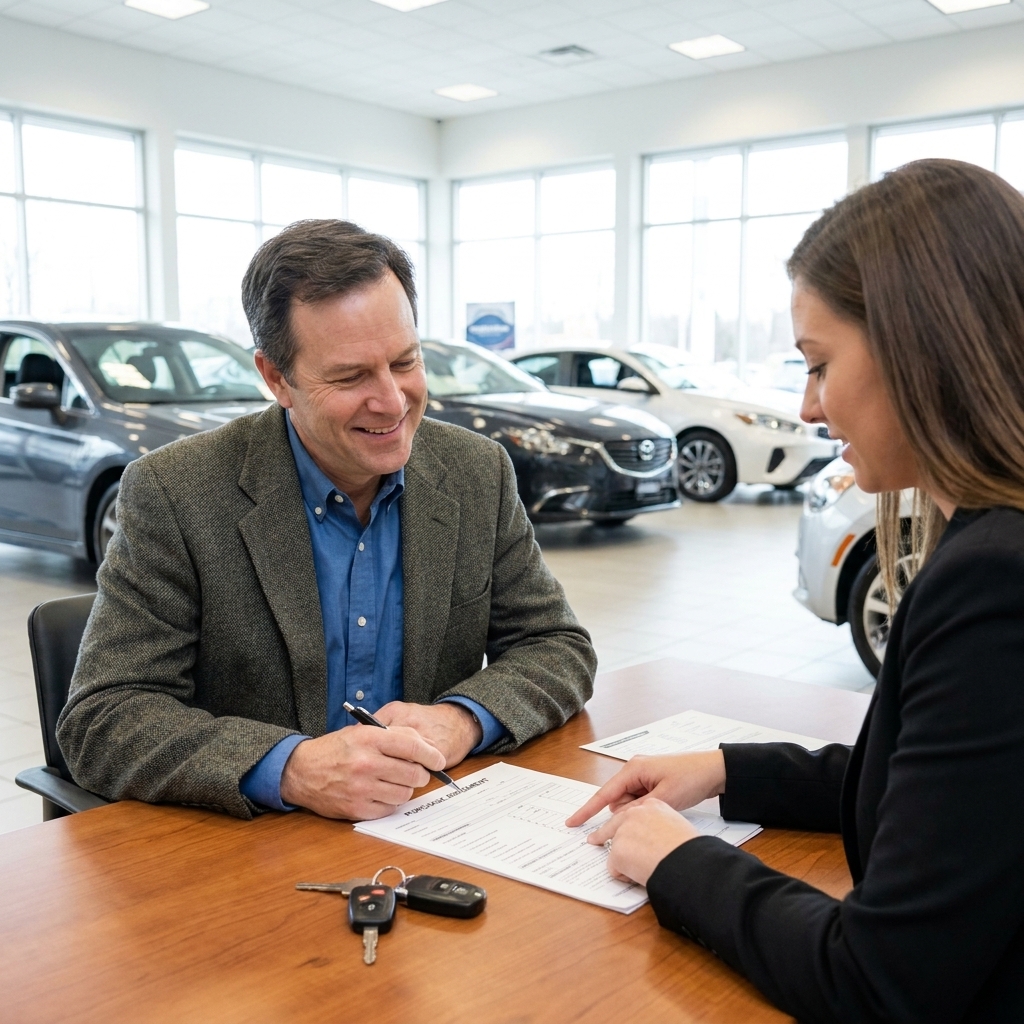
Dealerships love to negotiate in circles: monthly payment, trade difference, add-ons, or a “discount” that quietly comes back as fees. You cut through all of that by negotiating the out-the-door price (OTD). That is the total you will pay to drive the car home, including taxes, registration, and dealer fees.
OTD is the cleanest number for negotiation because it bundles the whole deal. You will still want to pay attention to your APR, term, and total cost of credit, but OTD is where most people get spun.
Your goal: get an itemized out-the-door quote in writing. Not a verbal “we can do around…” and not a payment quote.
Script
“If I buy today, what is the out-the-door price with an itemized breakdown?”
Quick note: taxes and registration can vary by state and sometimes by county. If you are buying out of state or the dealer does not have your exact registration address yet, ask for their best estimate and what pieces could change.
Do your homework in 20 minutes
You do not need a spreadsheet addiction. You need a realistic target and proof you can slide across the desk.
Build a fair range
- Compare listings for the same year, trim, mileage, and drivetrain within a reasonable radius.
- Check price guides (KBB, Edmunds, NADA/JD Power) to see typical retail ranges.
- Account for mileage: a 30,000-mile difference is not “basically the same car.”
- Account for condition and tires: cosmetic wear, mismatched tires, or cheap off-brand tires should move your offer.
Bring leverage
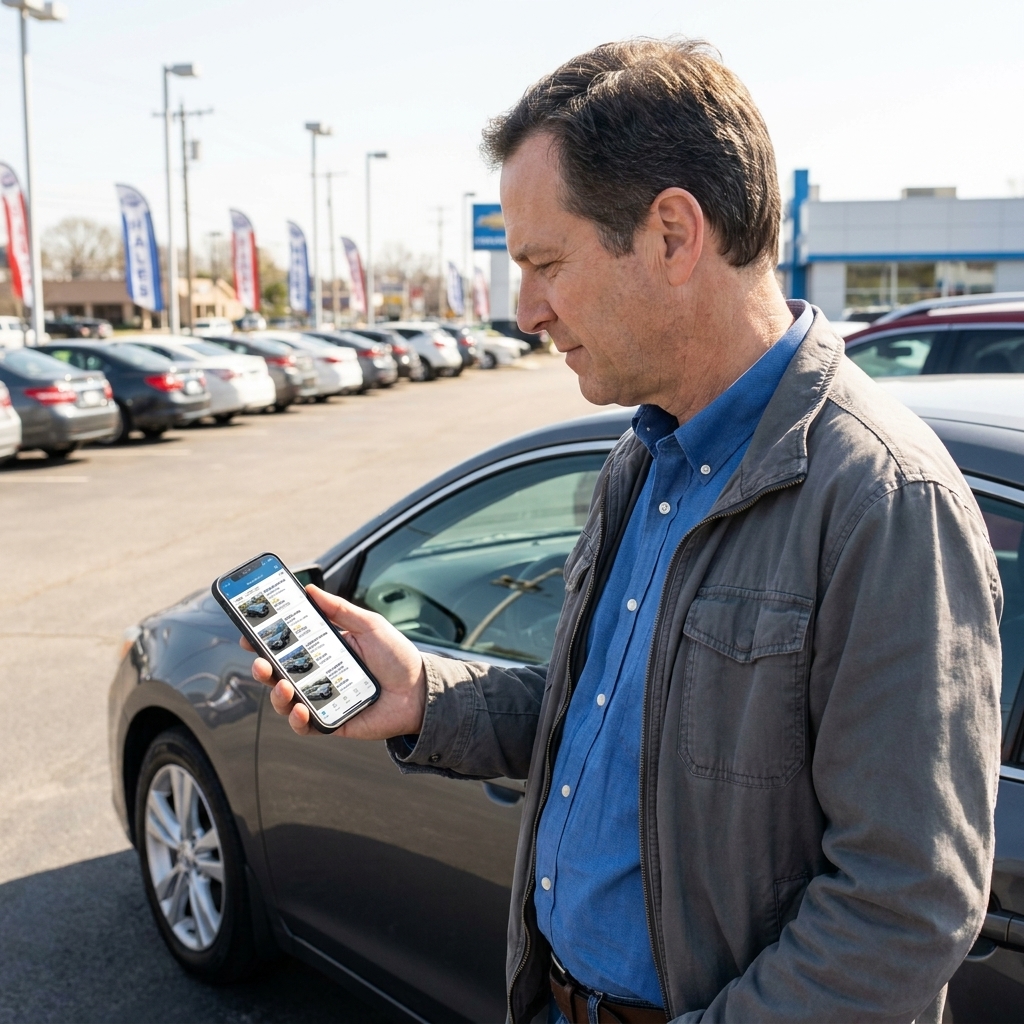
Print or screenshot 2 to 3 comparable listings that are truly comparable. Not a cheaper car with double the miles or a salvage title. Real comps. When you reference them calmly, you instantly stop sounding like “just a shopper” and start sounding like a buyer who can do math.
Get pre-approved first
Even if you might finance through the dealer, walk in with a pre-approval from a bank or credit union. This does two things:
- Sets your ceiling on interest rate and payment manipulation.
- Turns you into a cash-like buyer who can close if the price is right.
When the financing office tries to shift the conversation to monthly payment, you can steer it right back.
Script
“I already have financing. Let’s agree on the out-the-door price first, then we can talk about how I’ll pay for it.”
Timing helps
Sales staff have quotas, managers have targets, and used car inventory has aging costs. You do not need to exploit anyone. You just need to show up when the store is more motivated.
Best times to negotiate
- Weekdays, especially mid-morning or early afternoon when it is quiet.
- End of the month when stores chase numbers.
- When the car has been listed a while (ask how long it has been in inventory).
If a used car has been sitting, the dealership may be paying curtailment or floorplan-like costs, or at least tying up capital they want back. Either way, stale inventory can create real leverage for you.
Make an offer that works
Most buyers either come in insulting low or they come in too close to asking price. Either way, they lose momentum. A strong offer is anchored to evidence and leaves room for movement.
Here is the mindset shift: you are not “asking for a discount.” You are making a clean, defensible offer you are ready to sign on.
My simple formula
- Start with the out-the-door number you want.
- Back it up with 2 to 3 comps and any real condition issues you found.
- Make it easy to say yes: you are ready to buy today if the numbers work.
Script
“Based on these comparable cars and what I’m seeing on the tires and maintenance, I’m ready to buy today at $____ out the door. If you can do that, I’ll sign.”
Notice what is missing: long speeches. Negotiation is not a debate club. It is calm repetition of your number and your reason.
Common sales tactics
Most dealership staff are not villains. They are trained. If you recognize the training, you do not get emotionally steered.
1) “Let me talk to my manager” loops
This slows the process down and wears you out. Your counter is to set a boundary.
Say: “No problem. While you check, can you print the itemized out-the-door breakdown we’re working from?”
2) Payment focus instead of price focus
If they keep asking, “What payment are you trying to be at?”, they are looking for wiggle room.
Say: “I’m flexible on term. I’m not flexible on out-the-door price.”
3) “Someone else is coming to see it today” pressure
Sometimes it is true. Often it is just urgency. Either way, it changes nothing about what the car is worth to you.
Say: “Totally understand. If it sells at that price, good for you. If you can do my out-the-door number, I’ll buy it right now.”
4) The four-square worksheet
This is the classic box sheet that mixes price, trade, down payment, and monthly payment so you lose track of the real deal. You can refuse it politely.
Say: “I’m happy to look at a worksheet, but I want the out-the-door price and trade value listed separately.”
Separate car, trade, financing
This is where most money leaks out.
Step 1: Set the out-the-door price
Do not mention your trade at first if you can avoid it. You want the cleanest possible deal on the car itself.
Step 2: Then set the trade value
Get independent trade estimates (CarMax, Carvana, and at least one other local offer if possible). Bring them with you. Even if you do not plan to sell to them, those offers are powerful.
Say: “I have a written offer for $____. If you can beat it, I’ll trade it here today. If not, I’ll sell it separately.”
Step 3: Then talk financing
Once the OTD price is locked, ask the dealer to beat your pre-approval rate. Sometimes they can. Sometimes they cannot. Either outcome is fine when you already won the price.
Fees and add-ons to watch
Some fees are legitimate, some are store-dependent, and some are extra profit dressed up as a service. The fix is simple: make them itemize everything, then challenge line by line.
Question these
- “Reconditioning fee” or “certification fee” on a non-CPO car
- “Nitrogen tires”, door edge guards, paint protection, VIN etching
- Doc fee that is high for your area
- Accessory bundles you did not ask for
Here is the straight truth: reconditioning is part of the dealer’s cost of doing business. If they itemize it as an extra, treat it as part of the overall price. In other words, either it comes off, or your out-the-door offer comes down by the same amount.
Also, some fees (especially doc fees) may be non-negotiable at that store. Fine. You can still negotiate the out-the-door total by adjusting the price of the vehicle or choosing a different deal.
Script
“I’m not paying for add-ons I didn’t request. Either remove them or reduce the out-the-door price by that amount.”
Use inspection leverage
From doing many pre-purchase inspections, I can tell you this is where real savings happen. Not by nitpicking. By catching expensive, legitimate needs.
What to check on the lot
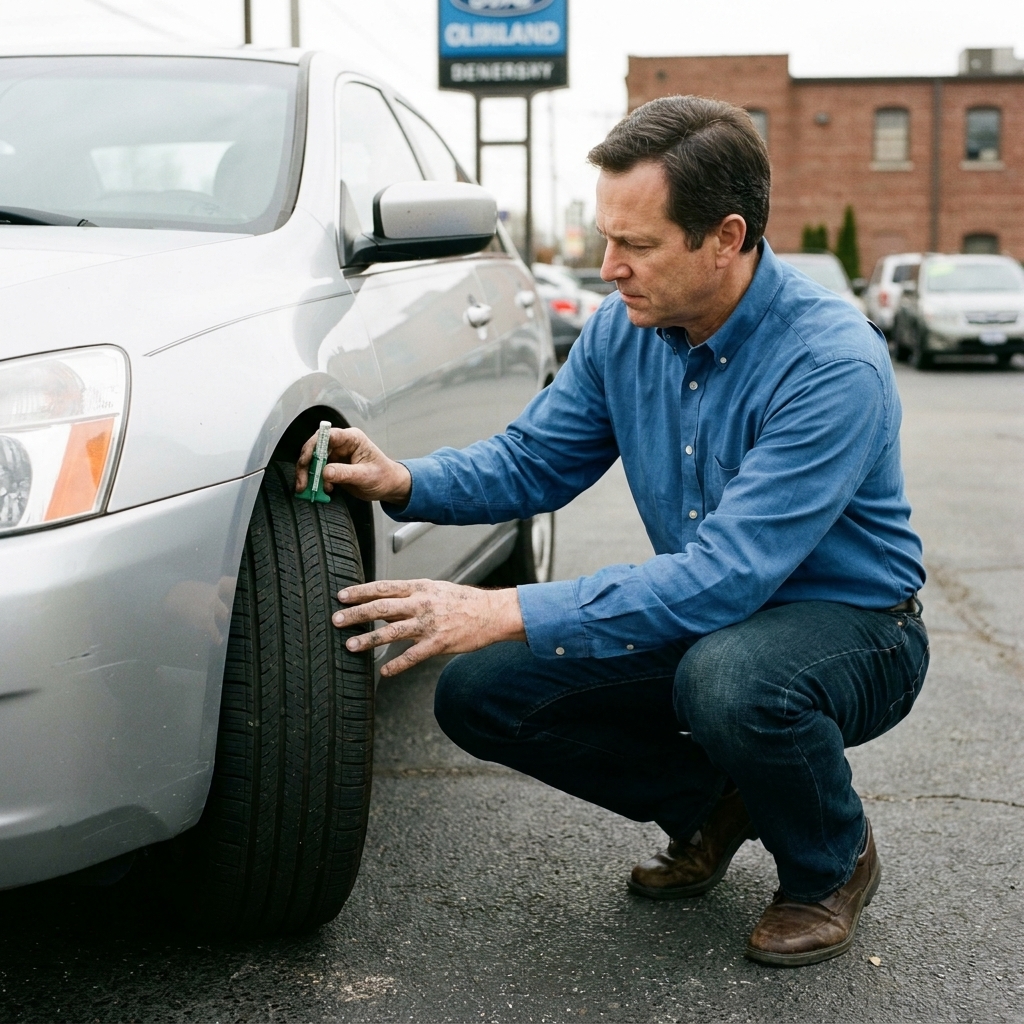
- Tires: uneven wear, mismatched brands, low tread
- Brakes: pulsing, grinding, or a soft pedal on the test drive
- Fluids: burnt smell, low coolant, oil leaks under the engine
- Warning lights: even if “it just came on”
- Maintenance history: missing records on known big services (timing belt, transmission service, etc.)
If you find issues, ask for one of two things: (1) they fix it before delivery, in writing, or (2) you get a price reduction that realistically covers it.
Example: If tires are at 3 to 4/32, that is tires soon for most drivers. A safe set of four installed often runs $700 to $1,200, and it can be higher on trucks, SUVs, and premium sizes. That is a real negotiation point.
How to get a real PPI
If you are serious about a used car, a third-party pre-purchase inspection (PPI) is one of the best dollars you can spend.
How to set it up
- Ask early: “If we agree on numbers, are you okay with a third-party inspection?”
- Use a local shop near the dealership, or hire a mobile inspector who comes to the lot.
- You usually pay for the inspection, and you should. You want the report to be for you.
If they say no
Some dealers will not allow off-site inspections. In that case, ask if a mobile inspector can inspect it on their property. If they refuse any independent inspection, treat that as a bright red flag and be ready to walk.
Run the VIN checks
Before you fall in love, do a quick paper check. It can save you from buying someone else’s problem.
- History report (Carfax or AutoCheck): look for title issues, mileage inconsistencies, repeated owners, and accident notes.
- Open recalls: run the VIN through NHTSA’s recall lookup.
- Title status: make sure it is clean (not salvage, rebuilt, flood) unless you knowingly want that risk at a steep discount.
Negotiate remotely first
One of the best dealership negotiation tactics is to do the back-and-forth remotely first. Email or text keeps you calm, creates a paper trail, and lets you compare offers without sitting under fluorescent lights for three hours.
A message that works
“I’m ready to buy this week. Please send your best out-the-door price with an itemized breakdown (tax, title, registration, doc fee, and any add-ons). If the numbers work, I’ll schedule a test drive and we can talk about a deposit.”
Deposits: get it in writing
If you put down a deposit to hold a car, make sure you know exactly what it means.
- Ask if it is refundable and get that answer in writing.
- Confirm what it holds: the specific VIN, the agreed out-the-door price (if already negotiated), and how long they will hold it.
- Use a card when possible for a clearer paper trail.
When to walk away
Walking away is not drama. It is a tool. If any of these happen, you should seriously consider leaving:
- They refuse to give an itemized out-the-door price.
- Numbers keep changing when you ask for clarification.
- They add products you declined back into the contract.
- The car has red flags and they will not allow an independent inspection.
Script: “I don’t think we’re going to land on the same numbers today. If anything changes, here’s my out-the-door offer. You can call me.”
Then stand up. Be polite. Leave. It is not a guarantee, but it is common for better options to appear once they realize you are not negotiating against yourself.
Scripts you can use
Keep these in your notes app. Read them exactly as written if you need to. Confidence is often just preparation with a calm voice.
Stop the payment trap
“I’m not discussing monthly payment yet. What is the out-the-door price?”
Counter “that’s the best we can do”
“I hear you. If you can’t do $____ out the door, what is the lowest out-the-door number you can put in writing today?”
Push back on add-ons
“I’m declining that. Please remove it from the buyer’s order.”
Keep it friendly and firm
“I want this to be easy for both of us. If you can meet my out-the-door number, I’ll sign today.”
Quick FAQ
How much can you negotiate on a used car?
It depends on demand, how long it has been in inventory, condition, and the dealer’s cost. On hot models priced competitively, it might be a few hundred dollars. On overpriced cars, stale inventory, or cars with condition needs, you can sometimes move the needle much more. Focus on a fair out-the-door number supported by comps, not a random “$2,000 off” goal.
Should you tell the dealer your max budget?
No. Share your target out-the-door price, not your maximum. Your maximum is private information that only helps the other side.
Is it better to negotiate by email?
Often, yes. You can keep everything in writing, avoid time pressure, and compare multiple out-the-door quotes quickly. Still test drive and inspect the specific car before you commit.
What if the dealer says the price is non-negotiable?
Some stores do fixed pricing. Your leverage then becomes: comparing against other listings, negotiating add-ons and fees, asking for needed reconditioning, or simply choosing a different car. Fixed pricing is only a good deal if the out-the-door number is truly competitive.
The bottom line
You do not win a used car negotiation by being the toughest person in the showroom. You win by being the calmest person with the clearest numbers.
Go in with pre-approval, insist on an itemized out-the-door price, separate the car price from the trade and financing, and be ready to walk if the deal gets fuzzy. Do that, and even a seasoned salesperson will usually shift from pressure to problem-solving, which is exactly where you want them.