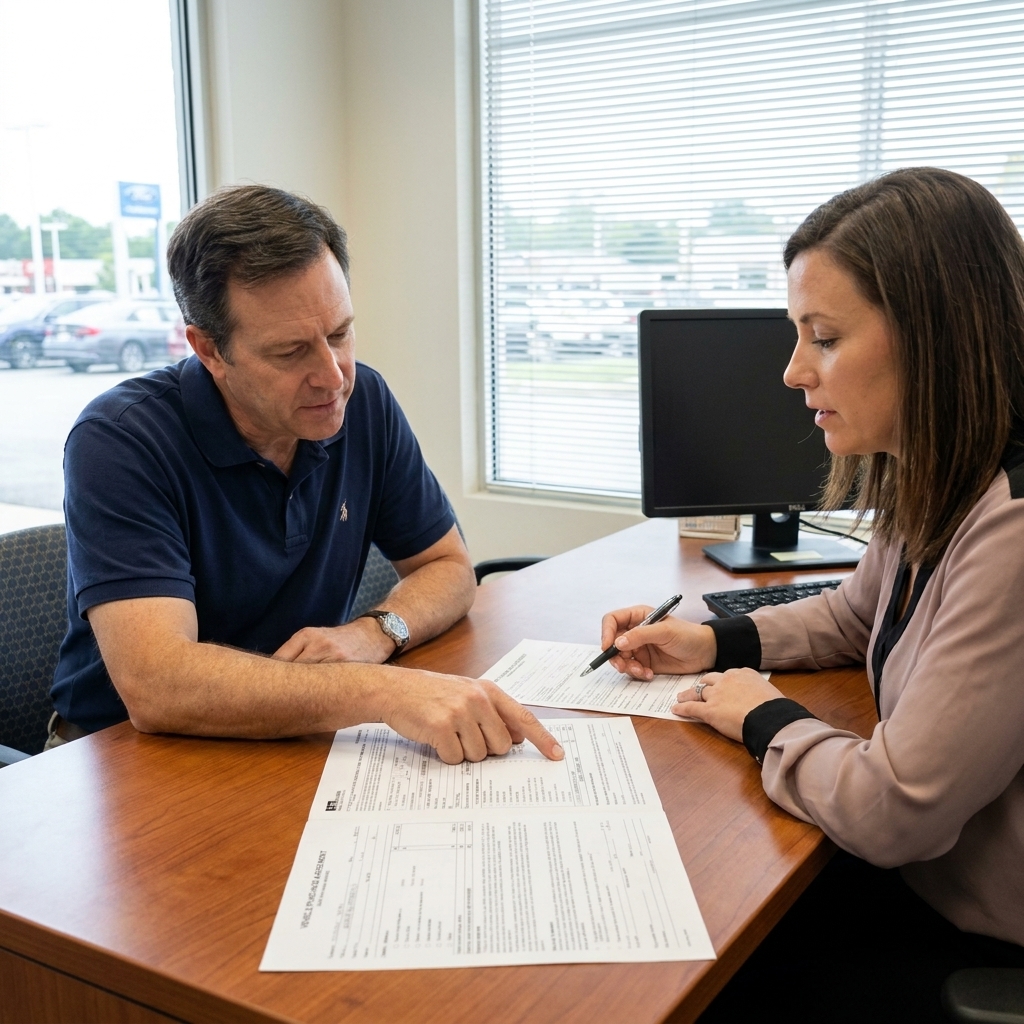
Stop negotiating monthly payments. Learn how to focus on the out-the-door price, spot common add-on tricks, and lock in a clean used-car deal.
Used Car Buying Guide
Maximize Your Trade-In Value
Learn how to get top dollar for your trade-in without letting the dealership bury it in the price of your next used car. Step-by-step prep, timing, and negotiation scripts.

Ben Sullivan
Ben Sullivan is a former ASE-certified mechanic with over 15 years of experience inspecting, repairing, and appraising used vehicles. He contributes to Car Wise Guide to help everyday buyers navigate the used car market with confidence, armed with the knowledge to spot hidden red flags and negotiate fair prices.
Published October 18, 2026
Updated October 18, 2026
If you have a trade-in, the dealership has three big numbers to play with: the price of the used car you want, the value of your trade, and the financing. If you let them mix those together, you can “win” one line and still lose the deal.
I have watched it happen more times than I can count. A buyer feels good because the salesperson “came up” on the trade, but the purchase price quietly went up too. Or the payment looks fine, but the trade value was light by $1,500 and nobody notices because it got blended into the math.
Here’s how to maximize your trade-in value and keep it from getting used as a shell game to offset your used car purchase.
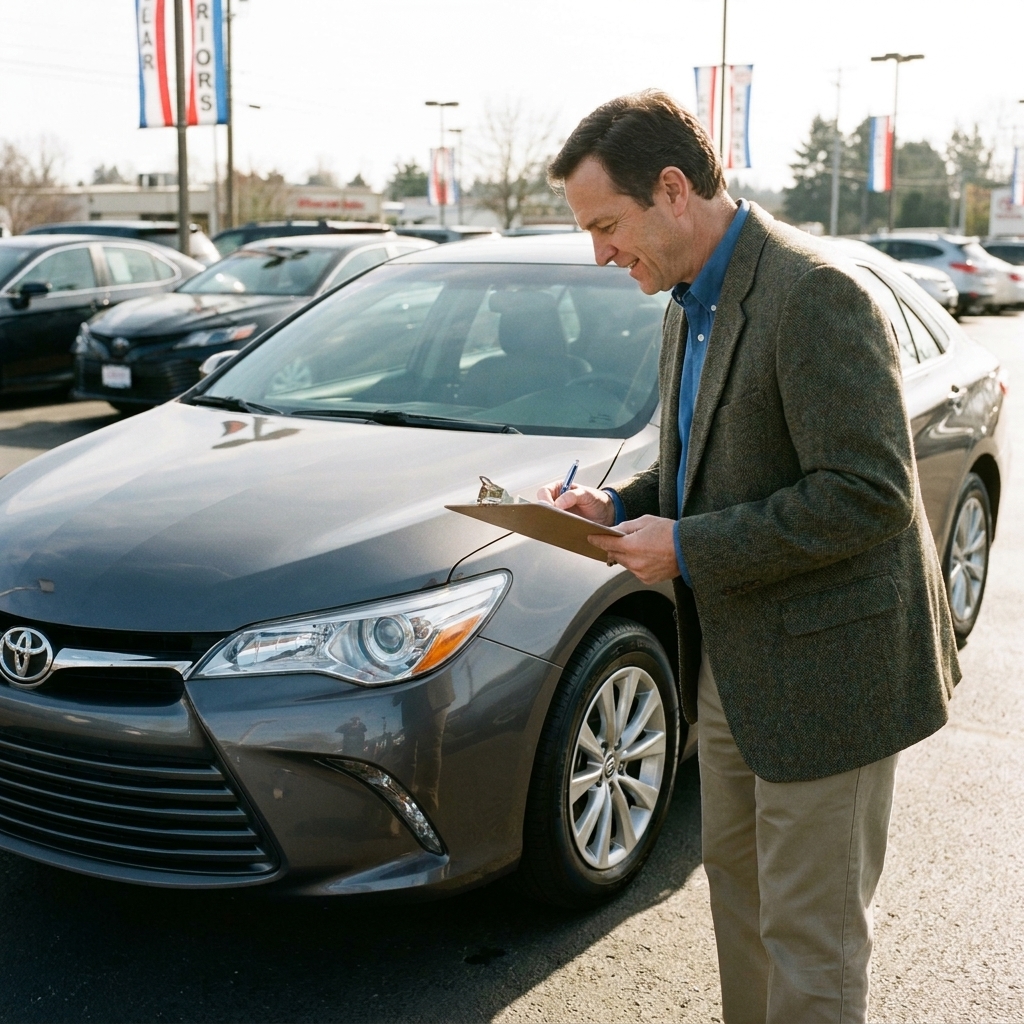
The rule: do this in order
If you take one thing from this article, make it this: treat the trade-in as a separate transaction.
My recommended order
- Step 1: Agree on the out-the-door price of the used car you’re buying (including taxes and fees) without mentioning the trade.
- Step 2: Lock down the trade-in value using real backup offers and condition-based facts.
- Step 3: Talk financing last, and only after you have the final numbers in writing.
If the store insists they “need the trade to work the deal,” you can calmly say: “No problem, I’ll share the trade once we agree on the purchase price first.”
To be fair, there are a couple of legitimate reasons they might ask about your trade early, like a payoff balance, negative equity, or tax-credit paperwork in your state. That still does not require blended numbers. You can give them the basics and still insist the purchase price and the trade value stay as separate line items.
Know your trade value
Walking in blind is the easiest way to get lowballed. You do not need to be an expert. You just need two or three solid reference points.
Get a real offer you can take
Before you visit the dealer, get at least one written appraisal from a car-buying service or local used-car superstore. If you can swing it, get two. Even if you plan to trade, having a “cash-out” option does two things:
- It creates a hard floor for your trade value.
- It stops the “we’re being generous on the trade” routine, because you can prove what the market will pay.
Bring the offer with you. Keep it polite and matter-of-fact: “I have an offer for $X that’s good through Friday. If you can match or beat it, I’d rather trade to keep things simple.”
Use pricing guides as guardrails
Online guides can be helpful, but they are not offers. Treat them as guardrails, not gospel. Two cars with the same year and miles can be $2,000 apart depending on tires, paintwork, warning lights, and maintenance history.
Your goal is to show up with a realistic range, not a fantasy number.
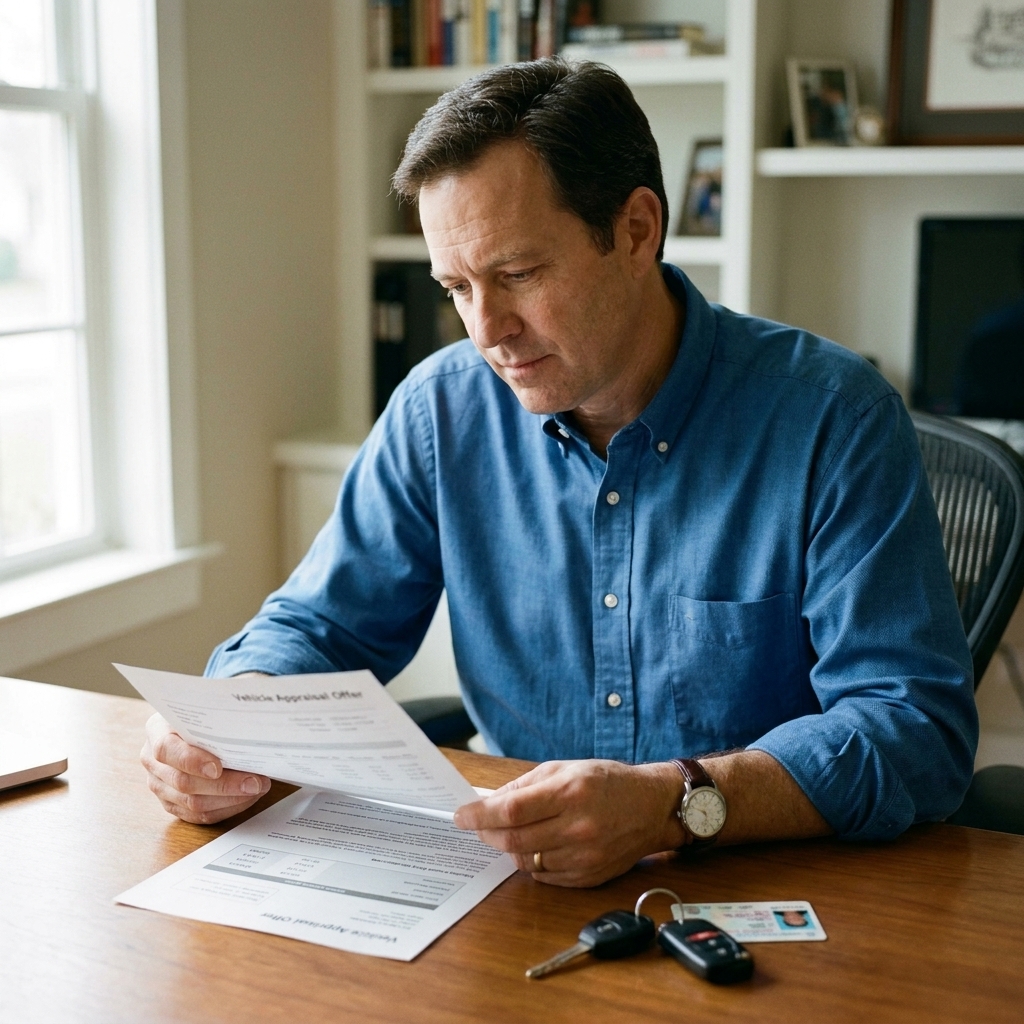
Prep the trade (no wasted money)
The best trade-in prep is the kind that makes your car look cared for without sinking money you will not get back.
High-impact, low-cost prep
- Wash and vacuum thoroughly, including door jambs and cupholders.
- Remove personal items from the cabin and trunk.
- Wipe down interior plastics so it looks tidy, not greasy.
- Gather both keys, key fobs, wheel lock key, and owner’s manual if you have it.
- Replace burned-out bulbs if it’s easy and inexpensive.
- Fix simple warning lights only if you’re confident it’s minor (for example, a loose gas cap). Do not throw parts at a problem.
What I usually tell people not to do
- Don’t repaint panels just for trade value. Cheap paintwork can backfire in appraisal.
- Don’t do major repairs hoping you’ll “get it back.” You often won’t. Price the repair against the expected value difference first.
- Don’t buy bargain tires just to have “new tires.” Appraisers can spot low-end rubber, and it rarely pays back dollar-for-dollar.
If your car needs something like brakes or tires soon, be honest with yourself: you’re not trying to sell perfection. You’re trying to present a car that looks maintained.
Bring proof
Appraisers discount unknowns. The more “unknown” your trade feels, the more cushion they build into their offer.
Bring a simple maintenance packet
- Oil change records
- Major service receipts (timing belt, transmission service, brake work)
- Recent battery purchase
- Any warranty paperwork for recent parts
You don’t need a binder that belongs in court. A folder or a few clear photos on your phone is plenty. The point is to prove the car has not been neglected.
Be upfront about known issues
If there’s a windshield crack, a check-engine light, or a slipping transmission, don’t play dumb. An experienced appraiser will find it, and “surprise problems” make them suspicious about what else you’re hiding. Calm honesty builds trust and keeps the conversation grounded in real numbers.
Control the appraisal
When the dealership evaluates your trade, you’re not just being graded on the car. You’re being graded on how easy you seem to negotiate with.
Use condition facts, not feelings
Good: “The tires are 7/32 and the brakes were done last year. No warning lights, and I have records.”
Not helpful: “I baby this car. It’s worth at least $10,000.”
Let them appraise it, then pause
A lot of buyers talk themselves into a lower offer by overexplaining flaws and acting apologetic. Be cooperative, answer direct questions, then pause and let the number come back. Once you have their offer in writing, you can negotiate from a position of clarity.
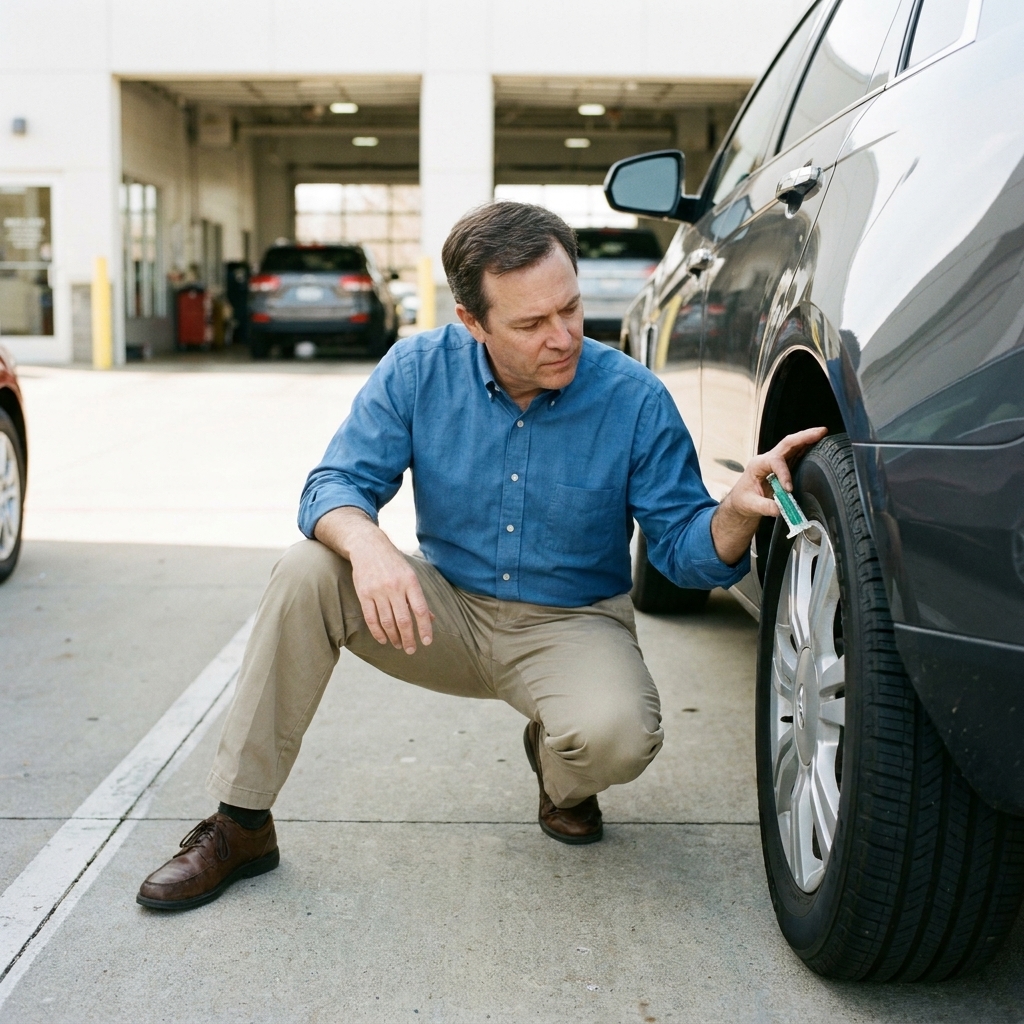
Keep the deal clean
This is the simplest way to prevent the numbers from getting blended.
1) Get the out-the-door price
Ask: “What’s the out-the-door price on this car, with all fees and taxes, if I’m paying cash and I have no trade?”
You can still finance later. You’re just removing variables.
2) Get the trade value as its own number
Ask: “Great. Now what will you give me for my trade as a standalone number?”
If they respond with monthly payment talk, bring them back: “Payment depends on a lot of things. I just need the purchase price and the trade value separately.”
3) Only then talk about the difference
Once you have:
- Out-the-door price on the car you’re buying
- Trade-in value
Now you can talk “difference” or “amount due.” That’s fine.
Watch for common trade tricks
- “We can give you more for your trade” paired with a higher selling price on the car you’re buying.
- Moving fees around so the total cost rises (dealer-installed add-ons, accessories, VIN etching, “reconditioning,” and similar line items).
- Focusing on payment to hide a weak trade number.
Timing tips
You can’t always pick the perfect day, but you can avoid the worst ones.
Trade before big maintenance is due
If you know you are close to tires, brakes, or a major service interval, you are in a better spot before you have to spend that money. Wait too long and you either:
- Pay for the repairs yourself, or
- Take a bigger hit in appraisal because the dealer knows it will need work immediately
Trade when it presents well
A fresh clean right before appraisal helps. So does addressing minor stuff you can fix cheaply, like replacing a worn wiper blade or reinstalling floor mats you already have at home.
Expect seasonal swings
Some vehicles move better at certain times (AWD in winter climates, convertibles when it’s warm). This is not a magic cheat code, but if you’re on the fence about timing by a month or two, it can nudge the numbers.
Taxes and trade-ins
In many states, trading in reduces the taxable amount of your purchase. That can effectively make your trade worth more than a straight sale, even if the dealer’s offer is slightly lower than a third-party buyer.
Example: If your state taxes the purchase price minus the trade allowance, an $8,000 trade might save you hundreds in sales tax.
But rules vary a lot. Before you decide “trade-in is always best,” confirm your state’s policy and any limits. Some states offer no credit, some cap it, and some apply different rules depending on whether you are buying new versus used, leasing versus financing, or trading a vehicle with a payoff.
Then do this quick comparison:
- Dealer trade offer plus estimated tax savings
- Third-party sale price minus the hassle and any immediate repair or detail costs you would spend to sell it
Pick the option that leaves you with more money in your pocket, not the one that feels easier in the moment.
Two common complications
If you owe more than it’s worth
Negative equity changes the math, and it is exactly why separating the line items matters. You want to see:
- Your trade-in value
- Your payoff amount
- The difference (the amount that gets rolled into the new deal, if you choose to do that)
Do not let the negative equity disappear into “a payment that works.” If you roll it in, do it on purpose and with the numbers in writing.
If your car is a lease
Lease trade-ins can be different. Some lenders restrict third-party buyouts, and the buyout price you see may not be what a dealer or online buyer is allowed to pay. If you are leasing, confirm your buyout rules before you count on a specific appraisal strategy.
Negotiation scripts
When they push monthly payment
“I’m not ready to talk payments yet. Let’s lock in the out-the-door price and the trade value first.”
When their trade number is low
“I appreciate the offer. I have an appraisal for $X and I can sell it today if needed. If you can match it, I’ll trade it here.”
When they say the trade has “issues”
“That’s fair. Can you show me how you’re accounting for that in the number? Are you deducting for tires, bodywork, or something else?”
This forces specifics. Specifics are negotiable. Vague statements are not.
When they offer more for trade but won’t move the car price
“I’m fine with whichever bucket it’s in, but the total deal matters. If we raise the trade by $X, the out-the-door price on the car needs to stay the same.”
Final checklist
- Purchase out-the-door price is in writing and matches what you agreed to.
- Trade allowance is in writing and matches the negotiated number.
- Payoff amount (if you owe money) is correct and current.
- No surprise add-ons you didn’t approve.
- You understand the net amount: out-the-door price minus trade minus down payment.
- You cleared personal data: remove garage door opener, delete saved addresses and phones, sign out of apps, and wipe the infotainment profile if you can.
If anything looks off, stop and ask. A clean deal can survive questions. A shaky deal depends on you staying rushed.
FAQ
Should I tell the dealer I have a trade-in right away?
You can acknowledge you have one, but keep the details back until you have the purchase price nailed down. The goal is to prevent the numbers from getting blended.
Is it better to sell privately than trade in?
Often, yes, you can get more money privately. But trading can be worth it if your state gives a sales tax credit on trade value and you want a one-stop transaction. Compare the true net difference, not just the headline numbers.
Should I fix a check-engine light before trading?
It depends. If it’s something simple and you can confirm it (like a loose gas cap), fix it. If it might be a bigger issue, get a diagnosis first. Throwing parts at it rarely pays back. A documented diagnosis can help you negotiate honestly.
How clean is clean enough?
It should look and smell normal, with no trash, no heavy odors, and no grime in obvious places. You’re aiming for “cared for,” not showroom perfect.