
Practical, no-fluff negotiation tactics: out-the-door pricing, comps, timing, fees, trade-ins, deposits, inspections, and scripts that keep you in control.
Used Car Buying Guide
Most Reliable Used Midsize Sedans Under $15,000: Camry vs Accord vs Altima
Shopping for a reliable used midsize sedan under $15,000? Here’s how the Toyota Camry, Honda Accord, and Nissan Altima compare for longevity, common problems, and best years to buy.

Ben Sullivan
Ben Sullivan is a former ASE-certified mechanic with over 15 years of experience inspecting, repairing, and appraising used vehicles. He contributes to Car Wise Guide to help everyday buyers navigate the used car market with confidence, armed with the knowledge to spot hidden red flags and negotiate fair prices.
Published October 18, 2026
Updated October 18, 2026
If you’re shopping used with a $15,000 ceiling, a midsize sedan is one of the best “adulting” purchases you can make. Plenty of room, usually better crash protection than a tiny car, and you can often crack 30+ mpg on the highway without paying hybrid money (depending on year, engine, tires, and how you drive).
But here’s the part I’ve seen too many times in the shop: the same model name can be a rock-solid commuter in one year and a budget-wrecker in another. So in this comparison, I’m treating the Toyota Camry, Honda Accord, and Nissan Altima like what they really are in the used market: a mix of great years, decent years, and a few situations you should walk away from unless you enjoy surprise repair bills.
The quick verdict
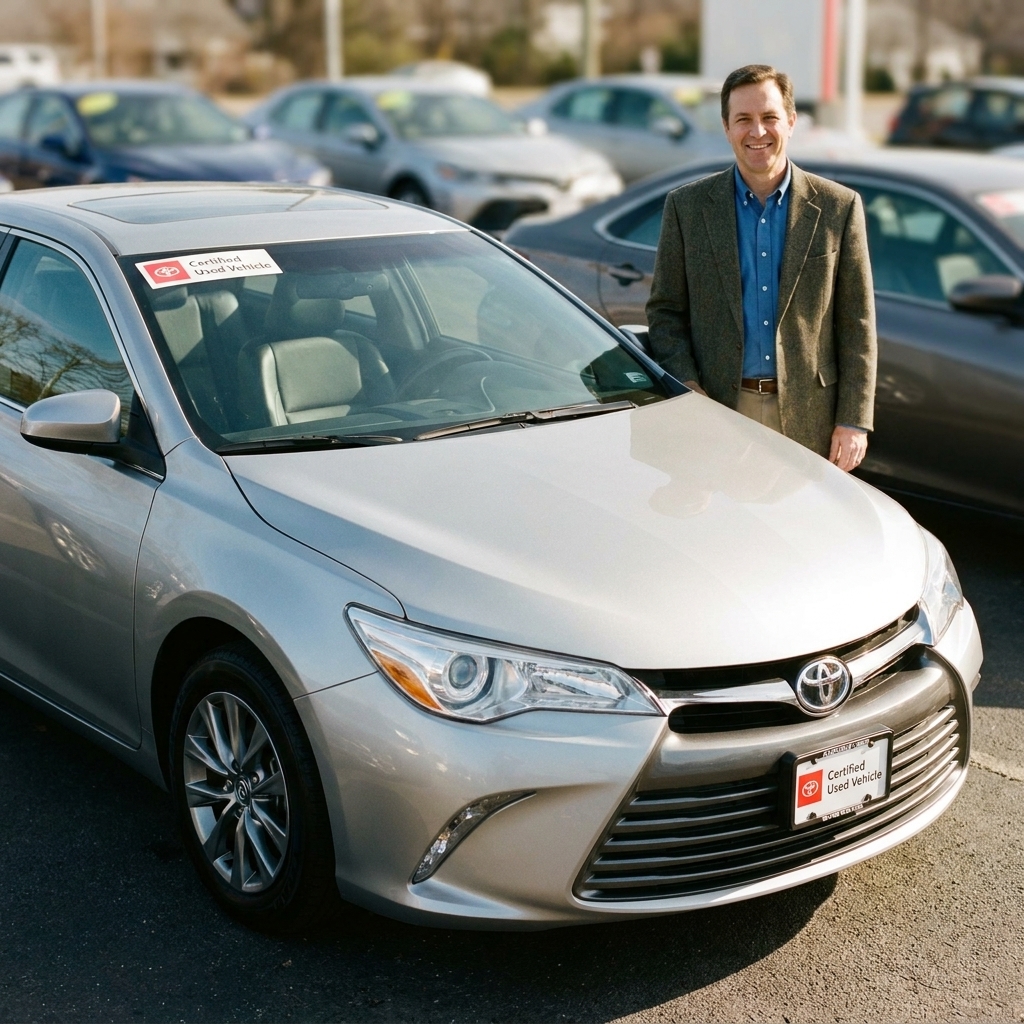
- Best overall reliability bet: Toyota Camry (especially 2012–2017 four-cylinder models in good condition)
- Best to drive while still very reliable: Honda Accord (2013–2017 is a sweet spot, but pick the powertrain on purpose)
- Best value only if you verify the details: Nissan Altima (can be a good commuter, but the CVT risk changes the math)
If your top priority is “I never want to think about my car,” the Camry is the safest play. If you want a more engaging drive and a cabin that often feels a class above, the Accord is hard to beat. The Altima can be a lot of car for the money, but only if you’re picky about year, maintenance history, and transmission behavior on the test drive.
What $15,000 buys
In many U.S. markets right now, under $15,000 you’re typically shopping roughly 2012–2017 model years, depending on mileage, location, trim, and accident history. This swings fast with the market, so treat it as a range, not a promise.
At this price point, condition beats badges. A well-maintained higher-mileage Camry or Accord can be a better buy than a lower-mile example with neglected fluids, cheap tires, and mystery warning lights.
A realistic target
- Mileage: 80,000 to 140,000 miles is common
- Ownership history: 1–2 owners with service records is ideal
- Must-haves: clean title, no current warning lights, no active leaks, good tires, smooth transmission operation
Budget reality check
If $15,000 is your out-the-door cap, remember taxes, registration, and dealer fees can eat a chunk of that. In that case, you may need to shop a little older, a little higher-mile, or a little lower trim on the same models.
Reliability scorecard
Here’s how I stack them up for a budget-conscious buyer who wants a safe, dependable daily commuter.
Toyota Camry
- Reliability reputation: excellent overall
- Common failures: usually smaller stuff (wear items, occasional oil seepage, suspension wear as mileage climbs)
- Don’t assume zero issues: any engine can burn oil if it’s been neglected. Verify oil level, look for smoke on startup, and check the underside for fresh oil.
- Big-picture: the Camry is the least likely of the three to surprise you with a four-figure repair if you buy a decent example and keep up with fluids
Honda Accord
- Reliability reputation: very strong, but there’s more variation by engine and transmission combo than with the Camry
- Common failures: starter/alternator age-out, suspension wear, occasional oil consumption depending on engine and maintenance, AC issues on some years
- Big-picture: an Accord that’s been maintained is an outstanding long-haul car, but I recommend being more powertrain-specific than you have to be with a Camry
Nissan Altima
- Reliability reputation: mixed primarily due to transmission risk
- Common failures: CVT problems (shudder, slipping, delayed engagement), plus the usual age-and-mileage items
- Big-picture: the Altima can be a good value, but the transmission is the “budget breaker” category item you must screen for
Best years and years to skip
I’m focusing on model years you’re most likely to see under $15,000, with the goal of minimizing expensive surprises.
Toyota Camry: best picks
- 2012–2017 Camry (especially 2.5L four-cylinder): a proven, low-drama commuter when maintained
- Hybrid note: Camry Hybrids can be great, but battery condition matters with age. If you’re not ready to evaluate hybrid health, stick to the non-hybrid four-cylinder.
Honda Accord: best picks
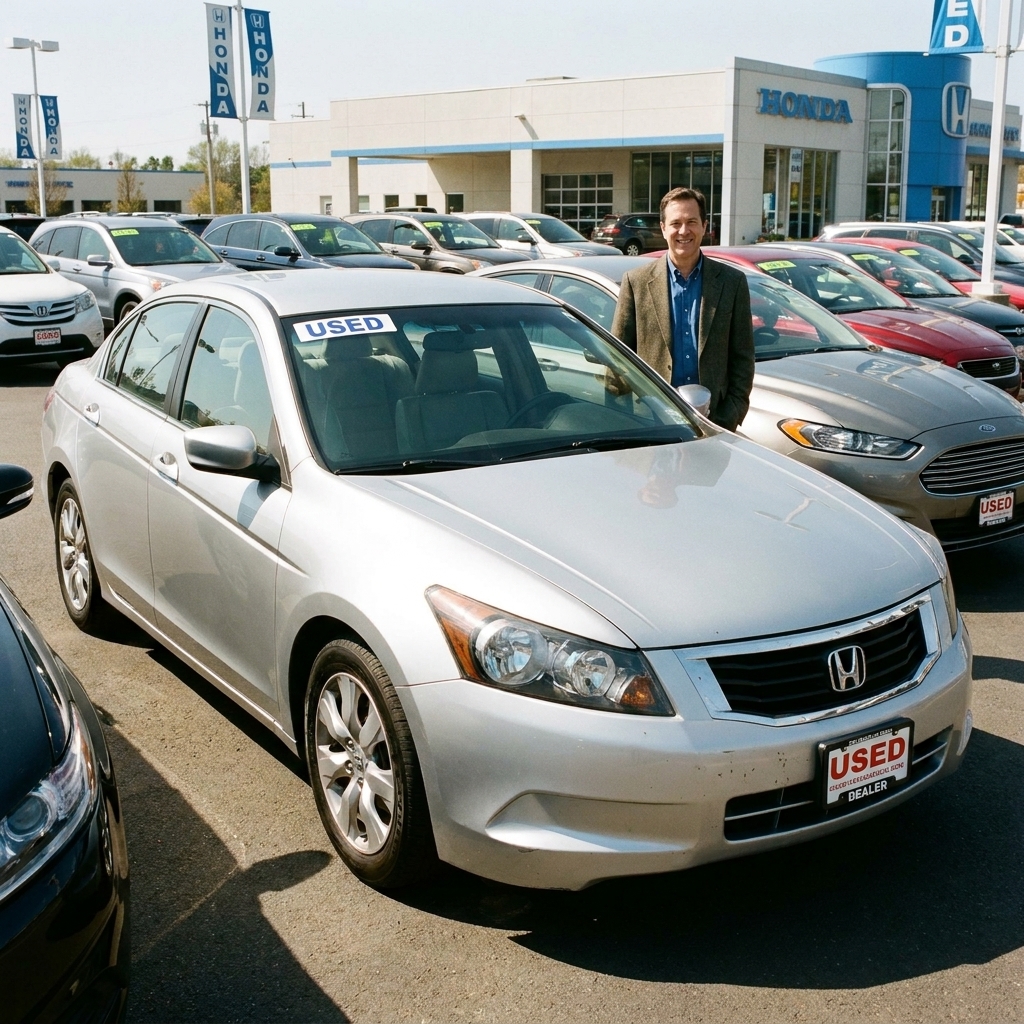
- 2013–2017 Accord: strong overall, modern safety available, typically drives better than the Camry
Accord powertrain cheat sheet
This is the part people gloss over and then act surprised later. Here’s the simple version.
- Most “set it and forget it” choice: a well-maintained four-cylinder Accord with a clean service history. If it’s a CVT car, it should drive buttery smooth with no RPM flare, shudder, or hesitation.
- If you’re looking at a V6: confirm timing belt service has been done on schedule (or budget to do it). A neglected timing belt service is a real risk, not a “maybe later.”
- Manual transmission: generally durable, but check for clutch slip, a high engagement point, or grinding into gears.
- Don’t guess: match the exact listing to the engine and transmission, then verify service. “It’s an Accord, it’ll be fine” is how good cars get turned into bad buys.
Nissan Altima: best picks (with conditions)
- 2013–2017 Altima: these can be affordable and efficient, but the CVT history is non-negotiable
- Record reality: some owners were told the CVT fluid is “lifetime,” so paperwork may not exist. If there are no records, treat that as a reason to be extra picky, not a reason to ignore the issue.
Altima CVT due diligence
- Test drive behavior: from a stop it should pull smoothly with no shudder; at steady speed RPM should be stable, not hunting
- Scan it: have a shop scan for transmission-related codes, even if there’s no check engine light
- Ask the right question: “Has the CVT ever been replaced or repaired?” A replacement with paperwork can actually be a plus
- Budget math: a CVT repair or replacement can run several thousand dollars depending on shop and parts. If the price difference versus a Camry or Accord is small, the risk is usually not worth it.
- If you buy one anyway: if it passes the drive and scan, I’d still budget for fresh CVT fluid service at baseline so you know where you stand
What I’m cautious about
Rather than blanket “avoid” statements, here’s the honest mechanic answer: avoid any year in any model that shows transmission shudder, overheating history, neglected fluids, mismatched tires, multiple recent owners, or a vague story. Those factors predict headaches better than the badge does.
Real-world costs
Fuel economy
Most four-cylinder versions of all three can land around the high 20s to upper 30s highway depending on year and configuration. In real life, the bigger difference is how the previous owner maintained the car. Underinflated tires, old spark plugs, and dirty filters can knock down mpg enough to matter over a year.
Insurance
Insurance varies wildly by zip code and driver profile, but here’s the pattern I see: Camry and Accord are often similar, while Altima can sometimes price differently because insurers factor in claim patterns. Before you fall in love, get quotes using the exact VINs you’re shopping.
Maintenance and repairs
- Camry: tends to be the most predictable for long-term ownership
- Accord: still very reasonable, but repair totals can swing more depending on trim, wheels, and drivetrain
- Altima: routine maintenance is fine, but a transmission issue can erase all the money you “saved” at purchase
What I inspect first
If you only remember one thing from this article, let it be this: under $15,000, your best negotiating tool is a clean inspection report. Here’s where I focus my attention on these three.
Camry inspection priorities
- Oil leaks and seepage: check the valve cover area and around the timing cover for wetness
- Suspension wear: listen for clunks over bumps, check for uneven tire wear
- Cooling system: look for crusty residue around the radiator and water pump area
Accord inspection priorities
- Transmission behavior: smooth shifts, no flare in RPM, no harsh engagement from Park to Drive
- Steering and suspension: tight feel, no wandering, no front-end knocks
- Electronics: confirm all windows, locks, and infotainment functions work. Small electrical issues become big annoyances fast.
- V6 timing belt proof: if it’s a V6, verify timing belt service history. If nobody can prove it, I price it like it needs it.
Altima inspection priorities
- CVT test drive: it should be smooth, predictable, and consistent. No shudder, no weird delays, no “it probably just needs a fluid change” vibes
- Service history: I want proof the owner cared, ideally including CVT fluid service
- Overheating clues: overheating and CVTs are a bad mix. Any coolant smell, bubbling reservoir, or heat-soak weirdness is a red flag.

Safety and driver assists
All three are generally safe choices structurally, but at $15,000 your bigger safety wins often come from tires, brakes, and basic driver-assist tech.
My safety priorities
- Good tires (name brand, even wear, plenty of tread). Tires are your only contact with the road.
- Healthy brakes (no pulsation, no pulling, no grinding).
- Stability control and ABS (common on these years, but verify the dash lights prove out correctly on startup).
- Backup camera if available, especially for new drivers or tight parking situations.
Two more practical checks I like on any used car: run the VIN for open recalls and make sure a pre-purchase inspection confirms there are no airbag or restraint system faults, especially if the car has any crash history.
If you’re choosing between a “fancier” trim with worn tires and a base trim with great tires and documented maintenance, I’ll take the boring one every time.
Trims and powertrains
Camry
If maximum reliability is the goal, I like the four-cylinder automatic combination for this price range. Keep it maintained, and it just tends to show up every morning and do the job.
Accord
The Accord gives you more variety. My practical advice: buy the simplest, best-maintained configuration you can verify. A clean service history beats a higher trim with unknown maintenance every day of the week.
Altima
This is where I’m the most “strict dad” about the purchase. If the CVT doesn’t feel right, don’t rationalize it. No amount of new floor mats will make a questionable transmission a smart buy.
How to negotiate
- Show up informed. Know the going prices in your area for similar miles and condition.
- Inspect first, talk money second. Be polite, take notes, and don’t get rushed.
- Use specific findings. “Front tires are down to 3/32"” is negotiation. “It feels overpriced” is not.
- Ask for documentation. Oil change intervals, major services, and any transmission service records.
- Be ready to walk. The best deals I’ve seen happened right after a buyer said, calmly, “I don’t think this is the one for me.”
Which should you buy?
Buy a Camry if…
- Reliability is priority #1
- You want the lowest surprise-repair odds
- You want a straightforward, comfortable commuter
Buy an Accord if…
- You want a more engaging drive without giving up practicality
- You’re willing to be selective about engine and transmission choice
- You value a roomy cabin and refined feel
Buy an Altima if…
- You’re getting a meaningfully better price than comparable Camry and Accord options
- The car drives perfectly and you can verify it’s been cared for
- You’re comfortable walking away from anything that hints at CVT issues
My bottom line
If you want the simplest, safest bet under $15,000, buy the best-condition Camry you can find, get a pre-purchase inspection, and keep up with fluids. If you want a sedan that feels a little nicer to live with every day, a well-maintained Accord is an excellent choice, just make the powertrain choice on purpose. If your budget is tight and you’re trying to maximize features per dollar, an Altima can work, but only if you treat transmission behavior and verification as deal-breakers, not “maybe it’s fine.”
If you’re unsure between two specific listings, my advice is always the same: pick the one with the cleanest history, best tires, best maintenance records, and best test drive. Brand reputation is real, but condition is what you actually drive home.
FAQ
How many miles is too many under $15,000?
There’s no magic number, but once you’re north of about 150,000 miles, condition and maintenance history become everything. I’d rather see 170,000 well-documented miles than 110,000 with no records and a suspiciously fresh detail job.
Is the Nissan Altima always unreliable?
No. Plenty of people have good experiences, especially when the car is maintained and driven reasonably. The issue is risk: the potential cost of a CVT problem is big enough that you need to screen carefully and be willing to walk.
Should I pay extra for lower miles?
Sometimes. Lower miles can mean less wear, but only if the car was maintained and not abused. A low-mile car that sat and rarely got fluids changed can still cause problems.
Is a pre-purchase inspection worth it?
Yes. Even a basic inspection can catch tires, brakes, leaks, accident repairs, and early transmission symptoms. In many areas, a pre-purchase inspection typically costs about $100 to $250, and it’s one of the few times you can spend a little to potentially save a lot.