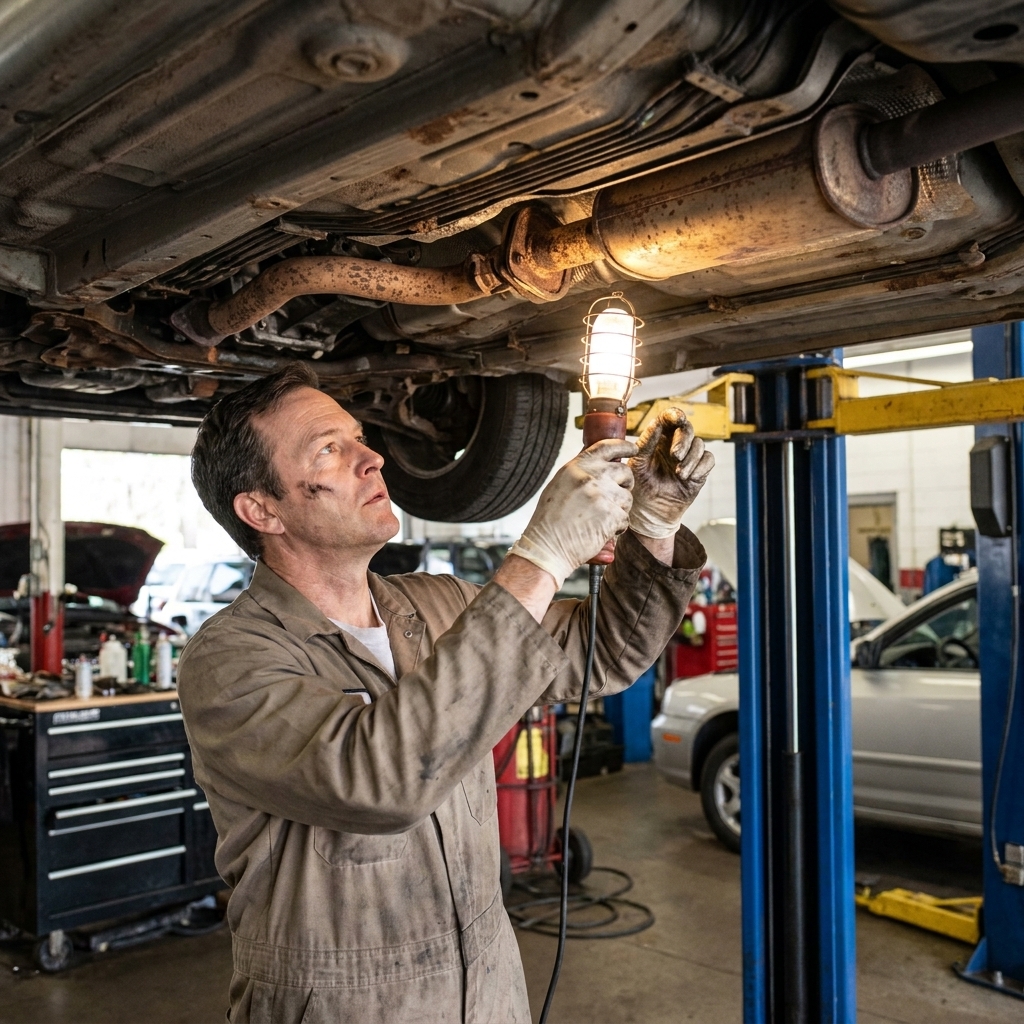
Don’t fall for a shiny detail job. Use this thorough test drive checklist to catch transmission issues, suspension clunks, brake vibrations, alignment prob...
Used Car Buying Guide
Used Mazda3 vs. Toyota Corolla: Sporty Feel or Bulletproof Reliability?
Shopping a used Mazda3 or Toyota Corolla? Here’s how they compare for driving feel, cabin quality, fuel economy, ownership costs, reliability, and what to inspect before you buy.

Ben Sullivan
Ben Sullivan is a former ASE-certified mechanic with over 15 years of experience inspecting, repairing, and appraising used vehicles. He contributes to Car Wise Guide to help everyday buyers navigate the used car market with confidence, armed with the knowledge to spot hidden red flags and negotiate fair prices.
Published October 18, 2026
Updated October 18, 2026
If you’re cross-shopping a used Mazda3 and a used Toyota Corolla, you’re looking at two of the smartest plays in the compact-car world. They’re usually easy to park, cheap to fuel, and not a pain to live with day to day.
But they scratch different itches. The Mazda3 is for the person who wants a car that feels like it was engineered by someone who enjoys driving, with steering and chassis tuning you can feel in the first couple of turns. The Corolla is for the person who wants to turn the key every morning for the next 10 years and not think about it.

Here’s how I’d break it down if we were walking the lot together, with the hood up and a budget in mind.
Quick take: which one should you buy?
Pick a used Mazda3 if you want:
- Better driving dynamics (steering feel, handling, brake feel)
- A more upscale cabin for the money
- A quieter, more “grown-up” ride in many trims and years, especially 2019 and newer
- Potentially stronger value used, since Corollas often command a premium in many markets (but it varies a lot by year, body style, and local pricing)
Pick a used Corolla if you want:
- Maximum long-term dependability with minimal fuss, especially if you are buying a clean, unmodified example with records
- Often cheaper, simpler ownership in day-to-day reality (parts, shop familiarity, fewer surprises), though condition and maintenance matter more than the badge
- Better odds of a clean history since many were lightly used commuter cars
- Easy resale and broad mechanic familiarity
If you’re the kind of buyer who will maintain the car on schedule, fix little problems early, and appreciate how a car feels at 40 mph on a back road, the Mazda3 can be the more satisfying pick. If you just need transportation that is hard to kill, the Corolla is the safer bet.
Driving dynamics: Mazda3 wins on feel
Let’s call it what it is. Most Corollas are competent, but not exciting. The Mazda3 is the compact car I routinely recommend to friends who want something reliable enough to be sensible, but still enjoyable to drive.
What you’ll notice on the test drive
- Steering: Mazda3 steering typically feels more direct and weighted. Corolla steering is usually lighter and more isolated.
- Chassis balance: The Mazda3 tends to feel planted through turns. Many Corollas prioritize easy commuting comfort over corner confidence.
- Road noise: The 2019 and newer Mazda3 in particular often feels more refined and quieter than you expect for the class. Corollas vary by year and trim, but they are rarely “premium-quiet.”
My advice: take each car on the same loop that includes a rough road and a highway on-ramp. In five minutes, you’ll understand why many enthusiasts rate the Mazda3 so highly.
Interior and features: Mazda3 feels pricier
Used buyers feel this one immediately. Sit in a Mazda3 and you’ll often get tighter panel fit, nicer materials in touch points, and a cockpit layout that feels intentionally designed.

Where the Corolla still shines
- Controls are usually simple and easy to learn
- Great visibility in many years
- Less to go wrong if you stick to lower trims with fewer gadgets
One practical note: infotainment and driver-assist features can vary wildly by year, trim, and option package on both cars. If Apple CarPlay or certain safety tech matters to you, confirm it on the exact VIN you’re considering, not “this model usually has it.”
Also, if the car has advanced driver assists that rely on cameras or radar, pay attention to signs of front-end or windshield replacement. Poor-quality repairs and missing calibrations can mean warning lights, odd behavior, or a bill at the dealer to make it right.
Reliability and costs: Corolla is the safe money
I’ve inspected a lot of used cars that were “reliable models” on paper but were neglected into money pits. Condition matters more than badges. That said, if we’re talking odds over tens of thousands of miles, the Corolla is still the conservative pick most of the time.
Why the Corolla earns its reputation
- Predictable maintenance patterns and generally forgiving engineering
- Excellent parts availability and broad shop familiarity
- Strong track record with high mileage when maintained
Mazda3 reliability reality check
Modern Mazda3 models are generally solid. The “Mazdas are unreliable” narrative is outdated for many years on the used market. Where owners get stung is usually not catastrophic engine failures. It’s more like: tires, brakes, suspension wear, or an ignored fluid leak that turns into a bigger problem.
If you maintain a Mazda3 like an adult, it can treat you very well. The Corolla just tends to tolerate neglect better on average, and in the used market, that matters. Still, any specific generation, engine, or transmission can shift the math, so buy the individual car in front of you.
Fuel economy: often close, sometimes Corolla edge
In real life, both can be impressively efficient, especially in stock form with properly inflated tires. Corollas often post slightly better numbers depending on year, drivetrain, and transmission choice, but the gap is usually not big enough to be the deciding factor.
My mechanic’s fuel economy advice
- Buy the car with the best service history before you chase a 1 to 3 mpg difference.
- On the test drive, watch for dragging brakes (burning smell, pulling, hot wheel) and misfires (shake under load). Both crush mpg and can be expensive to sort out.
Transmissions: automatic vs CVT vs manual
This matters more than most shoppers admit.
- Many newer Corollas use a CVT: They can be perfectly durable when serviced and driven normally, but the feel is different. Some people hate the way a CVT holds revs, and if you are sensitive to that, you need a longer test drive. Ask about fluid service history if mileage is up there.
- Mazda3 commonly uses a traditional automatic: It typically feels more “normal” in everyday driving. Manuals exist in some years and trims, and a clean, unmodified manual car can be a great buy if you actually want to drive it, not just talk about it.
Bottom line: do not pick the car in your head. Pick the one that behaves correctly on the road, with documentation to back it up.
Best years and trims: simple guidance
There are entire forums dedicated to best and worst years, but here’s a practical shortcut that works in the real used market: aim for the cleanest example in a strong generation, then verify the specifics for that exact year and powertrain.
Mazda3: where I’d start looking
- 2014 to 2018: Often a sweet spot for price, simplicity, and solid day-to-day reliability.
- 2019 and newer: Generally the more refined, quieter Mazda3 experience, often with a more upscale vibe.
- Trim tip: If you are budget-sensitive, smaller wheels usually mean cheaper tires and a less brittle ride.
Corolla: where I’d start looking
- 2014 to 2019: Typically straightforward used-car choices with lots of parts and shop familiarity.
- 2020 and newer: Often more modern safety tech and a more current interior, but confirm the exact feature package by VIN.
- Trim tip: Lower trims can be a hidden win if you want fewer expensive gadgets and lower replacement costs.
None of this overrides condition. A well-kept “less desirable” year can be a better buy than a beat “best year” with no records.
What typically goes wrong: red flags
No used model is immune to abuse, shortcuts, or bad repairs. Here are the issues I see most often during inspections that can turn a “good deal” into a monthly payment you did not plan for.
Mazda3: common inspection notes
- Tire wear from alignment issues: Look for inside-edge wear on the front tires. That can signal worn suspension parts or a curb strike.
- Suspension clunks: Over bumps at low speed, listen for knocking that points to end links, struts, or worn bushings.
- Paint and body history: Some Mazda3s get driven enthusiastically. Check for mismatched paint, overspray, and uneven panel gaps that suggest body work.
Corolla: common inspection notes
- Deferred maintenance: Because Corollas “always run,” owners sometimes stretch oil changes. Ask for records. Deposits under the oil cap can be a possible clue, but short-trip use can also make things look ugly even when the engine is fine, so do not treat it as a verdict.
- Old tires and brakes: Lots of Corollas are commuter cars that rack up miles. Budget for tires, brakes, and shocks if it feels floaty or noisy.
- Interior wear vs. mileage: A heavily worn driver seat and shiny steering wheel on “low miles” can be a clue that the story does not match the car.
On both cars, don’t ignore warning lights, mismatched tires, or a seller who cannot explain basic history. Those are universal red flags, not “Mazda things” or “Toyota things.”
How to choose year and trim
In the used market, the “best” year is often the one with the cleanest history and the fewest compromises. Here’s how I’d prioritize your search.
Step 1: Decide what you value more
- Lowest stress ownership: Corolla, ideally a simple trim with good maintenance records
- More enjoyment per mile: Mazda3, prioritize a clean, unmodified example
Step 2: Buy the best history, not the best story
- Look for service records and consistent maintenance intervals.
- Prefer 2-owner cars with stable history over “freshly detailed” mystery cars.
- Avoid cars with obvious performance mods unless you truly know what you’re buying.
Step 3: Do not pay for features you will not use
Leather, larger wheels, and premium audio can be nice. They also raise replacement costs. If you’re watching your budget, smaller wheels and simpler trims often mean cheaper tires and fewer electronics to troubleshoot down the road.
Pre-purchase checklist: 30 minutes
If you only do a few things before you buy, do these. They apply to both Mazda3 and Corolla, and they catch the expensive stuff.
- Cold start: Listen for rattles, rough idle, and ticking that does not settle down.
- Transmission behavior: Smooth engagement from Park to Drive and clean shifts under light and moderate throttle. On CVT cars, you want smooth, consistent acceleration without shuddering or flare.
- Brake feel: No pulsation, no pull, no grinding. A soft pedal can mean air in the system or fluid neglect.
- Steering and suspension: No clunks over bumps, no vibration at highway speed, no wandering.
- Fluids: Oil level and condition, coolant level, signs of leaks around the engine and under the car.
- OBD scan: Even if the dash is clear, check for pending codes and readiness monitors.

If you can swing it, pay an independent shop for a true pre-purchase inspection. It is usually the cheapest insurance you’ll ever buy.
Pricing and negotiation
Corollas often carry a “Toyota tax” on the used lot. Sometimes it’s worth it. Sometimes you’re paying extra for reputation while skipping the inspection that actually protects you.
Negotiation tips for a Corolla
- Use maintenance as your lever: If tires are aged, brakes are thin, or shocks are tired, that’s money off.
- Do not overpay for miles alone: A low-mile Corolla with no records is not automatically better than a higher-mile Corolla with meticulous service.
- Price-shop by year and body style: Sedan vs hatch, hybrid vs non-hybrid, and local demand can swing Corolla pricing more than people expect.
Negotiation tips for a Mazda3
- Point out wheel and tire costs: Sport trims with larger wheels can mean pricier tires. If the set is mismatched or worn, negotiate.
- Check accident repair quality: Any sign of mediocre body work is a valid reason to walk or demand a serious discount.
- Watch for modifications: Intakes, lowered suspension, loud exhaust, tinted lights. Even if you like the look, mods can mean hard use and harder diagnosis later.
The bottom line
If you want the most rational appliance on four wheels, it’s hard to beat a well-maintained Corolla. It’s the car I recommend to buyers who want the fewest surprises and the easiest ownership path.
If you want a compact car that feels a little special every time you merge, take a corner, or just sit in the driver’s seat, a clean Mazda3 is one of the best used-car values out there in many markets. You’re not “being irresponsible” by picking the fun one. You’re being intentional.
Either way, buy the individual car, not the nameplate. Get it inspected, check the history, and do not let a shiny detail job talk you into a bad decision.
FAQ
Is the Mazda3 reliable enough to keep past 150,000 miles?
In many cases, yes, if maintenance is consistent and issues are fixed early. The bigger risk is buying one that was driven hard and maintained lightly. Service history matters more than the badge.
Does the Corolla feel slow or boring?
Some trims and years can feel that way, especially compared to the Mazda3. If you do a lot of highway merging or carry passengers often, prioritize a strong test drive and make sure it feels comfortable at speed.
Which is cheaper to repair?
On average, the Corolla tends to be a little cheaper and simpler to keep on the road, largely due to parts availability and how common it is. But a well-cared-for Mazda3 can still be very budget-friendly, and a neglected Corolla can still become a problem.
What’s the single biggest used-car red flag on either model?
No proof of maintenance, especially oil changes, plus a seller who brushes off warning lights or cannot explain recent repairs. That combination is where “reliable cars” turn into expensive lessons.