Learn how to find the right shop, schedule a pre-purchase inspection, what a PPI can cost, and how it can save you money on a used car.
Used Car Buying Guide
How to Get a Pre-Purchase Inspection (PPI) on a Used Car
A pre-purchase inspection can save you thousands. Here’s how to schedule a PPI, what your mechanic should check, and how to use the report to negotiate the right price.

Ben Sullivan
Ben Sullivan is a former ASE-certified mechanic with over 15 years of experience inspecting, repairing, and appraising used vehicles. He contributes to Car Wise Guide to help everyday buyers navigate the used car market with confidence, armed with the knowledge to spot hidden red flags and negotiate fair prices.
Published October 18, 2026
Updated October 18, 2026
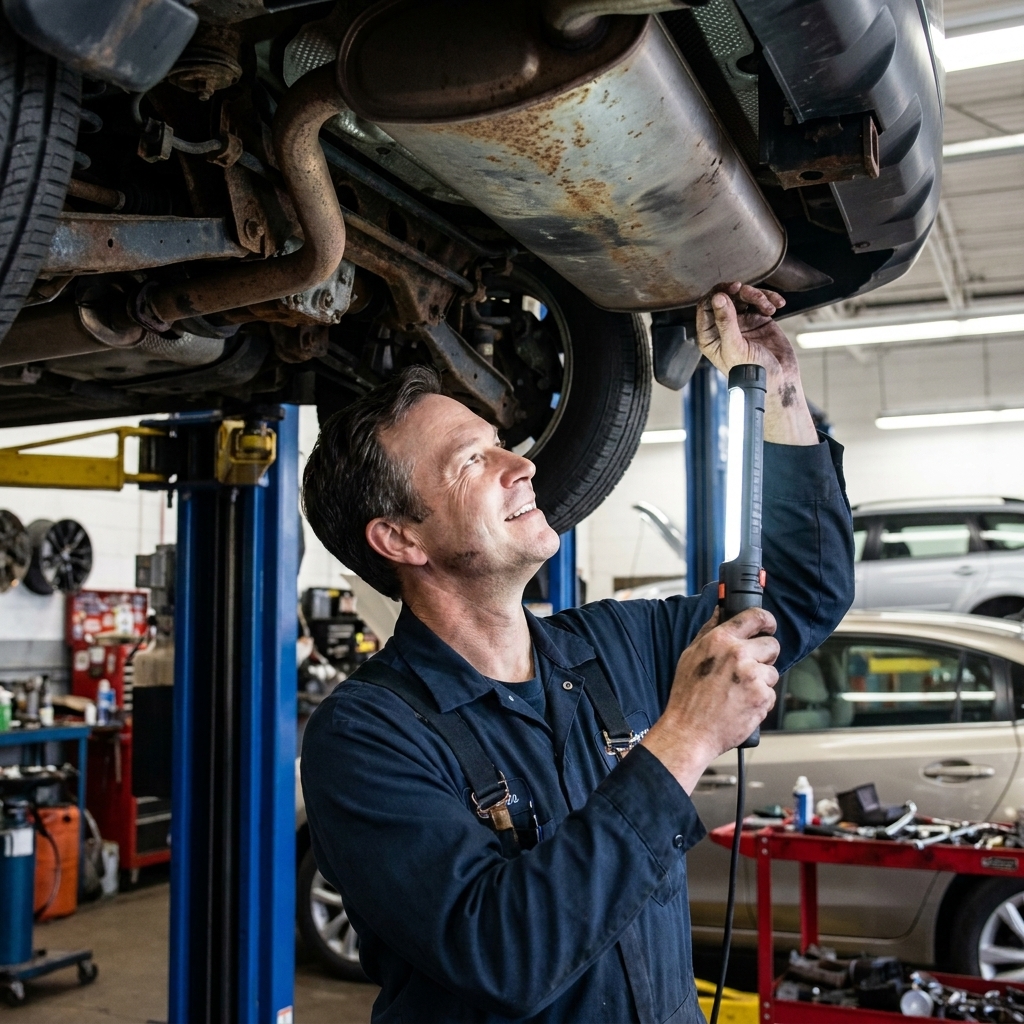
If you take only one smart step before buying a used car, make it a pre-purchase inspection, or PPI. I’ve been the guy on the lift delivering the bad news after someone already bought the car. A PPI flips that script. It turns an emotional purchase into a fact-based decision, and it usually costs less than one monthly payment.
This guide walks you through how to set up a PPI, what a thorough inspection should include, what to do if the seller pushes back, and how to use the findings to negotiate with confidence.
What a PPI is (and is not)
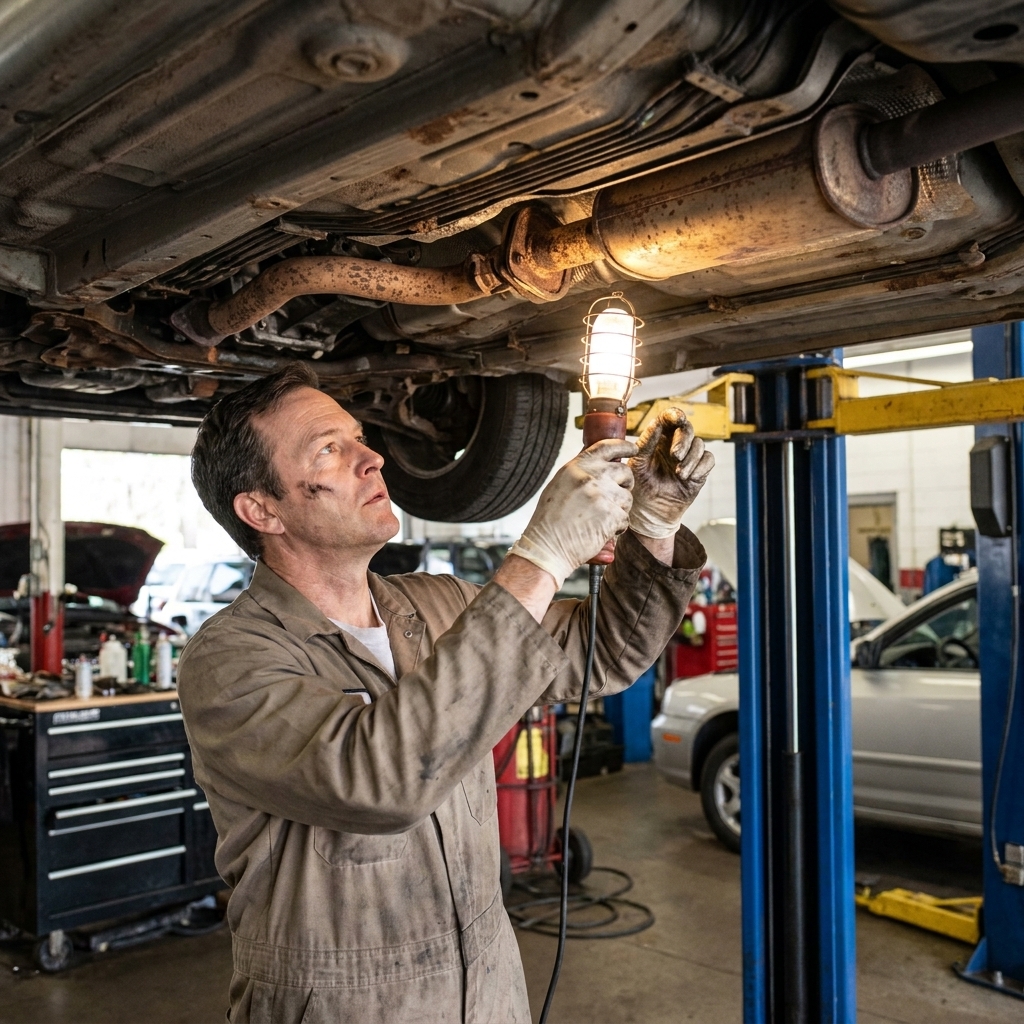
A pre-purchase inspection is an independent evaluation of a vehicle’s mechanical condition, safety items, and overall health before you buy it. The goal is to identify:
- Safety issues (brakes, tires, steering, suspension)
- Expensive repairs hiding in plain sight (oil leaks, cooling system problems, transmission issues)
- Evidence of prior collisions or poor-quality repairs
- Signs of neglect (overdue maintenance, cheap tires, warning lights ignored)
A PPI is not a guarantee the car will never break. It’s a professional snapshot of the car’s condition today, plus an educated forecast of what’s likely coming soon based on wear, leaks, noises, scan data, and maintenance history.
When you should get a PPI
In my book, the answer is: almost always. But it’s especially important when:
- The car is out of warranty, or close to it
- You’re buying from a private seller
- The vehicle has higher miles than average
- You see aftermarket modifications (lift kits, tunes, non-OEM wheels, lowered suspension)
- It’s a model known for costly failures (transmissions, timing chains, head gaskets)
- You’re buying sight-unseen or from out of town
If a car is cheap enough that you think “even if it needs a little work, it’s fine,” that’s also a strong reason to get a PPI. Cheap cars can become very expensive cars quickly.
How to schedule a PPI
Step 1: Get the seller on board early
Bring up the PPI before you spend time negotiating. A reasonable seller hears “independent inspection” and thinks “serious buyer.” An unreasonable seller hears it and starts making excuses.
Here’s a simple script that works:
“I’m ready to move forward if the car checks out. I’d like to schedule a pre-purchase inspection at a local shop. I’ll pay for it, and we can coordinate a time that works for you.”
Step 2: Choose the right shop
Pick a shop that inspects cars all the time, not just a quick oil change place. Ideal options:
- A trusted independent repair shop with strong reviews
- A brand specialist (Toyota specialist, European shop, etc.) for higher-end or complex vehicles
- A dealership service department if the model is particularly complex or you want brand-specific expertise
What I like for most buyers is a reputable independent shop. They tend to be straight with you, and they’re not trying to sell you a new car.
Step 3: Ask for a PPI appointment
When you call, be specific. Ask:
- Do you offer pre-purchase inspections?
- How long does it take (and do you need it as a drop-off)?
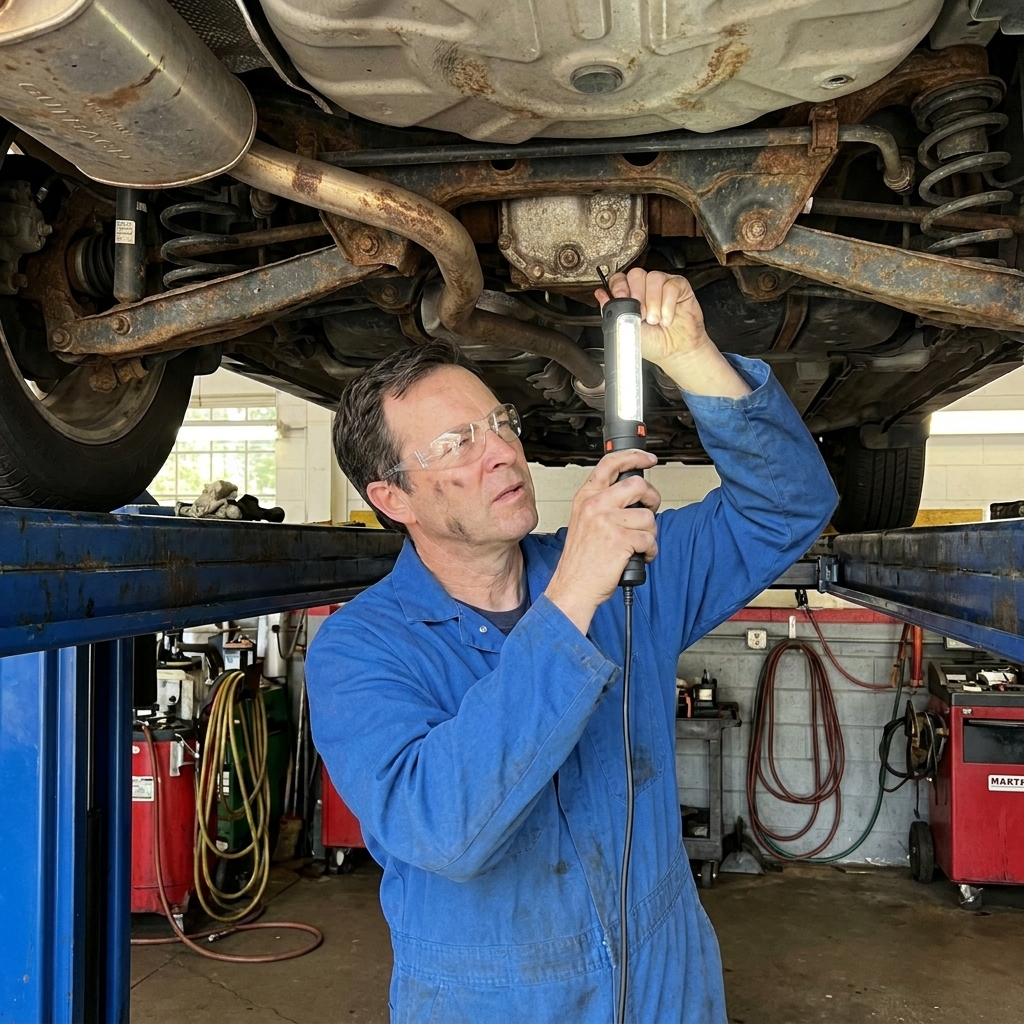
- Is it on a lift?
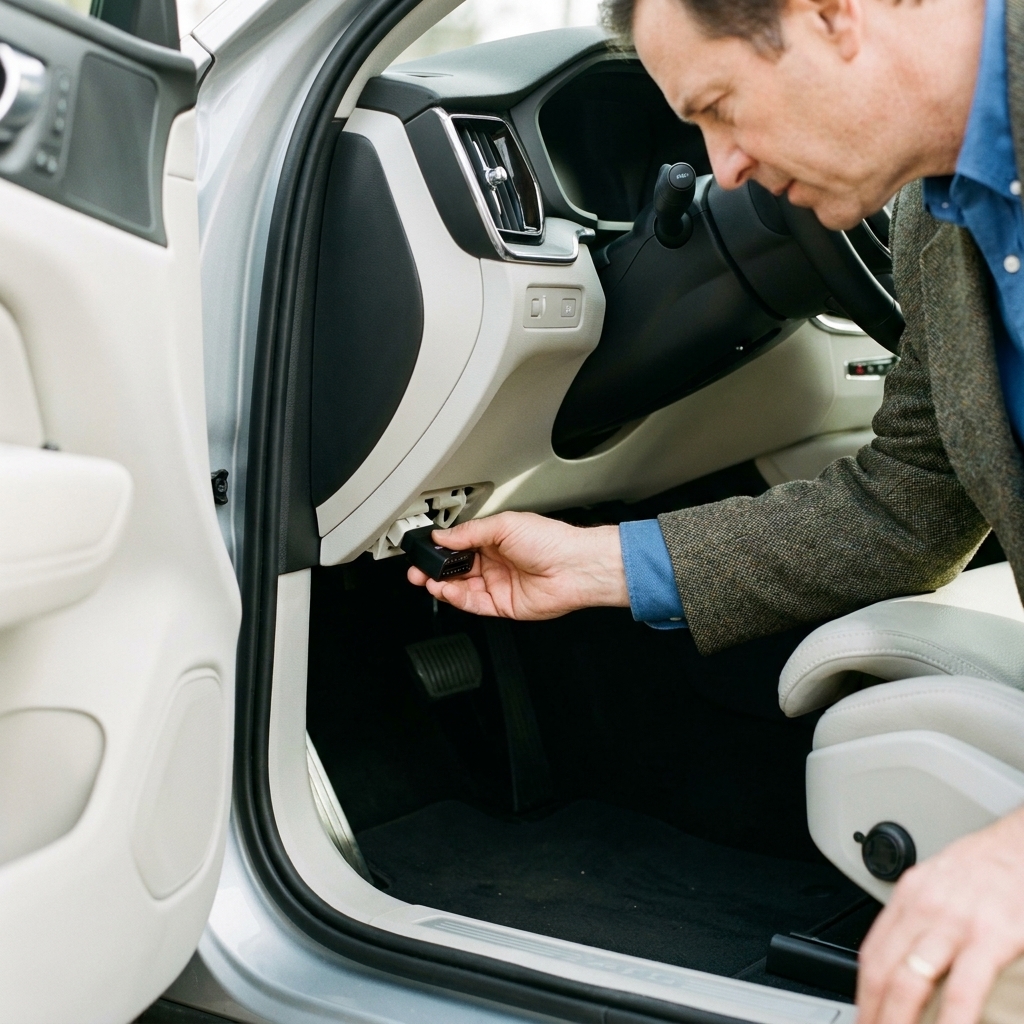
- Do you do a full-system scan, or just a basic OBD-II scan?
- Do you provide a written report with photos?
A real PPI takes time. If a shop says they can do a full inspection in 10 minutes, that’s not an inspection. That’s a glance.
Module scan note: “Full-system” or “all-module” scans can require brand-level scan tools and may cost extra. It’s still a great question to ask, especially on newer cars loaded with electronics.
Step 4: Coordinate logistics with the seller
Common approaches:
- Seller drops it off at the shop you booked.
- You meet the seller at the shop and they leave it for the inspection.
- Dealer car: some dealers will let you take the car to a nearby shop for a PPI with a copy of your license and proof of insurance.
Plan on roughly 1 to 2 hours of shop time for many PPIs, but don’t be surprised if the shop wants it for a half-day drop-off based on their schedule.
Step 5: Pay for it yourself
You want the shop working for you, not the seller. You pay, you own the report, you decide what happens next.
What a thorough PPI should include
If you’re paying for a PPI, you deserve more than “seems okay.” Below is what I’d expect a competent shop to inspect. Not every PPI will include every line item, but this is a strong standard to aim for.
1) Diagnostics and warning lights
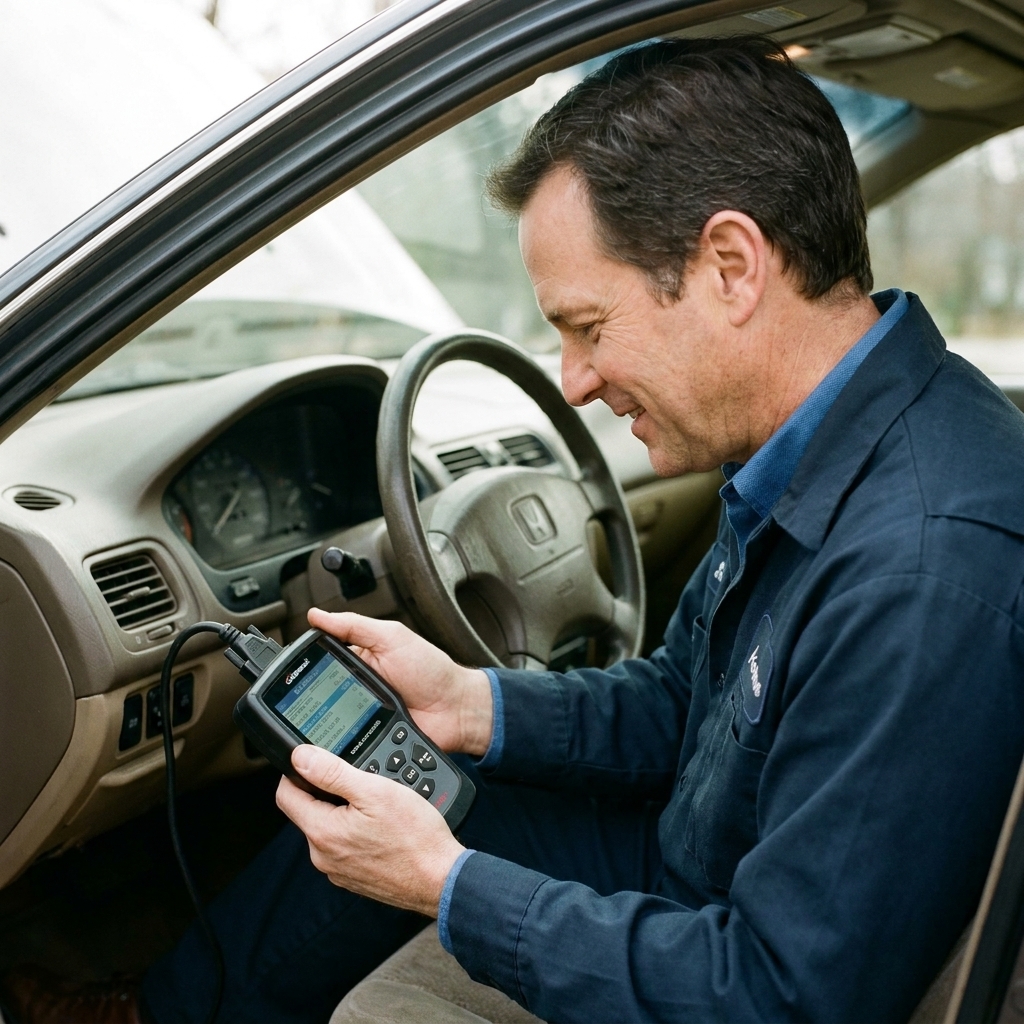
- Scan for diagnostic trouble codes (stored, pending, and permanent)
- Check readiness monitors (useful for detecting recently cleared codes)
- Confirm that, on most vehicles, the check-engine light, ABS light, and airbag light illuminate at key-on and then turn off as expected
- Look for signs of electrical “tape fixes” under the dash
Why it matters: A seller can clear codes in minutes with a scan tool, or by disconnecting the battery. Readiness monitors and scan data are how you catch that game.
2) Engine condition
- Cold start behavior (rattles, ticking, smoke, rough idle)
- Oil level and oil condition
- Oil leaks and seepage (valve covers, timing cover, oil pan, rear main area)
- Accessory drive belt condition
- Engine mounts (excess movement, torn mounts)
- Air intake condition and signs of poor filtration
Tip: If possible, ask the shop to start the car cold. A warm engine can hide hard-start issues, timing chain noise, and smoke on startup.
3) Cooling system
- Coolant level and condition
- Radiator and hoses (cracks, swelling, seepage)
- Water pump area for leaks
- Fans operating correctly
- Temperature stability during the test drive
Why it matters: Overheating is one of the fastest ways to turn a decent used car into an engine replacement.
4) Transmission and drivetrain
- Fluid leaks (transmission pan, axle seals, transfer case, differential)
- Shift quality on the road (flare, harsh shifts, slipping, delayed engagement)
- CV axle boots and joints (tears, grease sling, clicking on turns)
- Driveshaft and U-joints (play, clunks)
- 4WD/AWD operation if equipped
5) Brakes
- Pad thickness and rotor condition
- Caliper and hose condition
- Brake fluid condition
- Brake feel and stopping straight on the test drive
- Parking brake operation
6) Steering and suspension
- Ball joints and control arm bushings
- Tie rod ends and steering rack condition
- Struts and shocks (leaks, bounce test clues)
- Wheel bearings (noise, play)
- Alignment clues from tire wear
7) Tires and wheels
- Tread depth and even wear across the tire
- Tire age (older tires can look fine and still be unsafe)
- Cracks, bubbles, patches, or plugs
- Wheel damage and bent rims
8) Underbody, rust, and structure
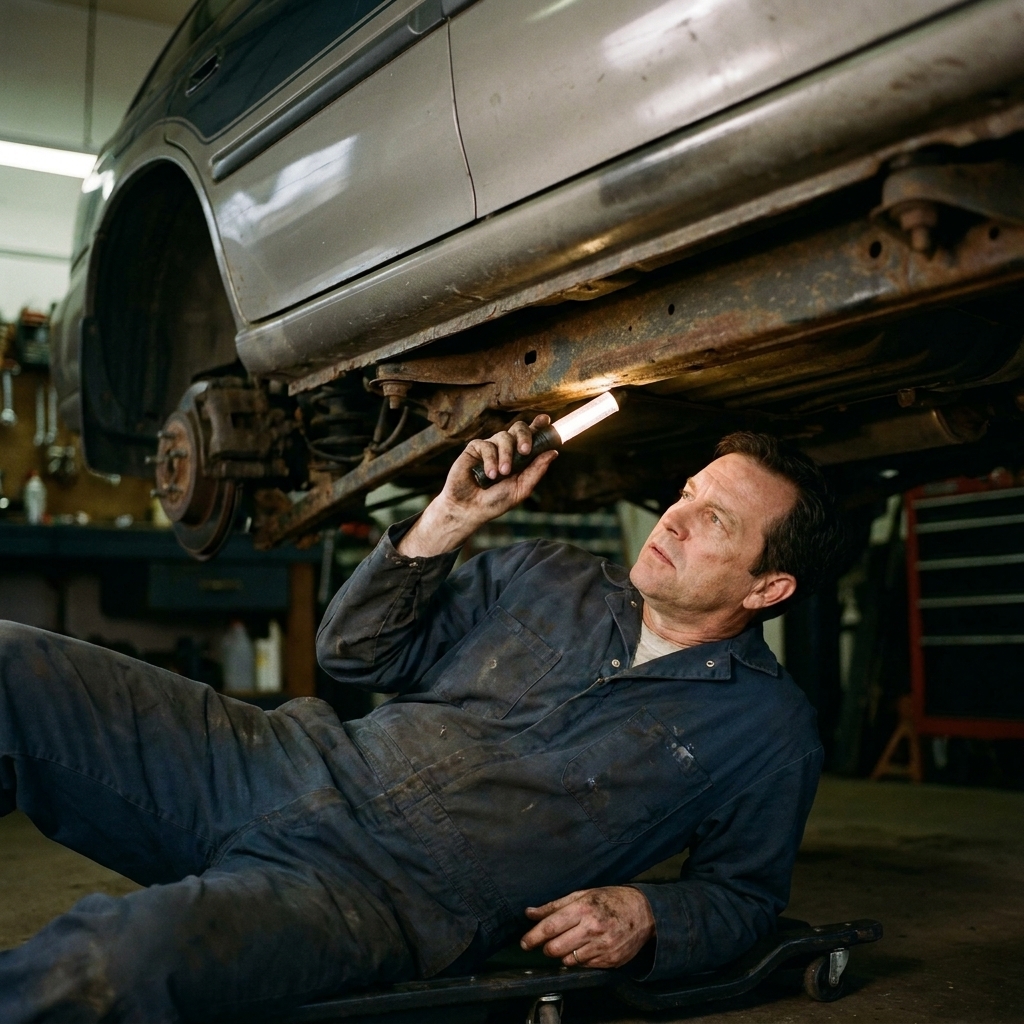
- Frame and subframe condition
- Rust severity (surface rust versus scaling versus structural)
- Evidence of impact damage or improper jacking
- Exhaust condition (leaks, rusted flanges, catalytic converter tampering)
- Fluid leaks from engine, transmission, power steering, and differentials
Rust note: In rust belt states, rust is normal. What you’re trying to avoid is structural rust, heavy scaling on critical suspension mounting points, and brake or fuel lines that look ready to burst.
9) Body and paint
- Panel gaps that don’t match side-to-side
- Overspray on trim, weatherstrips, or wheel liners
- Mismatched paint texture or color
- Headlights or taillights with mismatched dates or brands
- Signs of water intrusion in trunk or spare tire well
A good shop will also notice if the car has been repaired poorly. A “repaired” car can still be a fine car, but bad repairs can lead to alignment problems, leaks, wind noise, and weird tire wear that never goes away.
10) Interior, electronics, and safety systems
- HVAC performance (cold A/C, steady heat, blower speeds)
- Power windows, locks, mirrors, and seats
- Infotainment basics, backup camera, and key fobs
- Airbag system check for codes and warning light behavior
- Seat belt function and retraction
Why it matters: Electrical issues can be time-consuming to diagnose, and airbag problems are not something you want to “deal with later.”
11) Road test
- Starts, idle quality, acceleration, and unusual noises
- Steering wander, vibration, or pulling
- Brake pulsation or shimmy
- Transmission shift behavior under light and moderate throttle
- Clunks over bumps and during low-speed turns
What a PPI costs
Pricing varies a lot by region, shop, and vehicle. A basic PPI is often in the $150 to $400 range, and it can be more for luxury brands, complex vehicles, or very in-depth inspections. Things that can increase cost:
- European luxury models (more time, more specialized scan tools)
- Diesels or heavy-duty trucks
- Compression or leak-down testing (when engine condition is questionable)
- Advanced diagnostics for specific concerns (misfires, intermittent faults)
- Full-system scans that require brand-level tools
If you’re looking at a $15,000 car and the inspection is $250, that’s cheap insurance. If you’re looking at a $4,000 beater, a PPI can still make sense, but you may want to ask for a smaller scope inspection focused on safety, major leaks, and obvious drivetrain issues.
Pick the right inspection level
Basic PPI
Good for: cheaper cars, quick decisions, and narrowing down options. It should still include a road test, lift inspection, and a basic code scan.
Comprehensive PPI
Good for: most buyers. Expect a written report, deeper underbody review, and more time spent checking for leaks, wear items, and accident clues.
Targeted add-ons
Worth considering when the car has specific risk factors:
- Compression or leak-down test if you see smoke, misfires, or suspicious oil consumption
- Hybrid battery evaluation for hybrids
- EV battery health report for EVs, when available
- Pre-emissions test checks in states with strict inspections
PPI plus paperwork
A PPI tells you a lot, but it doesn’t replace paperwork checks. Before you buy, make sure you also verify:
- Title status: clean, salvage, rebuilt, or branded titles should be disclosed and priced accordingly
- Liens: if there’s a lien, make sure there is a clear plan to pay it off and transfer the title properly
- VIN matches: dash, door jamb, and paperwork should all agree
- Service records: receipts beat promises
- History reports: Carfax or AutoCheck can help, but don’t treat them like a truth machine
Red flags if a seller refuses a PPI
I’ll keep this simple. If a seller won’t allow an independent inspection at a reputable shop, assume they’re hiding something.
Common excuses you might hear:
- “I already had my buddy look at it.”
- “No time, someone else is coming with cash.”
- “It’s priced to sell as-is.”
- “You can inspect it here, but it can’t leave.”
Sometimes there’s a middle ground. For example, a private seller might be okay with a mobile mechanic doing the inspection at their house. But if the answer is a hard no, walk.
Using the PPI to negotiate
A PPI isn’t just about deciding yes or no. It’s also a powerful negotiating tool, if you use it the right way.
Step 1: Sort findings into three buckets
- Deal-breakers: structural rust, airbag faults, overheating, major drivetrain problems, flood indicators, salvage branding you weren’t told about.
- Safety-now items: bald tires, worn brakes, cracked suspension components, leaking brake lines.
- Maintenance-soon items: seepage, worn shocks, aging tires, due fluids, due spark plugs, small oil leaks.
Step 2: Get estimates when possible
Numbers matter. “It needs brakes” is vague. “Front pads and rotors measure 2 mm, estimate $480” is something you can negotiate with.
Step 3: Negotiate calmly and specifically
My favorite approach is calm and specific:
- Share the key findings (no need to dump the entire report like a threat).
- Explain what you’re comfortable taking on.
- Ask for a price adjustment based on real repair costs.
Example:
“The inspection came back mostly solid. It does need front brakes and the tires are from 2017. The shop estimate to make it safe is $1,050. If you can come down by $1,000, I’m ready to buy it today.”
Step 4: Repairs or discount?
In most cases, I prefer a discount over the seller doing the work. Sellers tend to choose the cheapest parts and the fastest labor. If the issue is safety-critical and the seller insists on fixing it, ask for the repair invoice and exactly what parts were installed.
If the PPI finds problems
If the problems are minor
Negotiate a fair adjustment and move forward. Most used cars need something.
If the problems are expensive but not dangerous
This is where the math matters. A $2,000 repair on a $10,000 car is a big deal. If the seller won’t budge, it can still be a fine purchase if the price reflects reality. If not, walk and keep shopping.
If the problems are safety-related or structural
Walk away. There will always be another car. There is only one you and your family riding in it.
Deposits and holds
If you need the seller to hold the car for a day or two so you can get an inspection scheduled, be careful with deposits. If you put money down, keep it simple:
- Get the terms in writing (even a text thread is better than nothing).
- Make the deposit refundable if the car fails the PPI.
- Agree on a short timeline so nobody feels strung along.
If a seller demands a non-refundable deposit before you can inspect the car, that’s usually a sign to slow down.
PPI limits to remember
A PPI is a deep look, not a teardown. Depending on the shop and the vehicle, it may not include things like oil analysis, a borescope inspection inside the cylinders, or any disassembly. And intermittent issues do not always show up on a short road test. That’s normal. The goal is to reduce risk, not pretend risk disappears.
PPI tips that save money
- Ask the shop to check for signs of recent code clearing. Readiness monitors are your friend.
- Look at tires closely. Cheap mismatched tires can hint at an owner who cuts corners everywhere.
- Don’t ignore small leaks. A “small” oil leak can become a timing cover job, and that can get pricey fast.
- Pay attention to maintenance history. A clean, well-documented car with a few wear items is often a better buy than a “perfect” car with no records.
- Make sure the VIN matches. Door jamb, dash VIN plate, and paperwork should all agree.
Quick FAQ
Can I get a PPI on a dealership car?
Often, yes. Some dealers allow you to take it to a nearby shop. Others will only allow an on-site inspection. If they refuse any independent inspection, that’s information you can use when deciding whether to keep talking.
Should I get a PPI on a certified pre-owned (CPO) car?
It’s still smart, especially if the car has a complicated history, high miles, or you just want a second set of eyes. CPO inspections vary, and I’ve seen plenty of “certified” cars with tires or brakes right at the limit.
Is a mobile PPI worth it?
It can be. Mobile inspectors are great for convenience and basic condition checks. The limitation is lift access. If rust, leaks, or underbody damage are concerns, a shop-based inspection on a lift is usually the gold standard.
How long does a PPI take?
Many inspections take 1 to 2 hours of shop time. In real life, you may need to drop the car off for half a day depending on the shop’s schedule.
What if the seller says it’s sold as-is?
As-is means you own the problems after purchase. It does not mean you can’t inspect it beforehand. If they won’t allow a PPI, I’d move on.
Bottom line
A PPI is one of the only parts of the used car buying process that’s designed purely to protect you. It gives you leverage, clarity, and often a very affordable exit ramp before you buy the wrong car.
If you want the simplest rule I can offer from more than 15 years of inspecting used cars: trust the report, not the sales pitch.