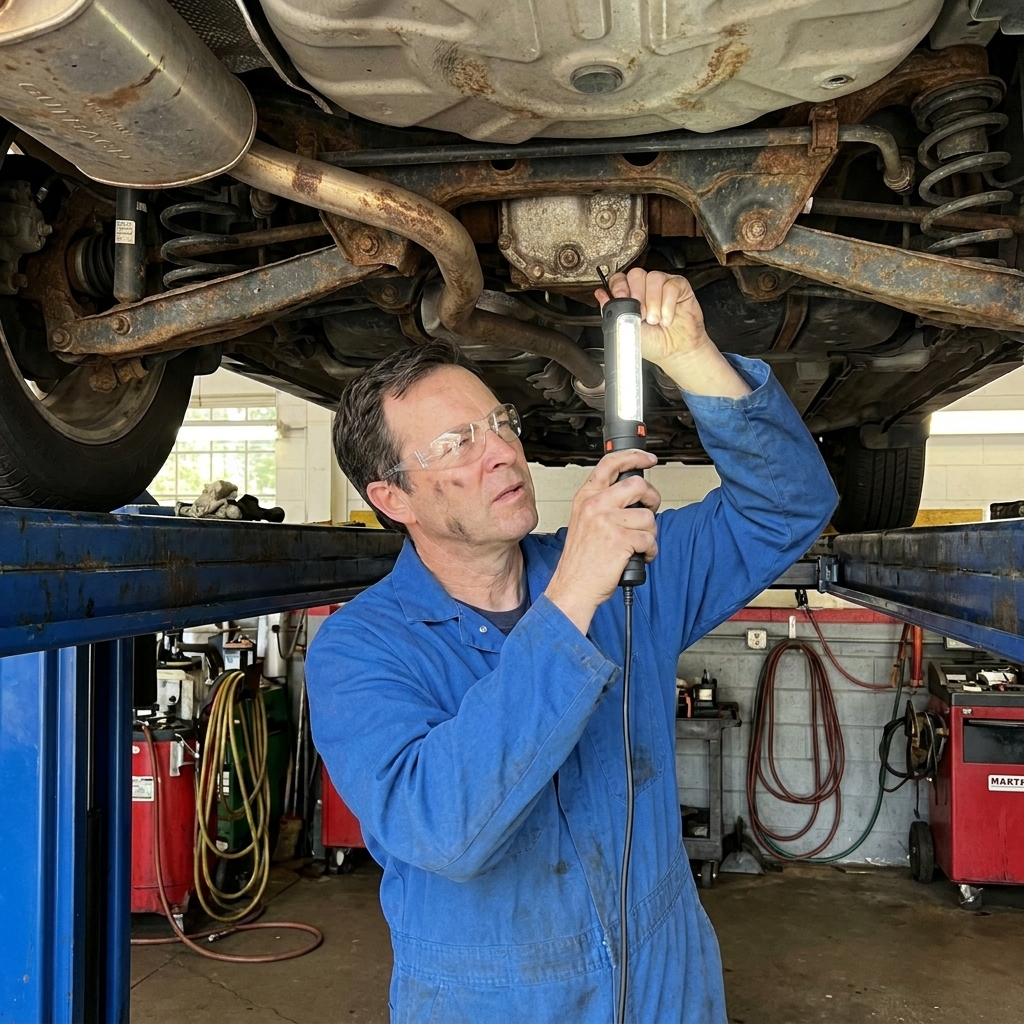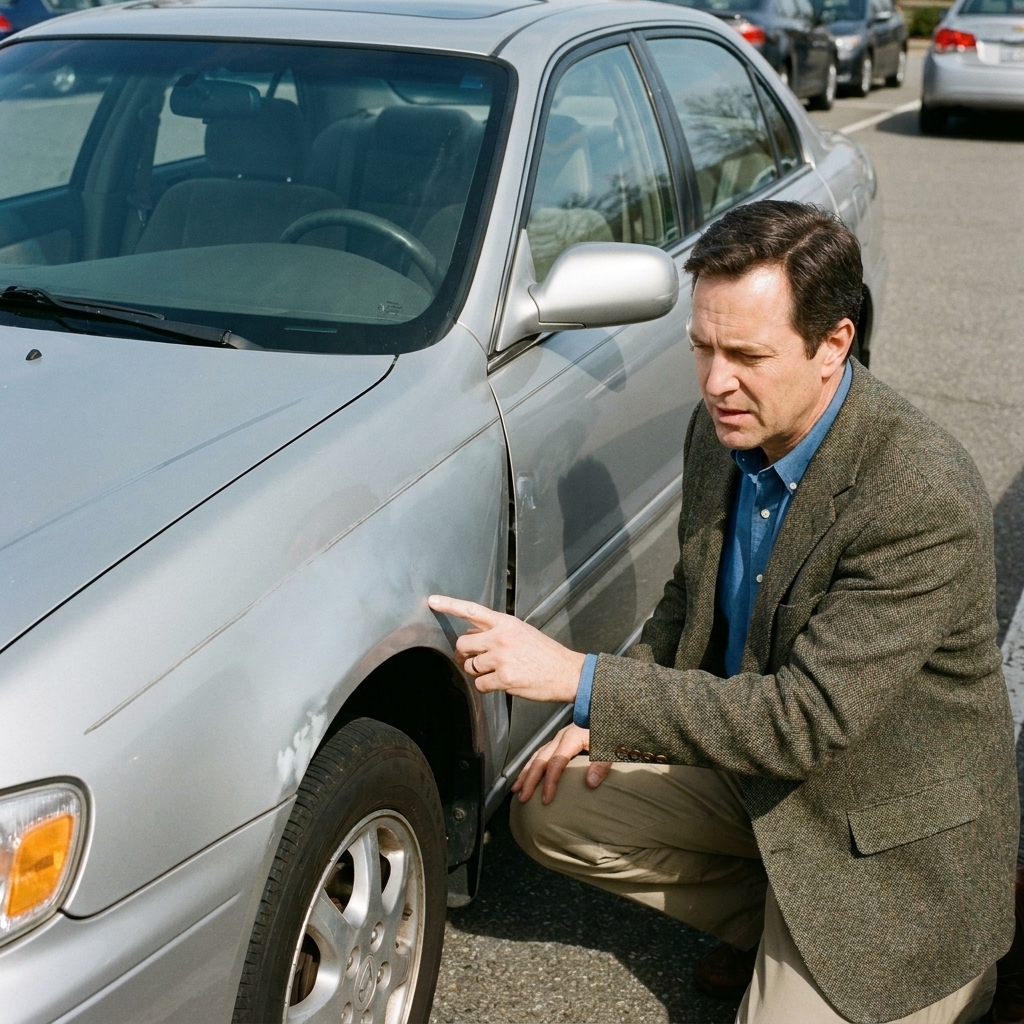
A mechanic’s straight-shooting breakdown of DIY checks vs. a professional pre-purchase inspection, including costs, limits, and when to walk away.
Used Car Buying Guide
How to Read a Used Car Maintenance History Report
Learn how to read and verify a Carfax or AutoCheck report, spot missing maintenance, and catch red flags that predict expensive repairs before you buy.

Ben Sullivan
Ben Sullivan is a former ASE-certified mechanic with over 15 years of experience inspecting, repairing, and appraising used vehicles. He contributes to Car Wise Guide to help everyday buyers navigate the used car market with confidence, armed with the knowledge to spot hidden red flags and negotiate fair prices.
Published October 18, 2026
Updated October 18, 2026
I have watched a lot of good people get burned by the same sales pitch: “It’s clean, one owner, and it’s been maintained.” Then the Carfax shows a handful of oil changes, a couple tire rotations, and huge stretches of nothing. The truth is, a maintenance history report can be incredibly helpful, but only if you know what it can prove, what it cannot, and how to verify the story.
This guide will teach you how to read a Carfax or AutoCheck report like a pre-purchase inspection tech. The goal is simple: buy the car that was actually cared for, not the one that just looks cared for.

What the report is and is not
Carfax and AutoCheck are data aggregators. They collect records from DMVs, inspection stations, dealerships, fleets, auctions, insurance companies, and some independent shops. When those sources report service or events, you see them as a timeline.
What it’s good at
- Big life events: title changes, registration history, mileage snapshots, emissions tests, some accident and insurance claims.
- Patterns: whether mileage climbs steadily, whether the car bounces around at auctions, whether it lived in rust or flood regions.
- Some maintenance breadcrumbs: dealer-performed services, quick-lube oil changes, tire store visits.
Where it falls short
- Missing records: a lot of independent shops do not report. DIY maintenance does not report. A “blank” stretch does not automatically mean neglect.
- Not a mechanical inspection: it cannot tell you if the transmission slips or if the engine is burning oil.
- Reporting delays and errors: dates can be off, mileage can be entered wrong, and sometimes a minor bump gets recorded in a way that sounds more serious than it was.
Use the report to build questions and verify claims, not as your only decision-maker.
Start with VIN and identity
Before you read the timeline, make sure the report actually belongs to the car in front of you.
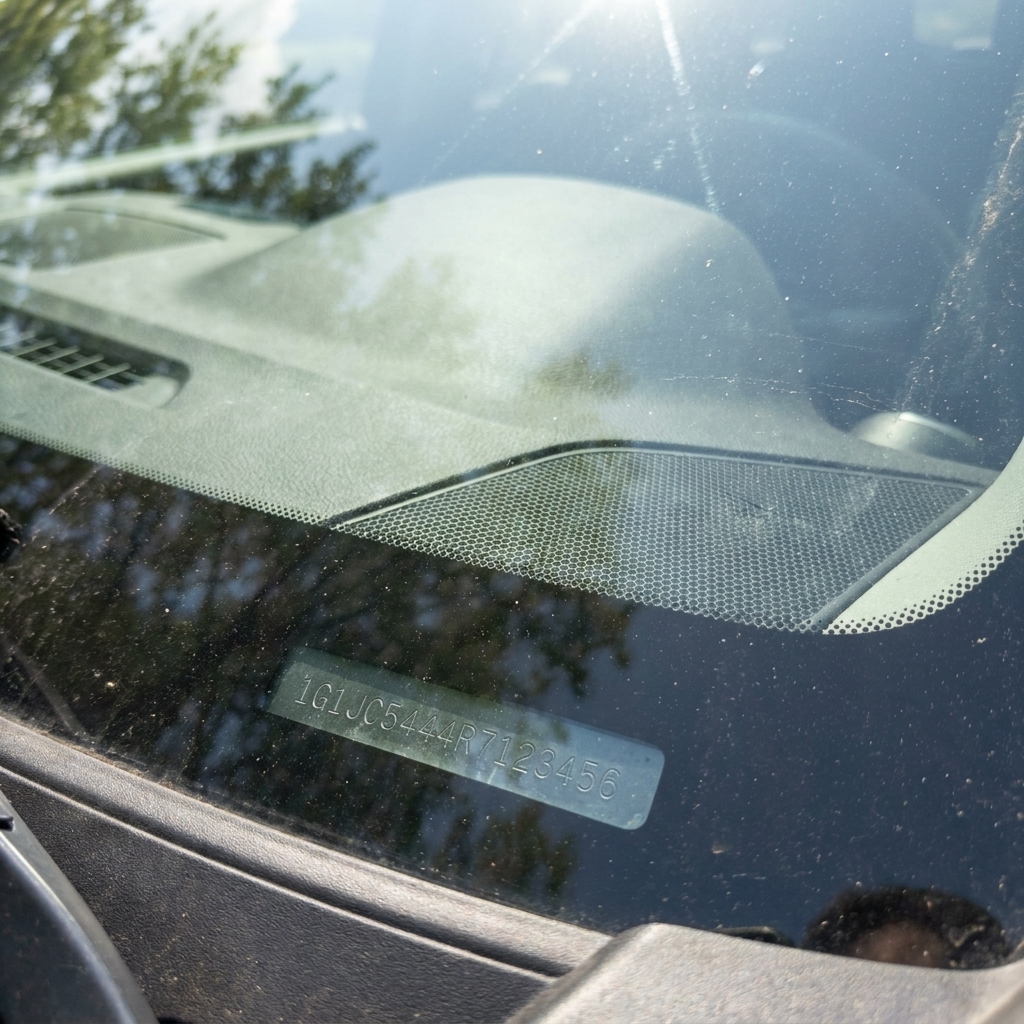
- Match the VIN in three places: dashboard VIN plate at the base of the windshield, driver door jamb sticker, and the VIN shown in the report.
- Look for salvage “rebody” clues: mismatched rivets on the VIN plate, door jamb sticker that looks replaced, or signs the dash panel has been removed.
- Confirm year, make, model, engine: some listings quietly swap trims or engines. The report should align with the vehicle’s badges and underhood emissions label.
Read the timeline like a tech
Don’t skim. I prefer reading the timeline from oldest to newest because it makes mileage and ownership patterns easier to spot.
1) Mileage progression
I start here every time. Mileage should climb steadily over time. Small plateaus can happen, but big drops are a red flag.
- Normal: 32,000 to 41,000 to 52,000 miles over a couple years.
- Concerning: 98,000 miles reported, then later 62,000 miles reported. That can be a data entry error, but you must verify.
- Watch for “Not Actual Mileage” branding: if a title gets branded for mileage issues, resale value and trust take a big hit.
2) Ownership and use
Ownership type changes what “good maintenance” looks like.
- Rental or fleet: often maintained on schedule, but driven hard and sometimes repaired fast instead of repaired perfectly.
- Lease: frequently dealer-maintained because it is convenient, which can create a nice record trail.
- Multiple owners in a short time: sometimes harmless, sometimes a hint the car has an annoying problem people give up on.
3) Location history
Where a car lived matters. A clean report does not prevent rust. It only tells you where to be extra diligent.
- Rust belt: plan to inspect brake lines, subframes, and suspension mounting points carefully.
- Coastal areas: salt air can accelerate corrosion.
- Flood-prone regions: look harder for moisture, musty odor, corrosion in electrical connectors, and foggy headlight housings.
4) Accident and damage entries
“Accident reported” is not automatically a deal-breaker. But the details matter.
- Look for airbag deployment: that escalates severity and can affect long-term safety and resale.
- Repeated damage events: multiple claims can mean the car lives on busy streets or is driven carelessly.
- Structural damage branding: treat this as a serious risk and price accordingly, if you consider it at all.
5) Service entries
Service history is not just “oil change, oil change, oil change.” You want to see evidence that the owner handled the big stuff too.
- Routine: oil and filter, tire rotations, brake service, alignments.
- Long-interval maintenance: coolant, spark plugs, brake fluid, transmission service (when applicable), timing belt service on belt-driven engines.
- Repairs that hint at recurring issues: repeated battery replacements, repeated “check engine light diagnosed,” frequent cooling system repairs.
What good maintenance looks like
Different cars have different schedules. Use patterns as clues, then compare what you see to the manufacturer maintenance schedule for that exact model and engine. The owner’s manual and OEM maintenance chart are your baseline.
Oil changes
On many modern cars, a 5,000 to 7,500 mile rhythm is a healthy sign. Some vehicles legitimately run 10,000 mile intervals with the right oil and driving habits. When I see repeated 15,000 to 20,000 mile gaps, I start thinking sludge risk, timing chain wear, and oil consumption issues.
When in doubt, default to the manufacturer interval or the car’s oil-life monitor, and shorten intervals for severe service (short trips, towing, extreme heat or cold, lots of idling).
Tires and alignments
When someone buys decent tires and gets alignments, they usually keep up with other maintenance too. Tires also provide mileage checkpoints that help validate odometer consistency.
Brakes
Brake pad and rotor replacement is routine wear. What you do not want is a pattern of brake issues every few months, which can indicate a caliper problem, ABS faults, or cheap parts.
Major scheduled services
These items are expensive enough that neglected cars often skip them. Also, do not assume every engine has the same “big” service. For example, some engines use a timing belt, some use a timing chain, and the maintenance expectations are different.
- Timing belt: commonly due around 60,000 to 105,000 miles depending on vehicle. If the engine is timing-belt-driven and the report is silent, you must ask for proof.
- Spark plugs: often 60,000 to 120,000 miles. Missing this can cause misfires and catalytic converter damage.
- Coolant service: helps prevent overheating, heater core issues, and corrosion.
- Transmission service: depends heavily on make and model, but a complete lack of transmission-related service by 120,000 miles is worth investigating.
Gaps that predict trouble
A gap is not automatically a deal-breaker. A gap plus the wrong type of car and the wrong mileage absolutely can be.
Red flag gap #1: no records on a high-mile driver
If a car racks up 12,000 to 15,000 miles per year and you see nothing recorded for two or three years, assume maintenance was either DIY, done at a non-reporting shop, or skipped. Your job is to find out which one.
Red flag gap #2: missing a milestone service
If the vehicle is at 98,000 miles and the manufacturer recommends a major service at 90,000 miles, you want documentation. I have seen people buy a car and immediately eat a $1,200 timing belt bill because the prior owner “meant to get to it.”
Red flag gap #3: vague service lines
Some entries are vague: “Vehicle serviced.” That could mean an oil change, or it could mean someone topped off windshield washer fluid. Vague entries are fine, but they should not be the only proof of care.
Red flag gap #4: frequent transfers, little service
Cars that bounce through auctions can be perfectly fine. But a pattern of rapid transfers can also mean the car is hard to retail because of condition, prior damage, or an intermittent problem.
What the report can miss
Even a clean, busy-looking report has blind spots. Common ones:
- Unreported repairs: cash work at a small shop, DIY maintenance, or service at a non-participating shop.
- Unreported damage: bodywork paid out of pocket without an insurance claim.
- Delayed reporting: an event can show up weeks or months after it happened.
- Thin details: some accident entries do not tell you severity, what was hit, or the quality of the repair.
Verify the maintenance
This is where smart buyers separate themselves. If the report looks too thin or too good, verify.
Ask for receipts
A seller saying “I did it all myself” might be honest. You still need details.
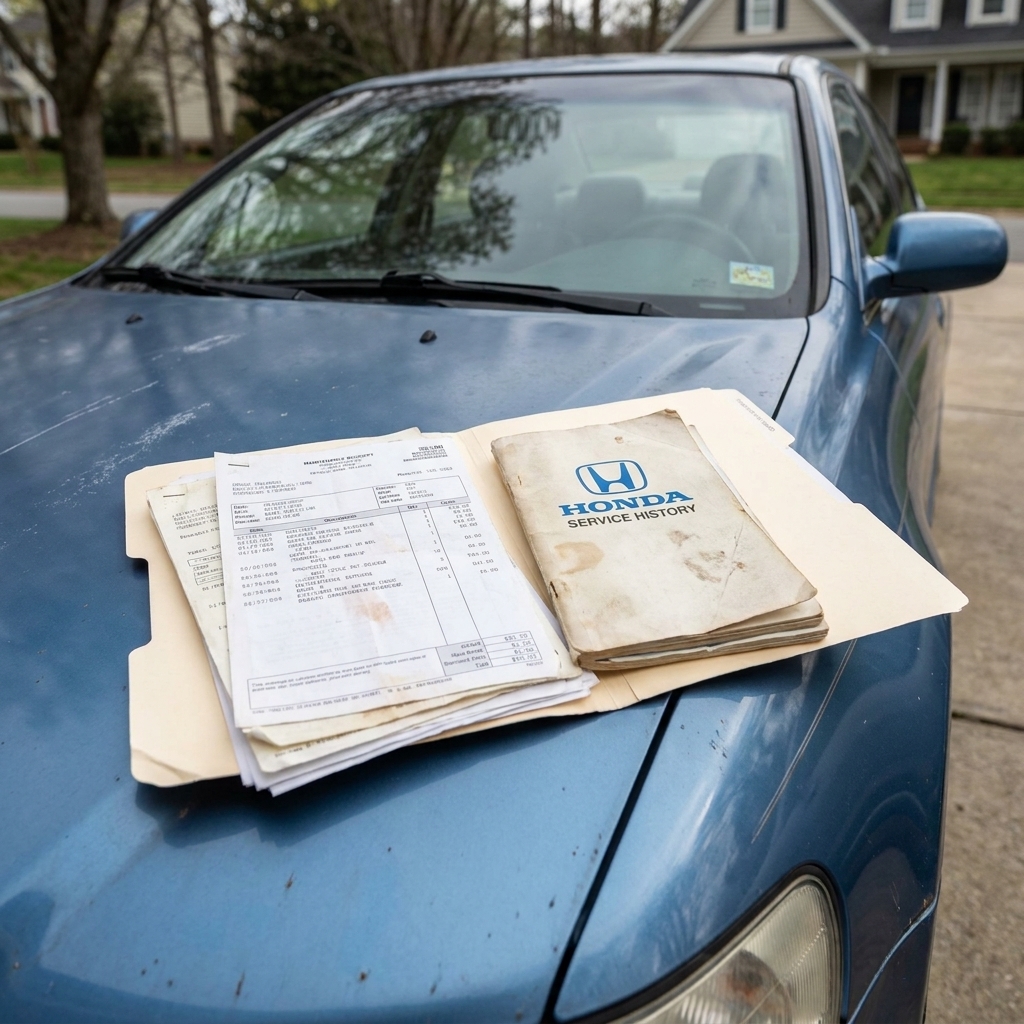
- Best case: itemized receipts showing parts, fluids, dates, and mileage.
- Good enough: a service log with dates, mileage, and what was done, plus supporting receipts for oil and filters.
- Not enough: “Trust me, I take care of my cars.”
Call the shop listed
Many entries show the servicing dealer or shop name. Call and ask if they can confirm service history for that VIN. Privacy rules vary, and they might not share everything, but you can often verify big-ticket items and dates.
Cross-check onboard systems
- Oil life monitor: if it reads 2% but the seller claims they changed it “last week,” ask why it was not reset.
- Service reminders: some cars track brake fluid, tire rotations, or inspections.
- OBD scan data: a scan tool can show readiness monitors and sometimes mileage stamps on certain modules on some vehicles. It is not universal, but when it’s available, it helps validate the story.
Look for physical proof
This is my mechanic brain talking, but it matters:
- Newish filters: clean engine air filter and cabin filter suggest someone cared.
- Fluid condition: burnt transmission fluid or muddy coolant does not match “meticulous maintenance.”
- OEM or quality parts: cheap off-brand components everywhere can indicate corner cutting.

Title brands in plain English
Title brands vary by state, but these are the big ones you should understand before you fall in love with a “great deal.”
- Salvage: the car was declared a total loss by an insurer (often due to repair cost vs value). It may be repairable, but it carries risk and stigma.
- Rebuilt or reconstructed: previously salvage, then repaired and approved for road use under that state’s process. Repair quality can range from excellent to terrifying, so inspect carefully.
- Flood: water damage risk, especially to wiring and modules. These can become long-term electrical nightmares.
- Junk: not intended to be titled for road use again in many cases. Treat it as a hard stop unless you truly know what you are doing.
Carfax vs AutoCheck
The mindset is the same, but coverage can differ by region, shop participation, and reporting channels.
- Carfax: often shows more service entries in many markets because more shops and dealers choose to feed data into it. That is not guaranteed, but it is common enough that I like using it for maintenance breadcrumbs.
- AutoCheck: can show strong coverage in some auction and dealer channels, and it includes a score that can help you compare similar vehicles. The score is not a substitute for reading the actual events.
If you can, I like pulling both on a car you are seriously considering. When one report has a gap, the other sometimes fills it.
Green flags I like
- Steady mileage climb with regular date and mileage checkpoints
- Service at logical intervals that matches how people actually drive
- Evidence of major scheduled services at the right mileages
- Long-term ownership (a few years at a time, not a new owner every few months)
- Consistent geography (less bouncing around can mean fewer unknowns)
Red flags to respect
- Mileage inconsistency or a title brand related to mileage
- Salvage, rebuilt, flood, or junk branding
- Airbag deployment without clear documentation of a quality repair
- Frequent ownership changes in a short period
- Long record gaps on a car known for expensive maintenance if neglected
- Repeated cooling system or misfire-related service which can foreshadow bigger failures
Use the report to negotiate
You do not need to be aggressive. You just need to be specific.
- If a major service is missing: get a quote for that service and negotiate the price down accordingly, or make the sale contingent on it being done.
- If the report is thin: treat it as higher risk. Ask for a pre-purchase inspection and negotiate based on what the shop finds.
- If there is an accident: price should reflect reduced resale value and the risk of hidden issues. Ask for repair invoices and consider an independent body shop inspection.
A seller with nothing to hide will usually work with you on verification steps.
Checklist before you buy
- 1) Confirm VIN match on the car and the report
- 2) Read the timeline slowly from oldest to newest
- 3) Validate mileage progression and flag any odd jumps
- 4) Compare the record to the OEM schedule for that model and engine
- 5) Look for major maintenance milestones at the car’s current mileage
- 6) Ask for receipts to back up big services
- 7) Call listed service shops when possible
- 8) Get a pre-purchase inspection even if the report looks perfect
If you take only one thing from this article, make it this: a clean history report is not the same thing as a healthy car. But a well-read report can absolutely help you avoid the cars most likely to drain your savings.
Maintenance report FAQ
Can a car be well maintained with no records?
Yes. DIY owners and non-reporting shops can leave a report looking empty. That is why receipts, a detailed owner interview, and a pre-purchase inspection matter so much.
Should I walk away from any accident on the report?
Not automatically. I care about severity and repair quality. Minor damage that was repaired correctly can be a non-issue. Airbag deployment, structural damage, or sloppy repairs are where I get cautious.
Why does the report show “vehicle serviced” with no details?
Some reporting systems only transmit a generic service line. Treat those entries as weak evidence unless you can back them up with receipts or shop confirmation.
Is dealer service always better than independent shop service?
No. I have seen great independent shops and lazy dealerships, and vice versa. What matters is correct parts, correct fluids, correct procedures, and proof.