A mechanic’s straight-shooting breakdown of DIY checks vs. a professional pre-purchase inspection, including costs, limits, and when to walk away.
Used Car Buying Guide
Timing Belt vs. Timing Chain: What Used Car Buyers Should Know
Timing belts and timing chains can make or break a used car budget. Learn the differences, typical intervals, warning signs, and how to verify what your engine uses before you buy.

Ben Sullivan
Ben Sullivan is a former ASE-certified mechanic with over 15 years of experience inspecting, repairing, and appraising used vehicles. He contributes to Car Wise Guide to help everyday buyers navigate the used car market with confidence, armed with the knowledge to spot hidden red flags and negotiate fair prices.
Published October 18, 2026
Updated October 18, 2026
If you have ever heard someone say, “Make sure the timing belt was done,” they are not being dramatic. They are trying to save you from one of the most expensive, most preventable used-car surprises out there.
Every engine needs a way to keep the crankshaft and camshaft(s) synchronized. That job is handled by either a timing belt (rubber, reinforced) or a timing chain (metal, like a beefy bicycle chain). Both can be reliable. Both can also turn into a big bill if you buy at the wrong time with the wrong paperwork.
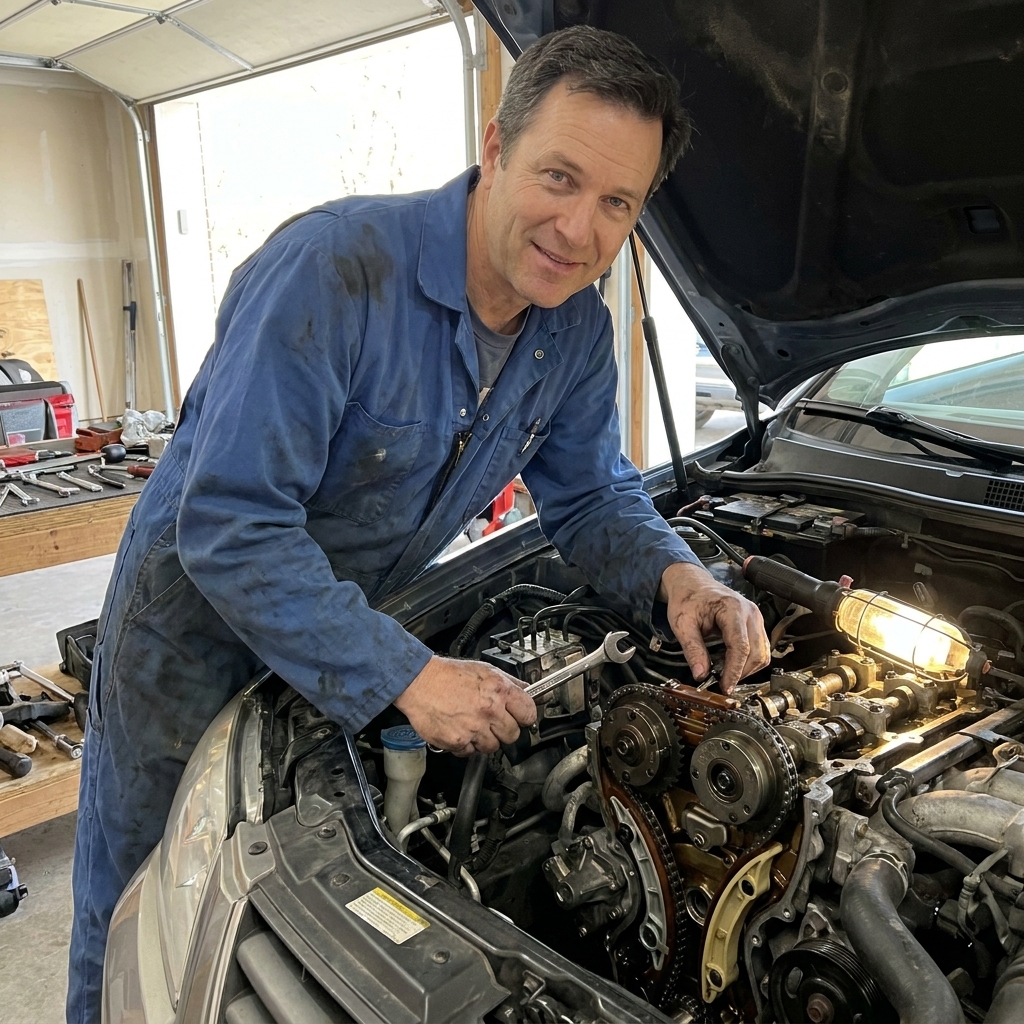
What the timing system does
Your engine’s pistons and valves have to move in a precise dance. The timing system links crankshaft rotation to camshaft rotation so valve timing matches piston position.
When timing is correct, the engine runs smoothly. When timing slips or fails, the engine may not run at all. And on many engines, a failure can cause internal damage in a split second.
Interference vs. non-interference
This is the part most buyers never hear until it is too late:
- Interference engine: If the belt or chain fails, valves and pistons can collide. That can bend valves, damage pistons, and sometimes destroy the engine.
- Non-interference engine: A failure usually leaves you stranded, but it is less likely to cause catastrophic internal damage.
A large share of modern engines are interference by design, but do not guess. If you are shopping a used car, verify interference status for that exact engine, not just the model name.
Timing belt basics
A timing belt is a reinforced rubber belt that runs behind timing covers (often plastic) on the front or side of the engine bay, depending on layout. Belts are quiet, efficient, and cheap to manufacture. The tradeoff is they wear with age and mileage.
Typical intervals
Many timing belts are due somewhere around 60,000 to 105,000 miles, often with a time limit too, commonly 7 to 10 years. But there are real exceptions. Some engines call for 120,000 miles, while severe-service schedules can be shorter, and some manufacturers use 5 to 6 year limits.
Buyer reality: check the OEM schedule for this exact engine. And if the seller cannot prove it was replaced on schedule, you should assume it was not.
Severe service is a thing
If the car lived a hard life, the belt may be due earlier than the headline interval. “Severe service” often includes lots of short trips, extreme heat or cold, dusty conditions, towing, or long idling. The maintenance schedule for the vehicle will spell out if an earlier interval applies.
What it costs
In typical US shop pricing, timing belt service often lands around $700 to $1,800, and can go higher on tight engine bays, V6 or V8 layouts, or luxury brands. Pricing varies by region and vehicle.
Why so much? Labor. The belt is buried. And while you are in there, good shops replace more than just the belt.
What to replace with the belt
If you are paying for the labor to get in there, it is smart to address the common “while you’re in there” parts. What makes sense depends on the design and parts condition:
- Tensioner and idler pulleys
- Water pump (only if it is timing-belt-driven on that engine, or if it is a known weak point)
- Front seals (as needed if there is leakage)
- Coolant (if the water pump is replaced or coolant is drained)
A bargain timing belt job that only replaces the belt can become an expensive redo if a tensioner, idler, or water pump fails 10,000 miles later.
Timing chain basics
Timing chains are metal chains running inside the engine, lubricated by engine oil. They are often described as having no scheduled replacement interval, which leads many buyers to assume they last forever. As a mechanic and inspector, I will tell you straight: chains are not automatically maintenance-free.
When chains wear out
Chains themselves can last a long time, but the system includes parts that wear:
- Chain guides (plastic wear surfaces)
- Hydraulic or spring tensioners
- Cam phasers (on engines with variable valve timing)
The biggest factor in chain life is oil quality and oil change frequency. Dirty oil and extended intervals accelerate wear, clog tensioners, and starve components.
What it costs
When chain work is needed, it is often $1,200 to $3,500+ in typical US shop pricing. On some engines, access is brutal, and costs can climb further if multiple components are replaced. As always, pricing varies by region and vehicle.
So while a chain may not have a routine replacement schedule like a belt, a neglected chain system can be a bigger financial punch when it finally shows symptoms.
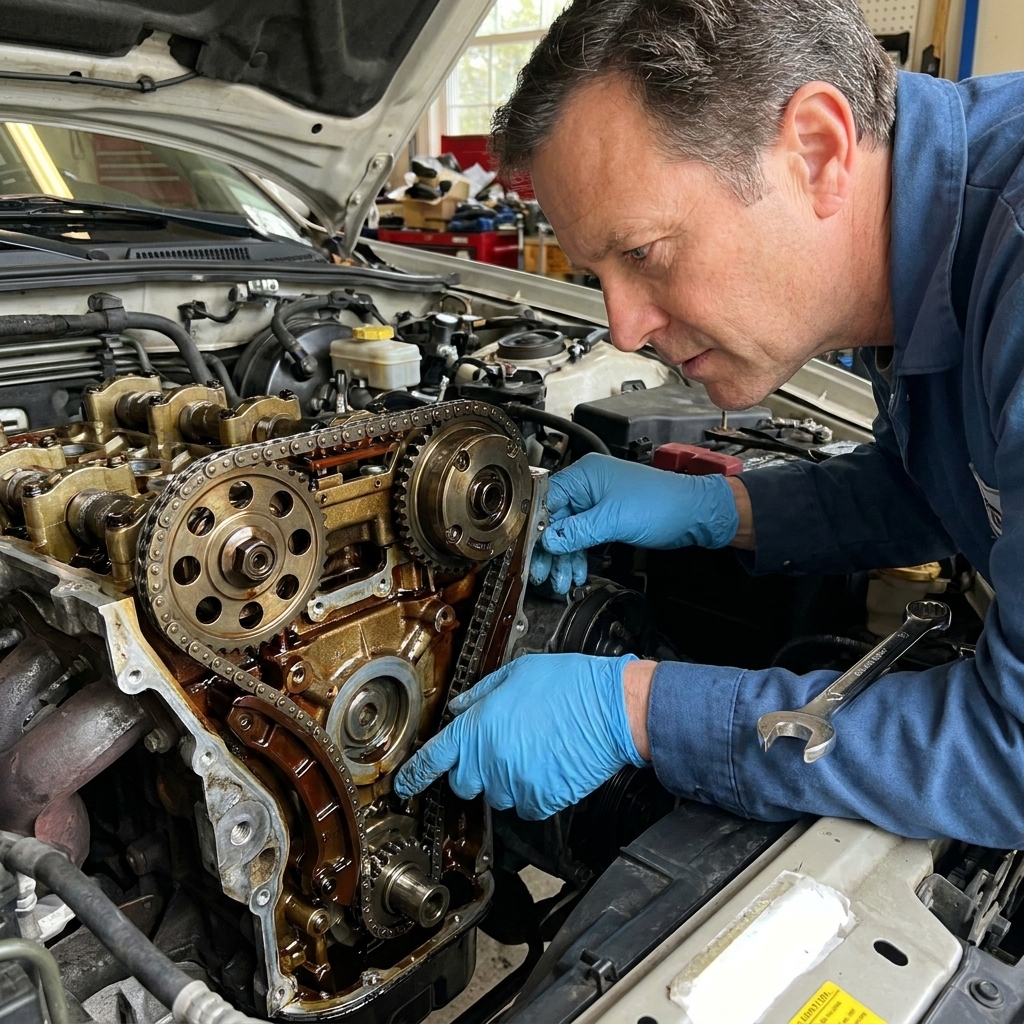
Belt vs. chain for buyers
Quick pros and cons
- Timing belt: Predictable interval and often cheaper than major chain repairs, but it has a hard deadline and failure can be catastrophic on interference engines.
- Timing chain: Usually no routine interval, but chain systems are sensitive to oil maintenance and can be expensive when they do wear out.
What matters when shopping
For used car ownership, the question is not “belt or chain, which is better?” The question is:
- Is the timing system due soon based on age, miles, and service category?
- Is there proof of proper service?
- Are there symptoms of wear right now?
- Is the engine interference, meaning failure could kill the motor?
How to confirm what it uses
Do not rely on dealership window stickers, casual seller claims, or internet comments about “all engines in that model.” Automakers change engines mid-generation, and the same model can have both belts and chains depending on engine size and year.
Step 1: Identify the exact engine
Ask for the VIN and confirm the engine code. A listing that just says “2.4L” is not enough if that model year offered multiple 2.4L variants.
Step 2: Check the factory schedule
If it has a timing belt, the maintenance schedule often spells out a replacement interval (and sometimes a separate severe-service interval). If the schedule is silent, it may be a chain, but do not stop there.
Step 3: Call a dealer with the VIN
A franchised dealer can often tell you what the engine uses and sometimes provide service history if it was performed in their network.
Step 4: Use a repair database
Many shops use professional labor guides that list whether the engine is belt- or chain-driven and what’s involved in service. You can ask an independent shop to look it up for you, especially if you are paying for a pre-purchase inspection.
What to check on a used car
Timing belt cars: verify
There is only one kind of timing belt that counts for your budget: one you can prove was replaced.
- Service records: Look for an invoice showing mileage, date, and what parts were replaced (belt, tensioner, and water pump if applicable).
- Under-hood stickers: Some shops place a timing belt sticker with date and mileage. Nice clue, but still not as strong as an invoice.
- Age matters: A car with 60,000 miles but 12 years old can still be due based on time.
Important: You usually cannot visually inspect a timing belt without removing covers. If a seller says, “It looks fine,” they are guessing.
Timing chain cars: listen and scan
Chains often give warning signs, especially on cold start. Pay attention to:
- Rattle on cold start for a second or two (can indicate a weak tensioner or guide wear)
- Check engine light with cam/crank correlation codes (often P0016, P0017, and related codes)
- Rough idle or poor power when timing is drifting
- Oil neglect signs like heavy sludge under the oil cap or inconsistent service history
One caveat: correlation codes and rough running do not prove chain stretch by themselves. Low oil, bad sensors, sticky VVT solenoids, phaser issues, and other problems can trigger similar symptoms. This is exactly why a real scan and a real inspection matter.
A quiet chain car with documented oil changes is usually a safe bet. A chain car with mystery maintenance and startup rattle is a negotiation moment at minimum.

Budgeting and negotiating
This is where being informed puts money back in your pocket.
If it has a timing belt and it is due
You have three realistic options:
- Negotiate the price down by the full expected cost of a proper timing belt service (belt plus tensioners, and water pump if applicable).
- Make the sale contingent on documented belt replacement by a reputable shop, with an invoice provided at delivery.
- Walk away if the seller will not budge and the engine is interference. There are too many cars for sale to take that gamble.
If it has a timing chain and shows signs
Do not let anyone hand-wave it as “they all do that.” Some engines are known for startup noise and may still run a long time, but you are buying risk.
At minimum, insist on:
- A scan for current and pending codes
- An overnight cold start test if possible
- A pre-purchase inspection by a shop that will actually listen to it cold
Myths I hear a lot
“Timing chains never need replacement.”
Some chains go 200,000 miles with great maintenance. Some do not. Neglected oil changes, sludge, worn guides, and weak tensioners can make a chain job necessary far earlier.
“If the belt breaks, you just put a new one on.”
On many interference engines, a broken belt means internal damage. You are not just replacing a belt. You may be buying a cylinder head rebuild or an engine.
“Low miles means the belt is fine.”
Rubber ages. A 9-year-old belt with low miles can still be due. Heat cycles and time matter.
Buyer checklist
- Does this exact engine use a belt or a chain?
- Is the engine interference?
- What is the replacement interval by miles and by time? (standard and severe service)
- Do you have an invoice showing it was done? (date, mileage, parts)
- If it’s a chain, do you have proof of regular oil changes?
If you can answer those confidently, you are already ahead of most buyers.
FAQ
Can I tell if a car has a timing belt or chain by looking?
Sometimes you can make an educated guess based on engine family, but visually confirming is tough because both live behind covers. The reliable method is verifying the exact engine and checking factory information or a professional database.
Should I avoid timing belt cars?
No. Plenty of excellent, long-lived engines use belts. Just buy with eyes open: you want proof the service was done, or you want enough discount to do it immediately after purchase.
What happens if the timing belt breaks while driving?
The engine will shut off. On many engines, internal damage occurs instantly. That is why belt intervals are not a “maybe later” item.
What’s more expensive long-term, belt or chain?
It depends on the model and maintenance. Belts are predictable and budgetable. Chains can be economical when oil maintenance is good, but expensive when neglected or when a known-problem chain system develops issues.
What about “wet belts” (belt in oil)?
Some engines use a belt that runs inside the engine and operates in oil. It is not a traditional dry timing belt and not a chain. These designs can have their own service intervals and failure modes, and the stakes can be high if the belt sheds material into the oil. If you are shopping a vehicle known to use a belt-in-oil setup, verify the exact service requirements and history before you buy.
The bottom line
If you remember one thing, make it this: timing belts have a schedule, and timing chains have a maintenance expectation. Either one can be a great ownership experience when the previous owner did their part and you verify it before you buy.
When in doubt, spend the money on a pre-purchase inspection. I have watched a modest inspection fee save buyers thousands, and more importantly, keep them out of the kind of car that turns every paycheck into a repair bill.