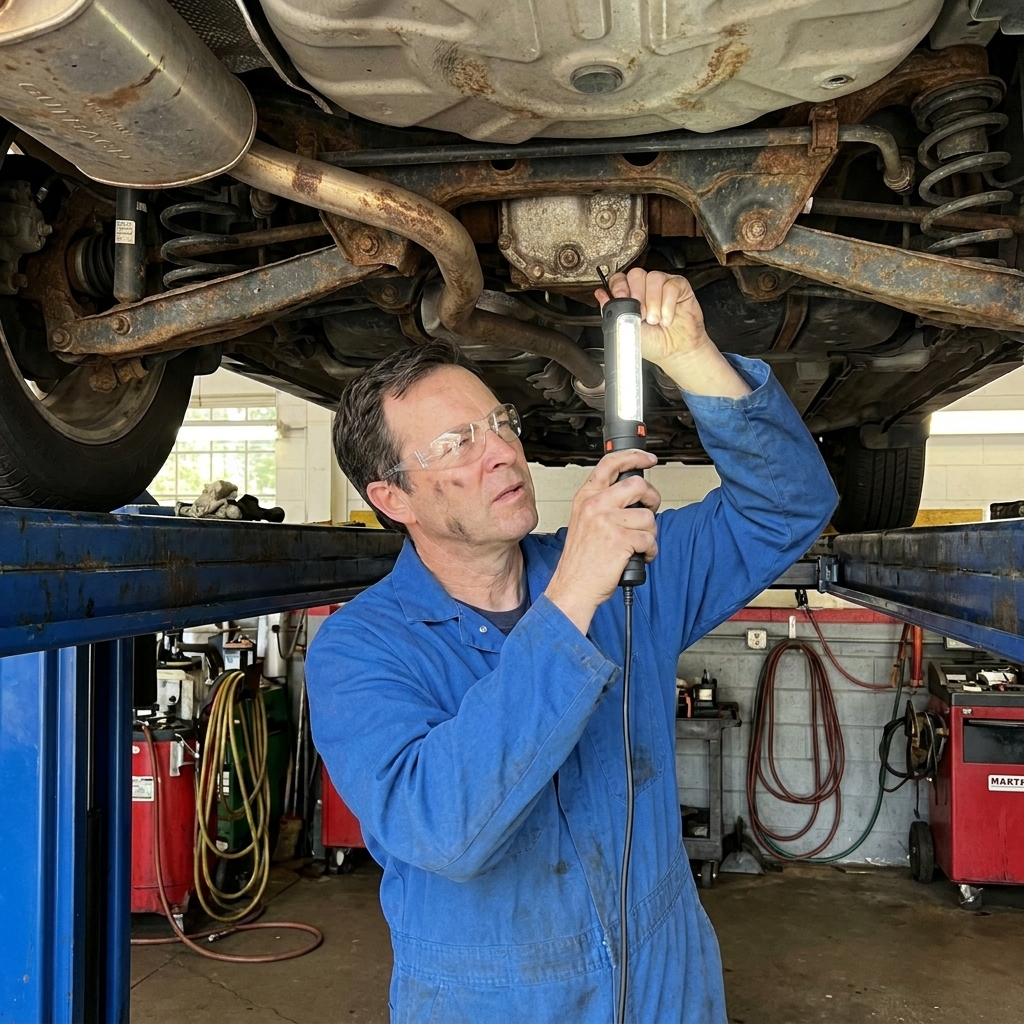
A mechanic’s straight-shooting breakdown of DIY checks vs. a professional pre-purchase inspection, including costs, limits, and when to walk away.
Used Car Buying Guide
How to Check Under the Hood of a Used Car
A beginner-friendly under-the-hood check for used car buyers: engine oil, coolant, belts, hoses, and other quick red flags that can save you from an expensive mistake.

Ben Sullivan
Ben Sullivan is a former ASE-certified mechanic with over 15 years of experience inspecting, repairing, and appraising used vehicles. He contributes to Car Wise Guide to help everyday buyers navigate the used car market with confidence, armed with the knowledge to spot hidden red flags and negotiate fair prices.
Published October 18, 2026
Updated October 18, 2026
Opening the hood can feel like staring into a bowl of spaghetti, especially on a modern car. The good news is you do not need to be a mechanic to catch the big, expensive problems. In a few minutes, you can spot signs of severe neglect, overheating, bad maintenance, or a seller trying to hide something.
This is the same quick under-hood routine I used for years doing pre-purchase inspections. It is beginner-friendly and safe, and it focuses on the items most likely to leave you stranded or cost you real money soon after purchase.

Safety first
Under-hood injuries usually come from heat, moving parts, and “surprise” hazards like electrical shorts, battery acid, and sharp edges. Here is how to keep it simple and safe on a test drive or driveway inspection.
- Park on level ground, set the parking brake, and put the car in Park (or in gear for a manual).
- Turn the engine off before you reach in. Keep keys in your pocket so nobody starts it while your hands are near belts or fans.
- Avoid the radiator cap if you do not know what you are doing. Never open it on a hot engine.
- Use your eyes and nose first. Many issues are obvious without touching anything.
- Be mindful of electrical and sharp-edge hazards. Do not lay tools across the battery terminals, and watch for broken plastic, sharp brackets, and cracked fan shrouds.
If a seller refuses to let you open the hood, that is a gift. Say thanks and move on.
First impressions
Before you even pull a dipstick, scan the whole engine bay.
Signs of a cover-up
- Fresh, wet-looking shine on the engine or inner fenders can be an attempt to hide oil leaks. A clean engine bay is fine. A freshly detailed engine that looks wet, feels greasy, or smells like degreaser or silicone dressing is suspicious.
- New black undercoating sprayed up high in the engine bay is a major red flag. That is not normal maintenance.
Leaks and crust
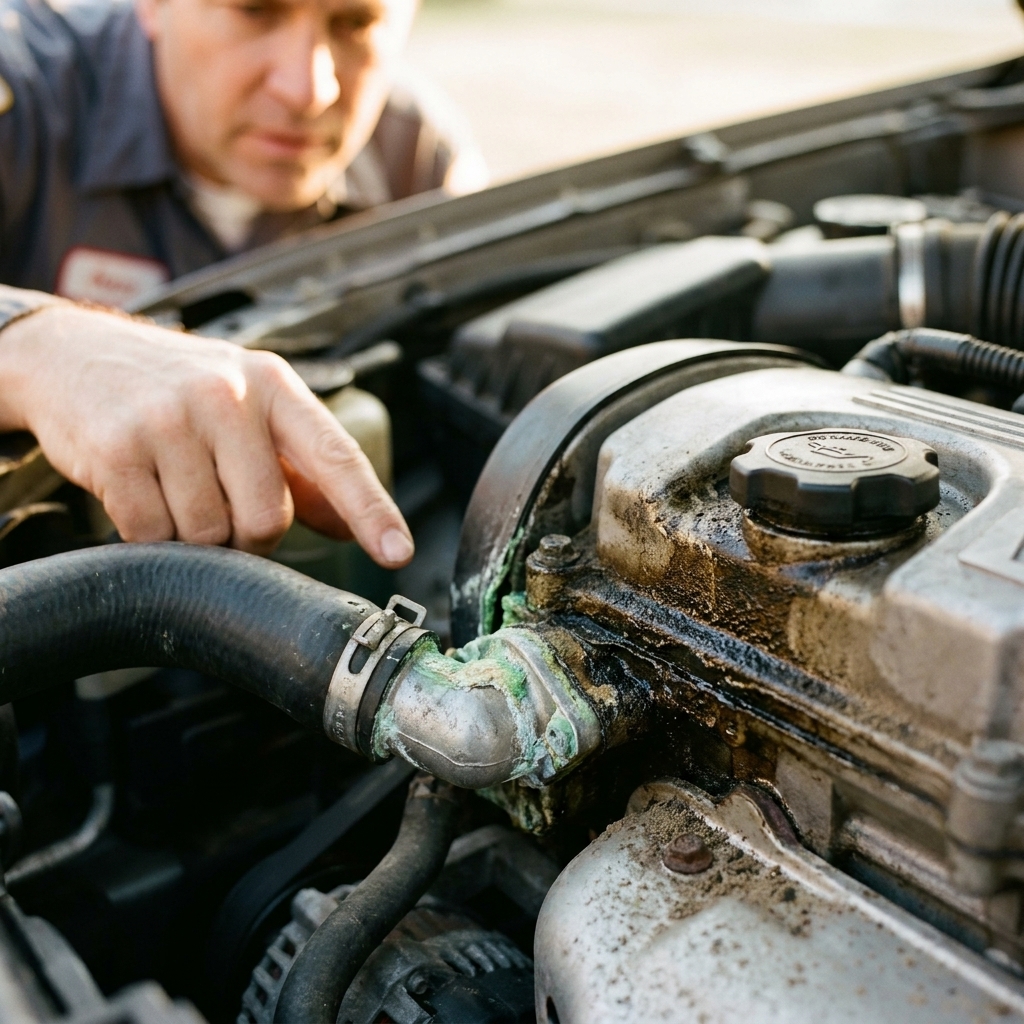
- Oil leaks: dark, greasy buildup around valve covers, the front of the engine, or down low near the oil pan.
- Coolant leaks: white, green, pink, or orange crusty residue near hoses, the radiator end tanks, or around the coolant reservoir.
- Power steering leaks (if equipped): oily wetness around the pump or lines, sometimes with a burnt smell.
Overheating clues
- Stained plastic around the coolant reservoir cap area.
- Coolant smell like sweet syrup after a short drive.
- Parts mismatch like a random universal radiator hose or a mismatched radiator. Not automatically bad, but it raises questions about why it was replaced.
Check the engine oil
If I could only do one under-hood check on a used car, it would be engine oil. You are not just checking the level. You are checking for neglect, contamination, and warning signs of bigger problems.
How to check oil
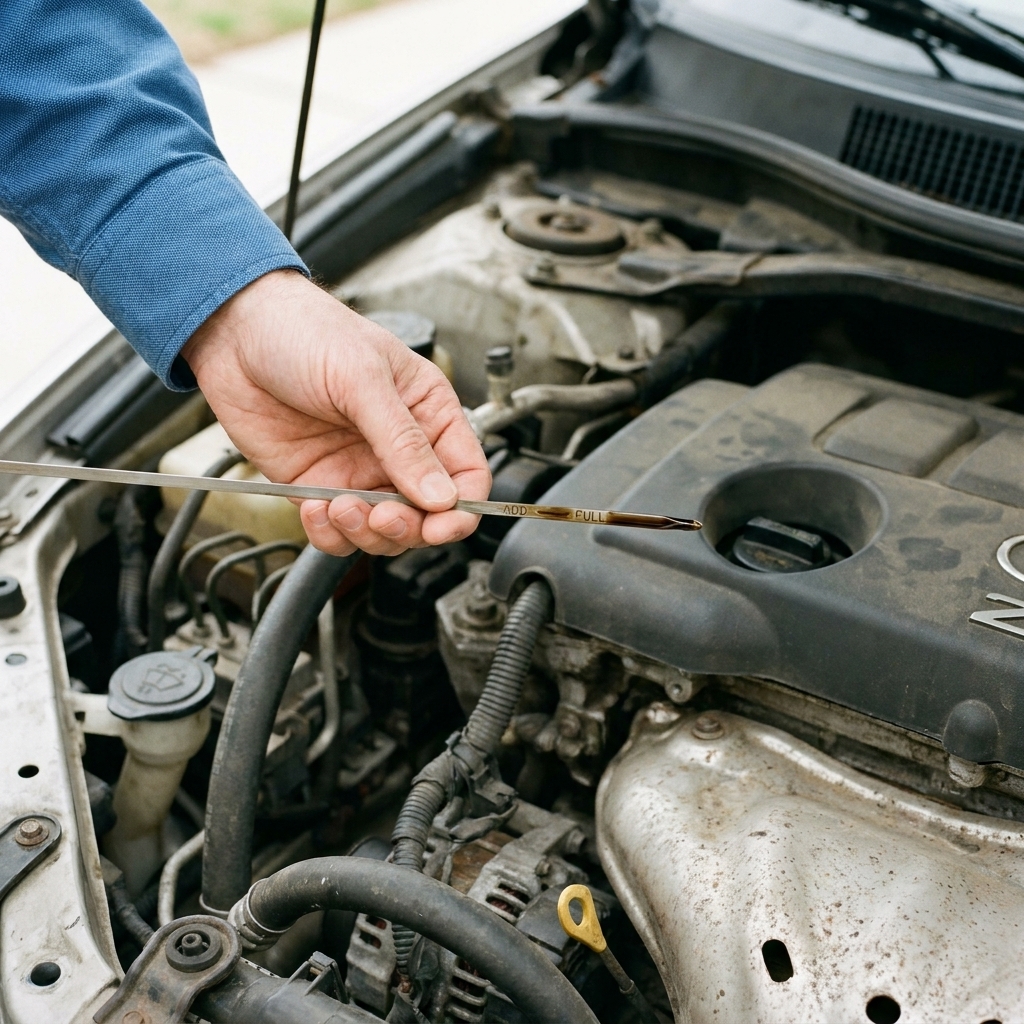
- Find the oil dipstick (often a yellow or orange handle).
- Ideally check with the car on level ground and the engine off. If it was just running, let it sit a few minutes so oil can drain back.
- Pull it out, wipe it clean with a paper towel, reinsert it fully, then pull it again.
- Check where the oil lands between the LOW and FULL marks. If the owner’s manual is available, follow its procedure.
What good looks like
- Level: somewhere between the marks. A little below full is fine.
- Color: light amber to medium brown is normal. Dark oil is not automatically bad, especially on cars that have been driven. Consistency matters more.
- Smell: mild oily smell. Not burnt.
Oil red flags
- Very low oil level: can indicate neglect, leaks, or oil burning. Low oil is a top engine killer.
- Milky or frothy oil on the dipstick: can suggest coolant mixing with oil. That can mean a head gasket issue or worse. (In cold climates, a little condensation can happen on short trips, so treat this as a “needs more investigation” flag, not an instant verdict.)
- Strong gasoline smell in the oil: can indicate fuel dilution from misfires, short-trip driving, or engine issues.
- Burnt smell and gritty feel: can suggest overheated, overdue oil changes.
Quick extra: under the oil cap
If the engine is cool and the cap is easy to access, remove the oil fill cap and look inside with a flashlight.
- Light brown staining is normal.
- Thick black sludge is bad news. Sludge usually comes from long oil change intervals and can clog oil passages.
- Thick tan “mayonnaise” goo can be moisture buildup from short trips, but if it is heavy and combined with other coolant-related signs, be cautious.
Check the coolant
Cooling system problems can turn a “good deal” into an overheating nightmare fast. The goal here is to spot leaks, neglect, and signs the car has been running hot.
Radiator cap warning
I am going to repeat this because it matters: do not open a radiator cap on a hot engine. You can get badly burned by pressurized coolant. On many modern cars, you never need to open the radiator cap during a pre-purchase check anyway.
What you can check safely
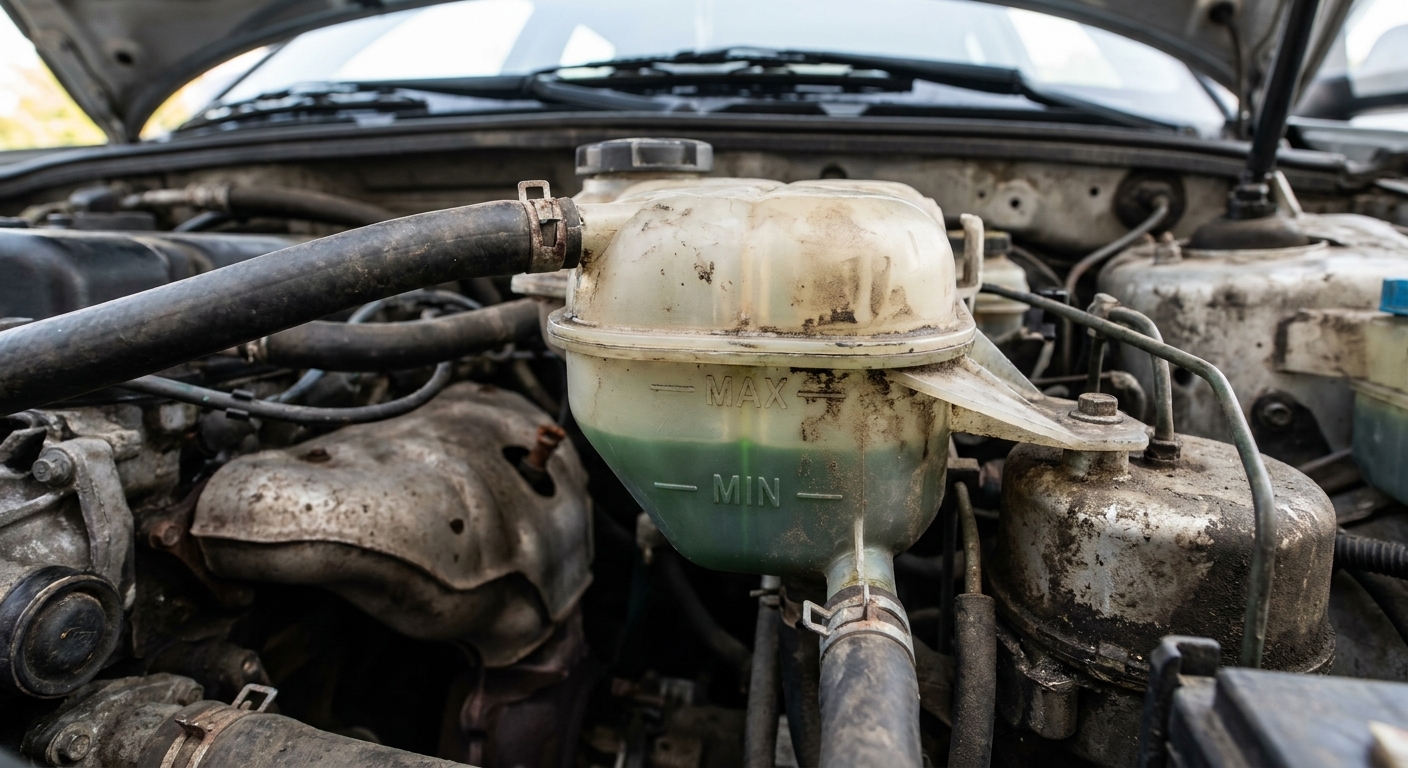
Most cars have a translucent coolant overflow reservoir with “MIN” and “MAX” lines.
- Level: should be between MIN and MAX when the engine is cold. A small change between cold and warm can be normal. A reservoir that is consistently low is not.
- Color: coolant comes in several colors (green, orange, pink, blue, purple). Color alone is not a pass or fail. What you do not want is brown, muddy coolant or floating oil sheen.
- Condition: the reservoir should not look like it is full of rust flakes or sediment.
Coolant red flags
- Consistently low coolant: coolant should not routinely need topping off. If it keeps ending up low, suspect a leak or overheating related loss until proven otherwise.
- Oily film in the reservoir: possible oil-coolant mixing.
- Crusty dried coolant trails: often found at hose connections, around the radiator, thermostat housing, or water pump area.
- Very hard upper radiator hose on a warm engine: only check hoses with the engine off and only if it is cool to lightly warm. Do not squeeze hoses on a fully hot engine. Firmness can be normal pressure, but if it gets rock-hard quickly and you see other overheating signs, take it seriously.
Inspect belts
Belts are one of the easiest “tell me how this car was maintained” items under the hood. A neglected belt does not just squeal. If it fails, you can lose charging, power steering, and in some cases overheat quickly.
What you are looking at
Most modern cars use a single serpentine belt that runs multiple accessories. Some older cars may have multiple V-belts.
How to check a belt
- With the engine off, look at the belt surface where you can see it.
- If you can safely access it, gently twist the belt a little to see the ribbed side. Do not force anything.
Good signs
- Even surface, no chunks missing.
- Ribs look defined, not glossy-smooth.
Belt red flags
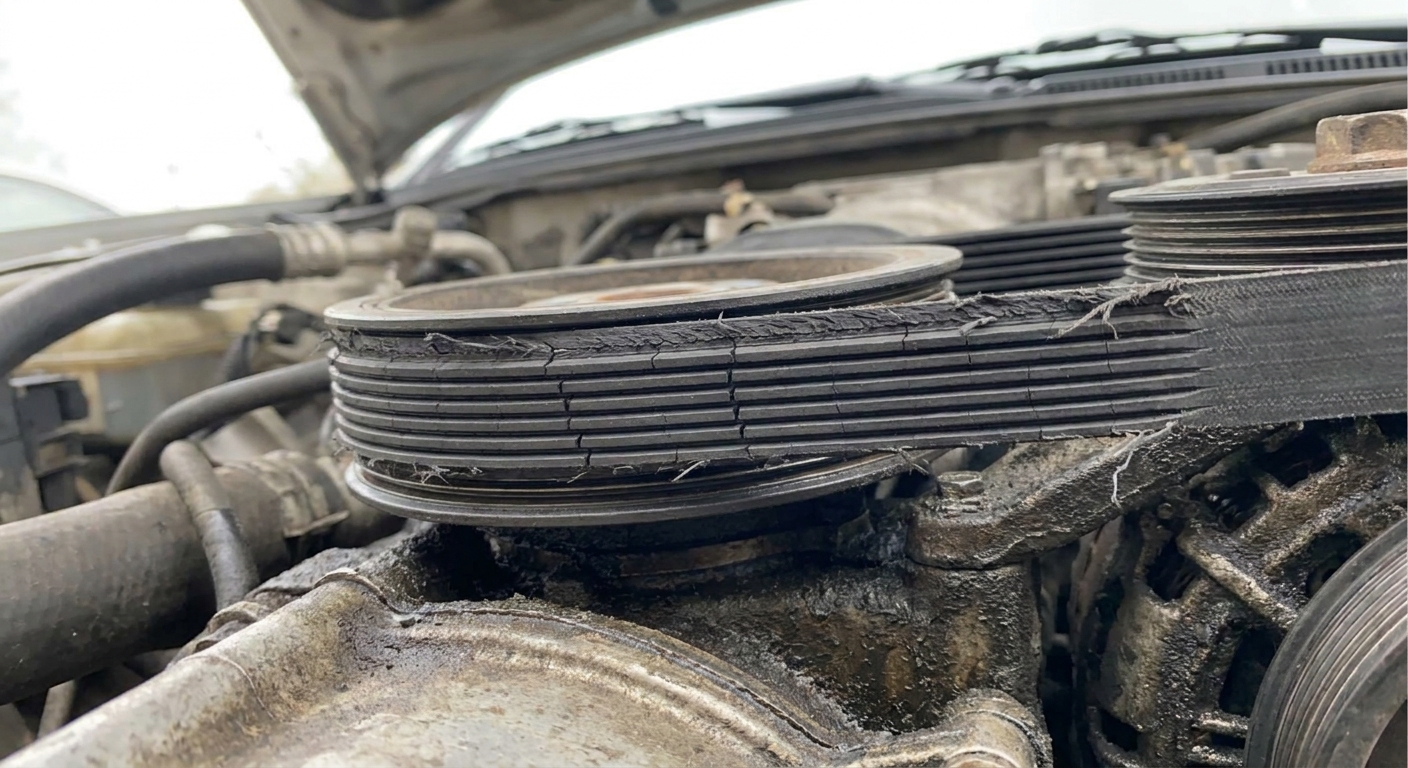
- Cracks across the ribs, especially lots of small cracks.
- Fraying on the edges.
- Glazed, shiny belt that looks polished.
- Oil-soaked belt, which often points to a leak dripping onto it.
A worn belt is not always a dealbreaker. It is a negotiating point. The bigger concern is when a worn belt is paired with obvious fluid leaks, because then you may be chasing multiple problems.
Inspect hoses
Hoses are rubber, rubber ages, and overheating is one of the fastest ways to ruin an engine. You are looking for hoses that are near the end of their life or signs the system has been leaking.
Hoses that matter
- Upper and lower radiator hoses
- Heater hoses going into the firewall
- Smaller coolant bypass hoses near the thermostat housing
- Vacuum and intake hoses (not coolant, but can cause drivability issues and check-engine lights)
What to look and feel for
With the engine off and preferably cool:
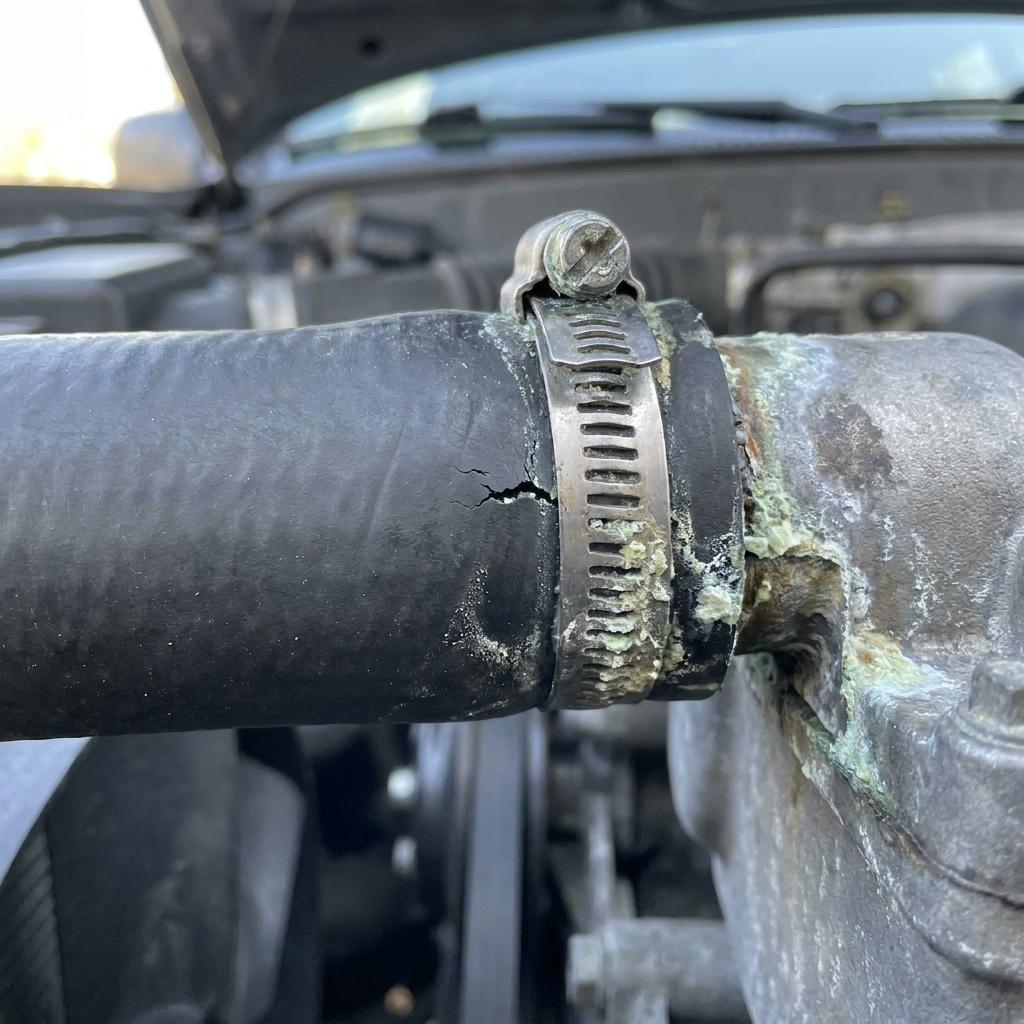
- Cracks near the ends where clamps bite.
- Bulges or ballooned sections.
- Soft, mushy spots that feel weak.
- Rock-hard, brittle hoses that feel like plastic.
- Wetness or crust around hose connections.
Clamps and connections
- Factory spring clamps are common and fine.
- Worm-gear clamps everywhere can hint someone has been patching leaks. Not an instant fail, but it raises the odds of ongoing cooling system issues.
Bonus checks
If you have a little extra time, these quick looks can save you from a very expensive surprise.
Brake fluid
- Level: look at the brake fluid reservoir. Low fluid can be normal as brake pads wear, but it can also signal a leak. If it is very low, ask questions.
- Color: very dark fluid can suggest overdue maintenance. It is not usually an immediate no, but it is another clue about upkeep.
Battery condition
- Corrosion: heavy blue-green fuzz on terminals can cause starting and charging issues.
- Loose terminals: you should not be able to wiggle them easily.
- Battery age: many batteries have a date sticker. A battery can last roughly 3 to 6 years depending on climate and usage.
Air filter box
If it is easy to access and the seller allows it, pop the clips and look at the engine air filter.
- Light gray and relatively clean is good.
- Packed with dirt, leaves, or rodent debris suggests neglect and possible critter damage.
Rodent damage
- Look for chewed wire insulation, nests, acorns, or shredded material around the battery tray, cowl area, and air box.
- Rodent damage can turn into weird electrical problems that are hard to diagnose.
Transmission fluid (if accessible)
Many modern cars have no transmission dipstick. If there is a dipstick and the seller is comfortable with you checking it, follow the correct procedure (some require the engine running and the fluid warm).
- Smell: burnt odor is a bad sign.
- Color: varies by type, but extremely dark fluid paired with burnt smell is concerning.
Obvious wiring hacks
- Twist-on wire connectors, exposed copper, or messy aftermarket wiring can mean electrical gremlins later.
- Aftermarket alarms and remote starts are common sources of parasitic battery drains when installed poorly.
Cold start tip
If you can, do one look with the engine fully cold, then another after a short idle and drive. Some leaks and overheating smells only show up once the system warms up.
How to use what you found
Not every under-hood issue is a reason to run. Some are normal wear. The trick is sorting “maintenance item” from “this car has been suffering for a while.”
Usually negotiable
- Worn serpentine belt with no major leaks
- Dirty air filter
- Minor battery terminal corrosion
- Small seepage around an older valve cover (if it is not dripping onto the belt or exhaust)
Get a professional inspection
- Low coolant or crusty leak evidence
- Oil that looks contaminated or smells strongly of fuel
- Heavy oil leaks, especially near the front of the engine
- Evidence of repeated overheating
- Rodent damage or hacked wiring
Walk away combos
- Low coolant plus oily residue in coolant
- Milky oil plus coolant loss signs
- Freshly cleaned, wet engine bay plus new drips forming
- Multiple patched hoses and clamps plus overheating smell
If you find one big red flag, the best move is usually to spend your money on a different car, not on a gamble.
Quick checklist
- Oil level: between marks
- Oil condition: not milky, not gritty, no strong fuel smell
- Coolant reservoir: between MIN and MAX (cold), not muddy, no oily sheen
- Leaks: look for wetness, crust, fresh dressing or degreaser smell
- Belt: no major cracks, frays, or oil soaking
- Hoses: no bulges, cracks, mushy spots, or crust at connections
- Brake fluid: not extremely low, not obviously neglected
- Battery: terminals not heavily corroded, cables secure
- Rodents: no chewed wiring or nesting material
FAQ
Should I check fluids when the engine is hot?
You can check oil warm or hot if the engine is off and has sat a few minutes, but follow the owner’s manual if you have it. You should not open a radiator cap hot. Checking the coolant reservoir level visually is usually safe, but avoid removing caps on a hot system.
Is dark oil always bad?
No. Dark oil can be normal. What concerns me is very low oil, burnt smell, gritty feel, or milky contamination.
What if I cannot find the dipstick?
Some newer cars have no traditional dipstick. If you cannot verify oil level easily on the spot, that is one more reason to get a pre-purchase inspection and confirm the oil level through the vehicle’s electronic measurement procedure.
If the coolant is a different color than I expected, is that a problem?
Not necessarily. Different brands use different coolant colors, and some cars have been topped off over time. The bigger issues are consistently low level, dirty or rusty coolant, and oil sheen.
Should I scan the car for codes?
Yes, but that is a separate step from an under-hood check. An OBD2 scan can reveal stored codes and pending issues even if the check-engine light is off.