A former mechanic’s must-ask questions to uncover the real history of a used car, confirm maintenance, check recalls, and spot red flags before you sign an...
Used Car Buying Guide
How to Confirm a Used Car Recall Was Fixed
Don’t take “it’s been done” at face value. Here’s how to check recall status by VIN, verify dealer repair proof, and avoid the common traps history reports miss.

Ben Sullivan
Ben Sullivan is a former ASE-certified mechanic with over 15 years of experience inspecting, repairing, and appraising used vehicles. He contributes to Car Wise Guide to help everyday buyers navigate the used car market with confidence, armed with the knowledge to spot hidden red flags and negotiate fair prices.
Published October 18, 2026
Updated October 18, 2026
I’ve watched plenty of smart, careful buyers get tripped up by one simple sentence from a seller: “Don’t worry, the recall was taken care of.” Sometimes that’s true. Other times, the recall is still open, the “fix” was only partially completed, or the paperwork is missing and nobody can prove it.
This guide walks you through how to verify a manufacturer safety-recall repair was actually completed, using the VIN, official recall tools, and documentation you can match up with what the databases show.
First, know what you are verifying
Not all “campaigns” are the same, and sellers mix these up all the time.
- Safety recall: A manufacturer-initiated repair for a safety defect. These are the big ones and usually show up in official recall tools. In the U.S., safety recall repairs are usually free.
- Service campaign or customer satisfaction program: Not always a safety recall. Sometimes time-limited. Might not show up in the same way as a recall.
- TSB (technical service bulletin): Not a recall. Just guidance for diagnosing or repairing a known issue.
This article is specifically about confirming safety recall completion, not routine maintenance, accident repair, or “the previous owner said they fixed it.”
One quick vocabulary note: You may see more than one identifier. NHTSA recalls have an NHTSA campaign number, and the manufacturer will also have its own recall or campaign code. When you’re matching paperwork to a database, either one can be the key.
One more term that matters: An open recall means an unrepaired safety recall. An open campaign can mean a recall or a non-recall program. That is why you ask about both when you call a dealer, then confirm which ones are actually safety recalls.
Step 1: Pull the VIN and double-check it
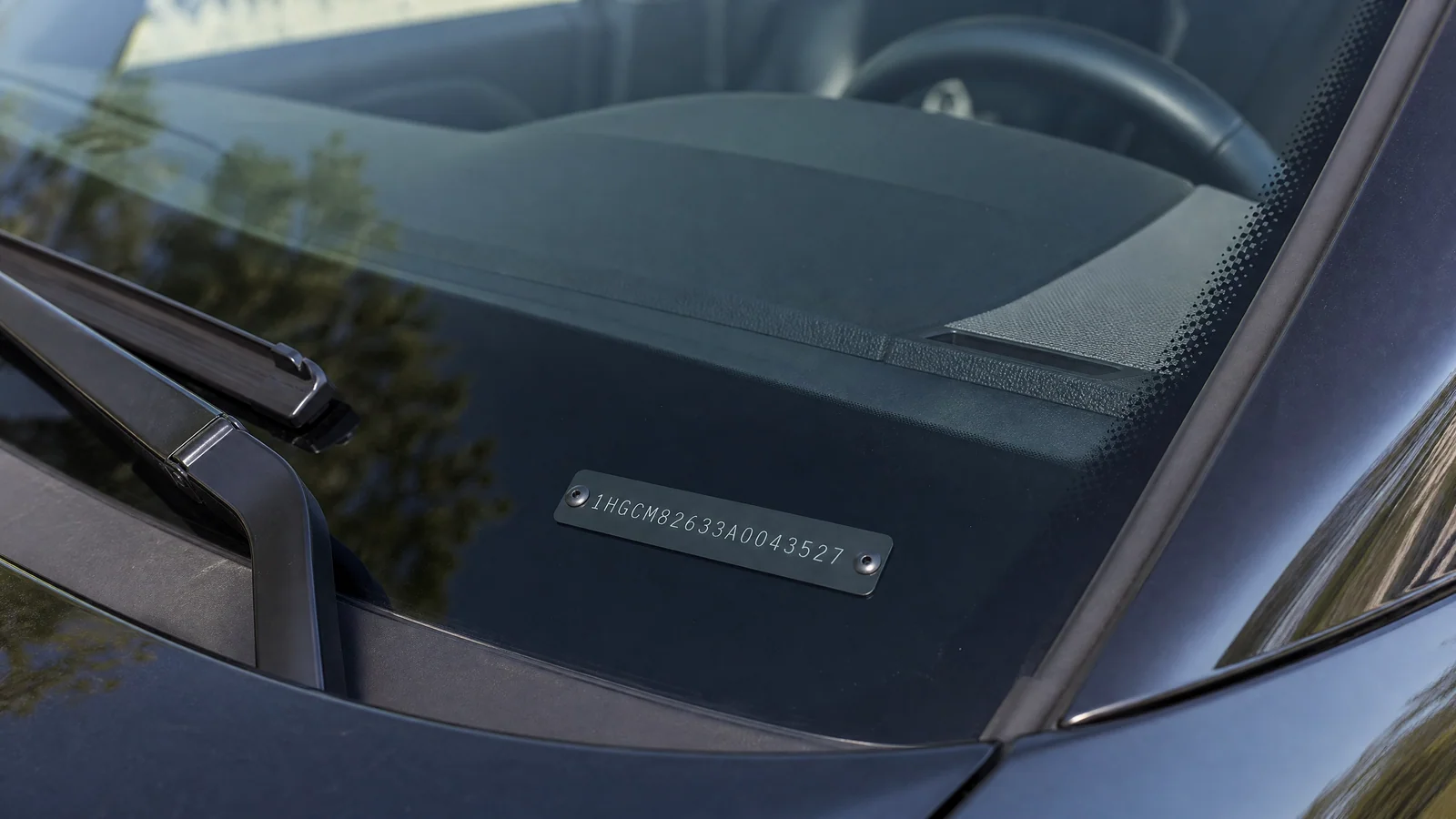
Everything starts with the VIN, and mistakes happen more often than you’d think.
- Get the VIN from the dashboard at the base of the windshield (driver side).
- Match it to the VIN on the driver door jamb sticker.
- Compare it to the title/registration the seller provides.
If any of those VINs do not match exactly, stop and sort that out before you go further.
Step 2: Use official recall tools
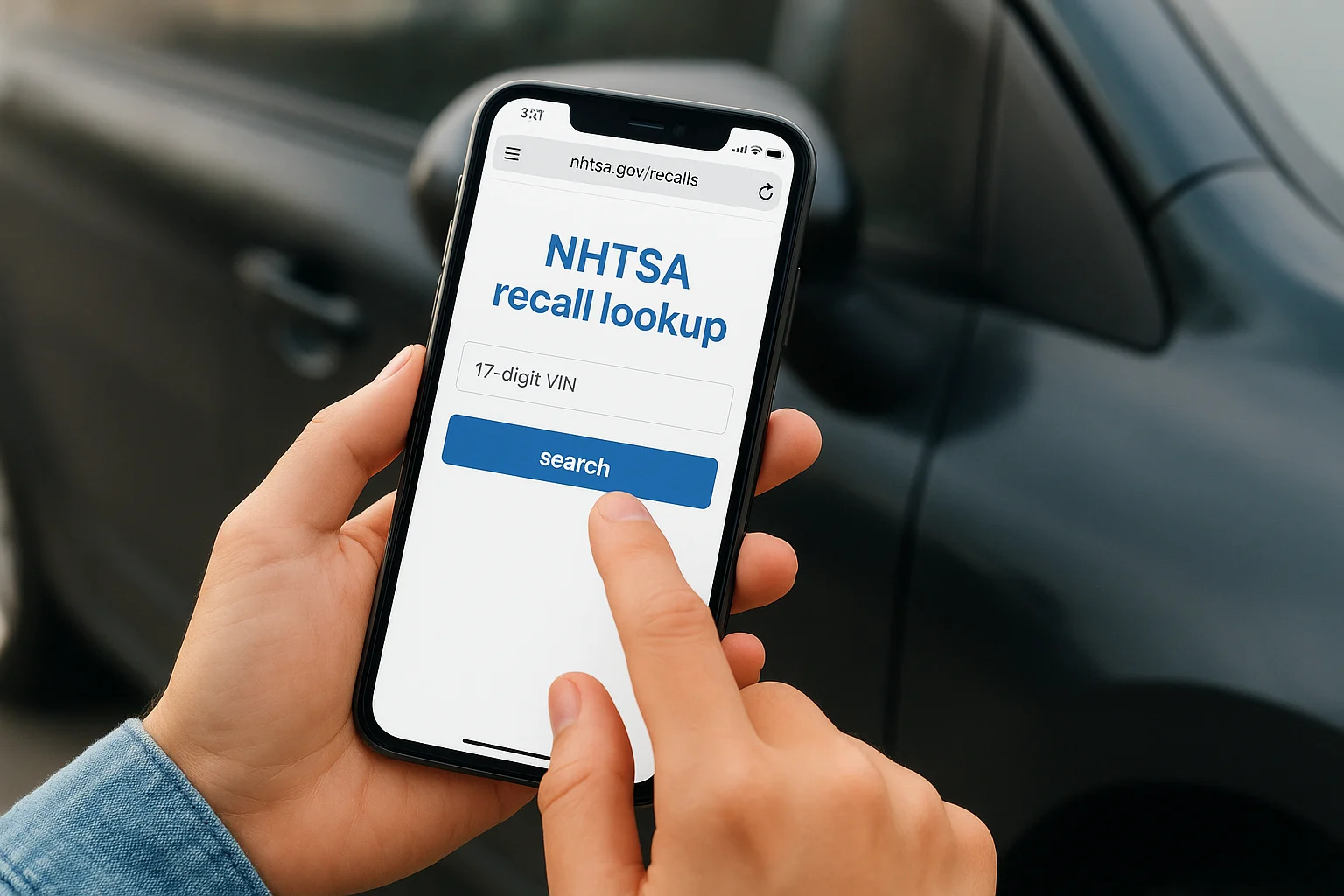
If you only do one thing, do this: run the VIN through official sources. The VIN lookup is your most reliable starting point, and you will still want to cross-check if anything looks off.
NHTSA recall lookup
NHTSA’s Recall Lookup by VIN is a solid baseline. You can find it at nhtsa.gov/recalls.
- It is independent and easy to use.
- It generally focuses on unrepaired safety recalls.
- It is not universal. It is mainly for vehicles model year 1996 and newer and depends on manufacturer reporting. It can miss some older vehicles, low-volume makes, and odd cases where VIN records were not fully populated. It can also take time to reflect a very recent repair.
Manufacturer VIN lookup
Most automakers also provide a VIN-based recall portal. This is often where you will see the clearest make-specific status wording like:
- “No open recalls”
- “Recall incomplete”
- “Recall remedy available”
- “Completed” or “Closed”
Don’t get tricked by third-party sites: To find the official portal, search “[Brand] recall lookup VIN” and use the manufacturer’s real domain (not a lead-gen page).
Tip from the shop: If NHTSA shows nothing open but the manufacturer site shows an open item, treat the manufacturer site as the best brand-specific source, then confirm the exact status with a dealer (next step). The reverse can happen too, so cross-checking matters.
Imported vehicles and non-U.S. history
If the vehicle was imported, your U.S.-based results can be incomplete. NHTSA and U.S. manufacturer portals may not reflect Canadian or other market recalls. In that case, confirm the vehicle’s original market and check the appropriate national recall system, or contact the manufacturer customer care line with the VIN and ask what applies where the vehicle is titled now.
Step 3: Call a franchised dealer
Here’s the move I recommend when you are serious about a car: call the service department of a franchised dealer for that brand (Toyota dealer for a Toyota, Ford dealer for a Ford, etc.). Give them the VIN and ask:
- “Can you tell me if there are any open recalls or campaigns on this VIN?”
- “Which of those are safety recalls, and what is the campaign code (or NHTSA number) and status: completed or incomplete?”
- “If it shows completed, can you tell me the repair date or the dealer that performed it?”
Some dealers will share limited detail due to privacy policies, and some may refuse to discuss completion history without proof of ownership. But in most cases, they can at least tell you whether a safety recall is still open in the manufacturer system.

Step 4: Get proof and match it
If a seller says the recall was done, ask for paperwork that proves it. Good proof is specific and boring.
What good recall proof looks like
- A dealer repair order (RO) showing the VIN (or last 8 of VIN), date, mileage, and the recall campaign code.
- A receipt/invoice showing “Recall” or “Warranty” line items (often $0.00) with the campaign number.
- A manufacturer letter stating the recall is complete for that VIN (less common, but sometimes owners keep it).
What is not proof by itself
- “Carfax says it was serviced.”
- A generic oil change receipt.
- A text message from the previous owner.
- A parts receipt showing a related part was purchased. That does not prove the recall procedure was performed correctly.
Reconciliation check: If the paperwork says “Recall completed,” but the manufacturer site or dealer still shows an open recall, assume the recall is not completed until you get a clear explanation. Sometimes the paperwork is for a different VIN, a different campaign, or an inspection step that did not include the final remedy.
Why history reports can mislead
Vehicle history reports can be helpful, but recalls are one of their weak spots.
- Not all recall repairs get reported consistently.
- Some reports show “Recall” with no detail, and it may be a notification, not a completed repair.
- Timing can be off. A recall completed last week might not appear for a while.
- If the recall was performed at a shop or dealer that does not feed data to that provider, you might never see it.
I treat history reports as supporting evidence, not the final word. For recalls, the headline is the VIN recall status in official systems, backed up by paperwork that matches the campaign code.
Common scenarios
“The recall was done” but it still shows open
This usually means one of four things:
- The seller is wrong or mixing it up with a different repair.
- The recall was scheduled but never completed.
- The vehicle had an inspection performed, but the final remedy was not installed.
- Paperwork exists, but it is for a different campaign or even a different car.
If the recall is open, treat it as open. Build your negotiation and your purchase decision around that reality.
“Remedy not available” vs parts delays
These get confused all the time.
- Remedy not available usually means the recall exists, but the manufacturer has not released an approved final fix for your VIN yet. Some recalls start with an interim step (like an inspection or temporary measure) and stay open until the final remedy is available and installed.
- Remedy available but parts constrained means the fix exists, but the dealer cannot get the parts or allocation to complete it right now.
Either way, if you buy the car, you could be waiting weeks or months. Confirm with a dealer what is actually going on for that VIN and how scheduling works in your area.
Multiple recalls over time
A car can have a recall completed in 2020 and a different recall opened in 2024. Sellers love to say “all recalls done” based on an old repair. Your job is to verify there are no open safety recalls right now.
“No open recalls” but something still feels wrong
If the tools say zero unrepaired recalls but you have credible signs of a safety-related defect, do not ignore it. Get a pre-purchase inspection, and call the manufacturer customer care line with the VIN. You can also ask a dealer service department to print the VIN campaign screen if their policy allows it.
What to do if a recall is open
An open recall does not always mean “walk away,” but it does mean you slow down and get clarity.
If you are buying from a dealer
- Ask them to complete the recall before delivery and show you the RO.
- Get it in writing as a We Owe or due bill if the parts are on order.
If you are buying private party
- Call a dealer, confirm parts availability, and ask how soon they can schedule it.
- Use the open recall as negotiation leverage, especially if it is safety-critical or affects drivability or resale.
- If the seller refuses to share the VIN or discourages you from checking, that is a big red flag.
Quick checklist
- Confirm VIN matches windshield, door jamb, and paperwork.
- Run the VIN at nhtsa.gov/recalls.
- Run the VIN on the manufacturer recall portal.
- Call a franchised dealer and ask whether any recalls or campaigns are open by VIN, and which ones are safety recalls.
- Request recall repair order documentation and match campaign codes and dates.
- If anything conflicts, assume the recall is not done until proven otherwise.
FAQ
Can a recall be marked completed even if the car still has the problem?
It can happen. A recall completion status means the manufacturer’s required procedure was reported as performed. It does not guarantee every symptom is gone. If a car still shows a safety-related symptom, treat it as a separate diagnostic issue and get it inspected.
Do recall repairs expire?
In the U.S., safety recall repairs are usually performed at no charge, regardless of vehicle age. Common exceptions include salvage or branded titles, grey-market imports, missing or modified components, and situations where a recall has an interim step but the final remedy is handled later. A dealer or the manufacturer can confirm coverage for that specific VIN and campaign.
Will a dealer do a recall repair if I am not the owner yet?
Policies vary. Many dealers will complete an open recall as long as the vehicle is present and the VIN shows eligibility, but some may require proof of ownership or authorization. If you are mid-purchase, ask the seller to take it in, or close the deal only after the recall is completed.
What if the seller will not share the VIN?
Then you cannot verify recall status. In my world, that is a reason to move on. The VIN is basic due diligence for any used-car purchase.
If you want to keep this simple: trust the VIN tools as your starting point, confirm status with a franchised dealer, and only trust seller claims when there’s paperwork that matches the campaign code. That is how you avoid inheriting a safety problem you did not sign up for.