A mechanic’s straight-shooter comparison of the 2013-2018 Toyota RAV4 and Honda CR-V, focusing on reliability, CVT vs automatic, common problems, running c...
Used Car Buying Guide
Honda vs. Toyota Used Reliability: Who Lasts Longer?
Honda or Toyota for long-term used car reliability? A former inspection tech’s real-world breakdown of longevity, common 100k+ mile issues, and what repairs can cost.

Ben Sullivan
Ben Sullivan is a former ASE-certified mechanic with over 15 years of experience inspecting, repairing, and appraising used vehicles. He contributes to Car Wise Guide to help everyday buyers navigate the used car market with confidence, armed with the knowledge to spot hidden red flags and negotiate fair prices.
Published October 18, 2026
Updated October 18, 2026
If you have spent any time shopping used cars, you have heard it: “Just buy a Honda or Toyota.” As a former pre-purchase inspection technician, I get why that advice sticks. These two brands earn their reputations the hard way, by surviving year after year of skipped services, short trips, and questionable budget tires.
But “Honda vs. Toyota” is not a tie in every situation. They fail differently, their high-mileage weak spots are not identical, and the repair bills in the 100,000 to 200,000-mile ownership window can look different depending on the model and powertrain.

Below is how I would explain it to a friend standing next to me on the lot: what lasts, what breaks, what it can cost, and how to choose between them based on how you actually drive.
The quick verdict
- If your top priority is lowest drama after 150,000 miles: Toyota often gets a slight edge overall, especially with simpler, non-turbo engines and conventional automatics. There are exceptions by year and powertrain.
- If you want a car that still feels tight and efficient, and you will keep up on maintenance: Honda is excellent, but it can be less forgiving when maintenance gets delayed.
- If hybrid reliability matters: Toyota has the longest mainstream track record across the used market, and because there are so many of them on the road it is generally easier to find independent shops that have real hybrid experience.
- If you are comparing specific models: the “best” brand can flip. A well-kept Honda can outlast a neglected Toyota all day long.
What reliability means
Most reliability arguments online get fuzzy because people mix together three different things:
- Durability: Will the engine and transmission make it to 200,000 miles without major internal work?
- Failure pattern: When problems happen, are they small and annoying, or big and wallet-crushing?
- Total cost to keep it safe: Suspension, brakes, cooling system, A/C, sensors, and rust all matter. A “reliable” car that needs $2,500 in suspension work can still be a financial hit.
For this article, I am focused on the real-world used-car question: what tends to happen after 100,000 miles, what owners get surprised by, and what you should budget to keep either brand dependable.
Longevity to 200,000+
Both brands can run deep into the 200,000-mile range with basic care. The difference I see most often is not that Hondas “die early.” It is that Toyotas tend to be more tolerant of mediocre maintenance in the average used-car sample.
Where Toyota often wins
- Powertrain conservatism: Toyota often uses less stressed engine tuning and transmission calibration. That can mean fewer edge-case failures when the car lives a hard life.
- Conventional automatic track record: Many Toyota automatics have a strong reputation for long-term survival when serviced and not overheated.
- Hybrid maturity: Toyota has been refining hybrids for decades. High-mileage Priuses, Camry Hybrids, and RAV4 Hybrids are common sights for a reason.
Where Honda often shines
- Efficient, well-engineered engines: Many Honda 4-cylinders are outstanding long-term performers when oil changes are consistent.
- Feels newer at high mileage: This is subjective, but plenty of high-mile Hondas still drive with a light, precise feel when suspension and steering wear is addressed.
My shop-floor take: if two cars are equally maintained, it is close. If maintenance history is unknown or clearly spotty, I would rather roll the dice with the Toyota.
Common issues after 100,000 miles
At 100,000 miles, you are typically transitioning from “routine maintenance” into “age-and-wear repairs.” Here is where each brand tends to show its personality, with an important caveat: these patterns are common, not universal, and they vary by generation and powertrain.
Toyota trouble spots
- Oil seepage and timing cover leaks (some engines): not always urgent, but it is common to see oily timing covers or seepage that eventually becomes a real leak.
- Water pumps and cooling components: water pump seepage and coolant-related work can show up in the 100k to 160k window depending on model and driving conditions.
- Suspension wear: struts, control arm bushings, and sway bar links wear like any other car. Owners sometimes ignore early clunks because the car still runs fine.
- Hybrid battery aging (on hybrids): not “common at 100k” across the board, but age matters. A 10 to 15-year-old hybrid is more about calendar time and heat exposure than mileage.
Honda trouble spots
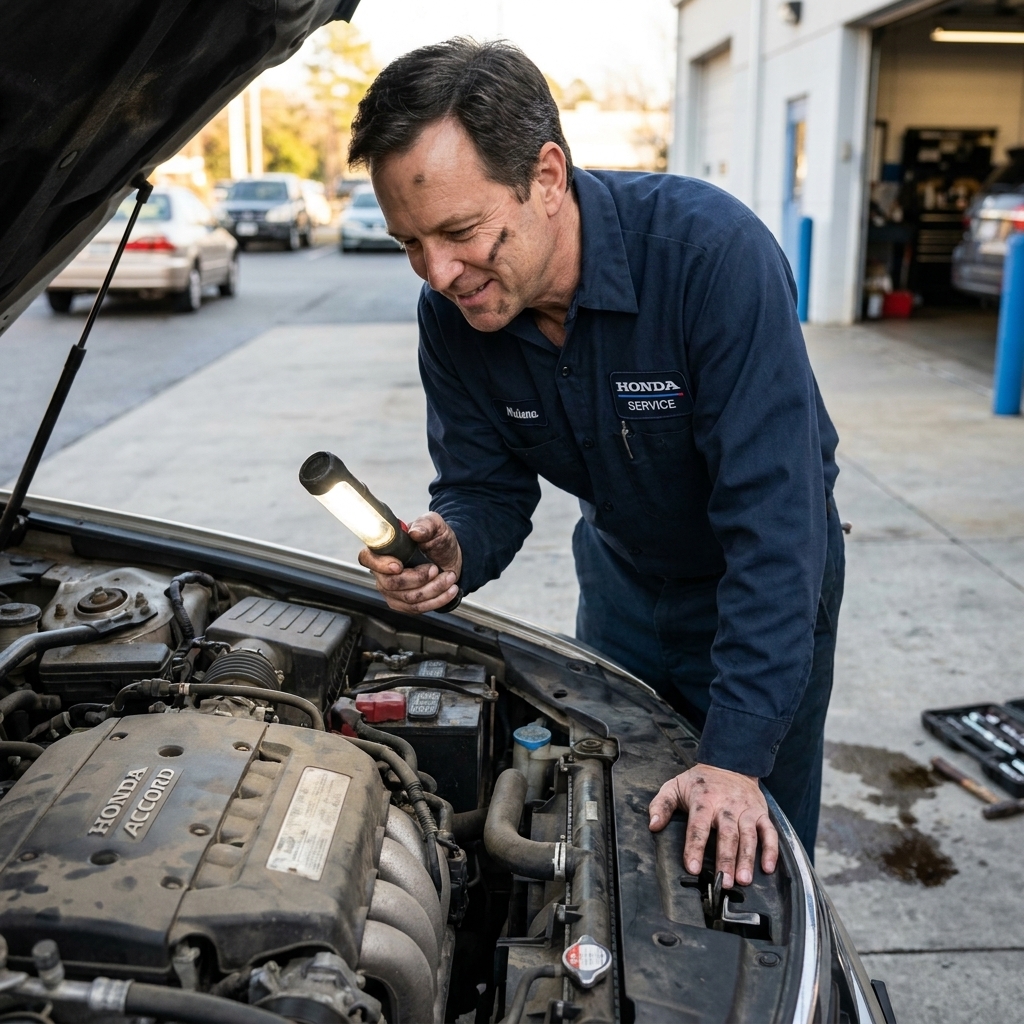
- Oil consumption (some engines and years): the practical advice is the same: check the dipstick during the test drive and again after you buy it, then keep an eye on it between changes.
- VTC actuator rattle and timing-related noises (some 4-cylinders): often more annoying than catastrophic, but it can scare buyers and it is not free to address.
- Transmission sensitivity (varies by transmission and era): Hondas can be extremely durable, but certain automatic generations and neglected CVTs are less tolerant of skipped fluid changes. If the fluid is burnt or the shifts are harsh, walk away.
- A/C system repairs (certain model-year clusters): depending on model and year, A/C can be a bigger-ticket surprise. When you are shopping used, cold air today is not a guarantee the system is healthy.
Pattern difference in plain English: Toyotas more often rack up small, manageable wear items while still “running fine.” Hondas more often turn neglected maintenance into drivability issues that force you to fix them sooner.
What repairs can cost
Prices vary a lot by region and shop rate, but used-car ownership still falls into predictable buckets. If you buy either brand around 90,000 to 120,000 miles and keep it to about 200,000, plan for these categories.
Predictable maintenance
- Tires (often 2 sets in this window)
- Brakes (pads and rotors)
- 12-volt battery
- Fluids (oil, coolant, brake fluid, transmission fluid)
- Spark plugs, filters, belts, and hoses
Wear-and-tear repairs
- Struts or shocks
- Control arms, ball joints, tie rod ends
- Wheel bearings
- Exhaust leaks or heat shield issues
- Window regulators and door lock actuators
Big-ticket surprises
These are the bills that can change the math on a used car. Ballparks below assume independent-shop pricing and can swing widely by model and location.
- Suspension refresh (struts, control arms, alignment): often $1,200 to $2,800 depending on how deep you go and how rusty the hardware is.
- A/C compressor or condenser work: commonly $900 to $2,000+ depending on what failed and whether the system is contaminated.
- Transmission repair or replacement: it can range from a service and minor solenoid work to several thousand dollars if the unit is failing. Maintenance history matters more than the badge here.
- Hybrid battery replacement (hybrids): frequently $1,800 to $4,500 depending on new OEM vs quality remanufactured options and the specific model. Heat and age are the real battery killers.
- Rust: this is not a Honda vs. Toyota argument as much as a “where did the car live” argument. Rust can total a car mechanically before the engine ever quits.
My cost takeaway: for most buyers, the difference is not that one brand is “cheap” and one is “expensive.” The difference is how often you get hit with a large, unexpected bill when the service history is thin. In the average high-mileage used sample, Toyota tends to produce fewer of those surprises.
Known exceptions
If you want the most honest Honda vs. Toyota conversation, you have to leave room for outliers. Every brand has a few engines, transmissions, or generation-specific quirks that do not follow the stereotype.
- Transmission type matters: a well-maintained conventional automatic is usually more forgiving than a neglected CVT, no matter whose badge is on the grille.
- Turbo vs. non-turbo: turbos add heat and complexity. A well-maintained turbo car can be great, but it tightens the margin for missed oil changes and cheap oil.
- Some years have “famous” issues: certain Toyota engines have had oil-consumption or head-gasket chatter in specific generations, and certain Honda eras have had well-known automatic transmission and A/C complaint clusters. This is why you shop the exact year and powertrain, not the logo.
The practical move is simple: when you narrow down to two or three model years, search those exact year-and-engine combinations for common patterns, then confirm with inspection evidence, not forum panic.
Model beats badge
This is where I gently push back when someone asks, “So which is better, Honda or Toyota?” I can name Hondas I would buy in a heartbeat and Toyotas I would inspect with a raised eyebrow. The badge matters, but the model, engine, transmission, and previous owner matter more.
Safer bets
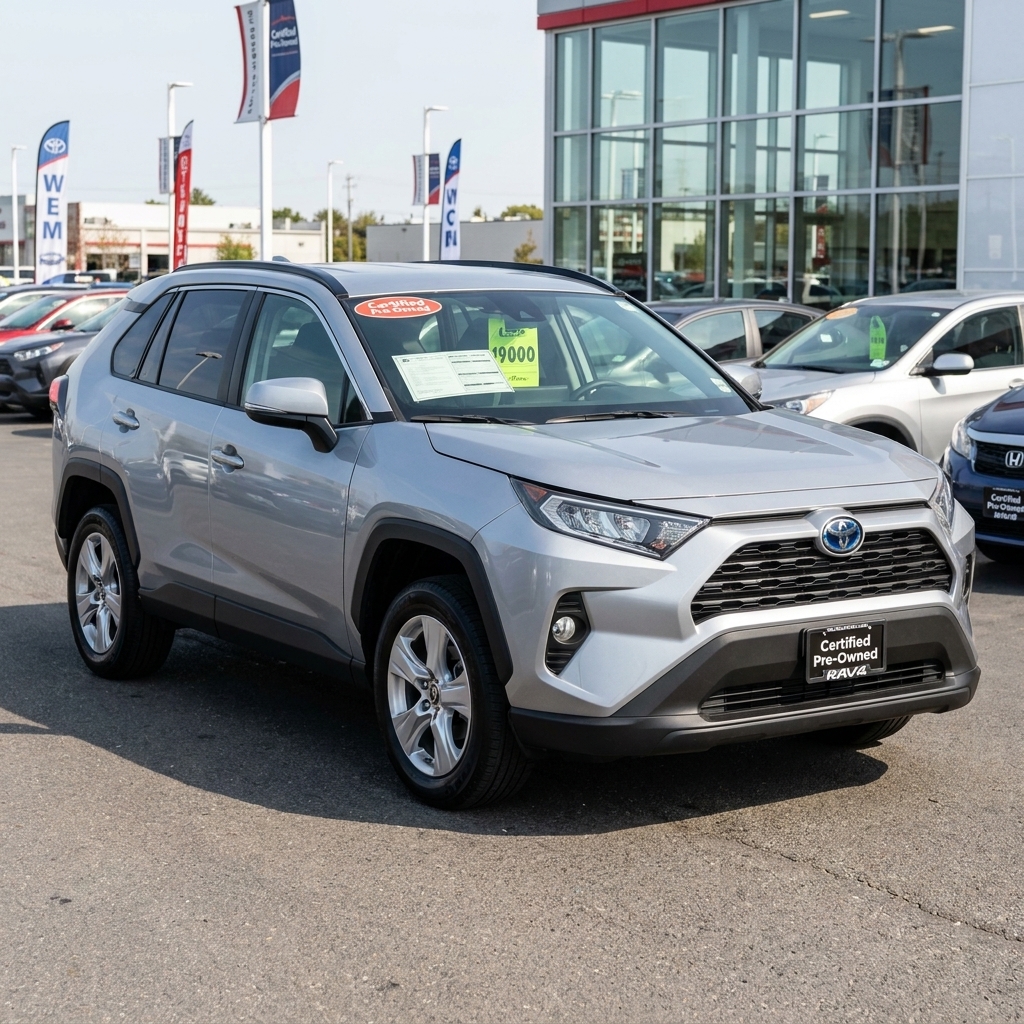
- Toyota: Camry, Corolla, Avalon, RAV4, Highlander (varies by year and powertrain), Prius and many Toyota hybrids
- Honda: Accord, Civic, CR-V (varies by year and powertrain), Fit (when not rusted out and maintained)
What I check first
- Maintenance records: oil changes, transmission service history, coolant service, brake fluid
- Cold start behavior: rattles, smoke, rough idle that settles down
- Transmission behavior: smooth engagement, no flares, no harsh or delayed shifts
- Cooling system health: stable temp, clean coolant, no sweet smell
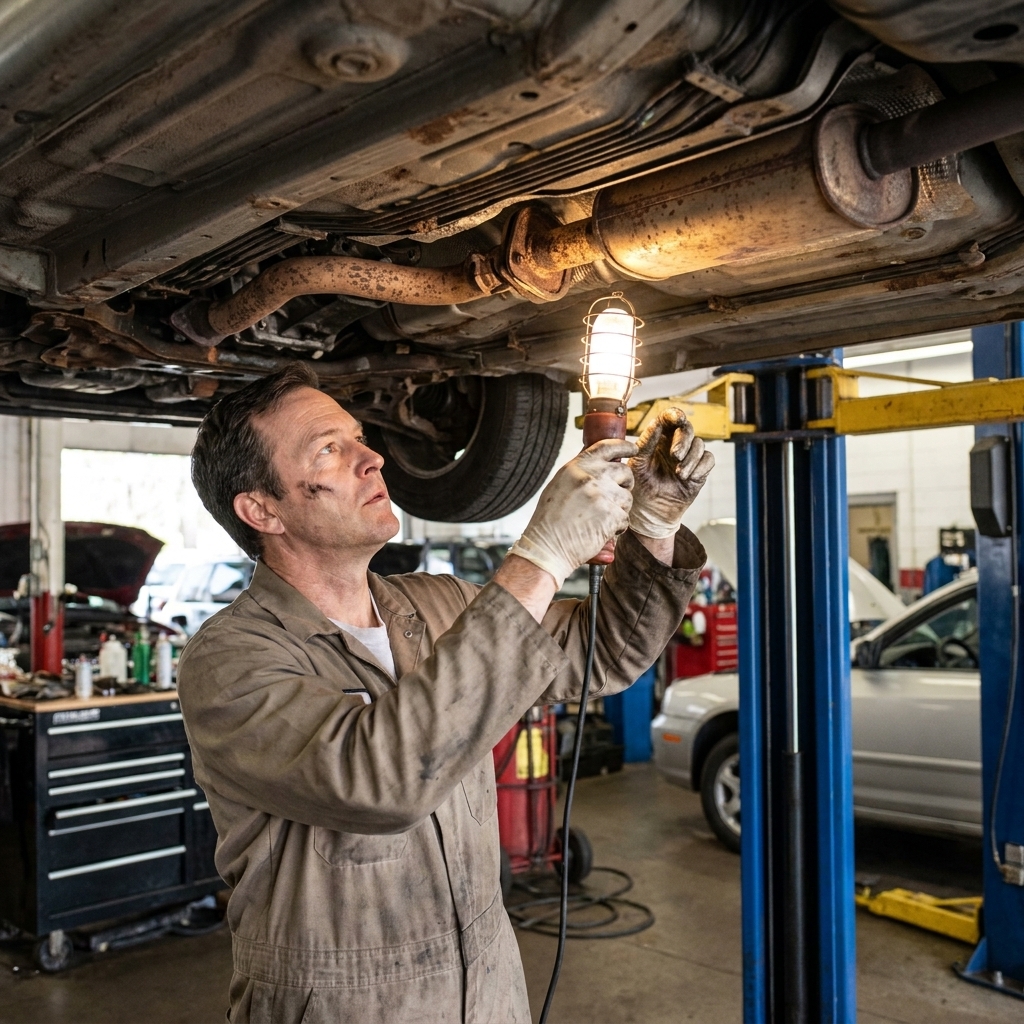
- Undercarriage rust: brake and fuel lines, subframes, suspension mounting points, control arm mounts, and anything structural

Which one fits you
Low-maintenance ownership
Lean Toyota. You still need to maintain it, but many Toyotas stay “fine” longer even when owners are not perfect about service intervals.
Mostly highway miles
Either is a strong pick. Highway miles are generally easier on engines and transmissions. Choose the cleaner car with better records.
Short trips and city driving
Toyota gets a slight edge because short-trip life is hard on oil, emissions systems, and overall wear. Prioritize frequent oil changes and no warning lights over brand loyalty.
Long-term hybrid ownership
Toyota is usually the easier used-market experience because of sheer volume and long-running system design. Regardless of brand, treat hybrid battery life as an age-and-heat question, not just a mileage question, and price the car with that reality in mind.
10 to 15 years old and 150,000+ miles
Toyota is my default recommendation unless the Honda is clearly the better-kept example. At this age, condition and history are everything.
Shopping checklist
If you want the reliability win, do these four things regardless of brand:
- Insist on a cold start: arrive early. Listen for rattles, ticking, or a rough idle that goes away once warm.
- Check fluids yourself: oil level and condition, coolant level, signs of sludge or contamination.
- Scan it: a basic OBD-II scan can reveal pending codes even if the dash light is off.
- Get a pre-purchase inspection: a good independent shop can spot leaks, prior accident repair, tire wear patterns, and undercarriage issues you will not see in the parking lot.
FAQ
Which brand is cheaper to maintain?
Routine maintenance is usually similar. The bigger difference is unexpected repairs. In my experience, Toyota owners slightly less often get hit with a “you need this now” repair when the service history is unknown.
Do Hondas or Toyotas last longer?
Both can last 200,000 miles and beyond. Toyota often gets a small edge in the broader used market because they tend to tolerate delayed maintenance a bit better on average.
Is it smarter to buy the newer Honda or the older Toyota?
Buy the one with the better history and cleaner inspection. A newer car can still be a money pit if it was neglected, crashed, overheated, or poorly repaired. Condition beats age more often than people think.
What matters more than brand?
Maintenance records, rust, accident history, and how the transmission and cooling system behave on a test drive. If those check out, either brand can be a fantastic long-term used buy.
Bottom line
If you want the simplest answer: Toyota is often the safer bet for long-term used reliability in the average real-world case, especially when you are buying a higher-mileage car without perfect records. Honda is still a top-tier choice and can be every bit as durable, but it rewards owners who stay on top of fluids and fixes.
My best advice is boring, but it saves people thousands: pick the cleanest example you can find, confirm the maintenance history, and spend the money on a pre-purchase inspection. That is how you turn “Honda or Toyota” from a cliché into a genuinely smart financial decision.