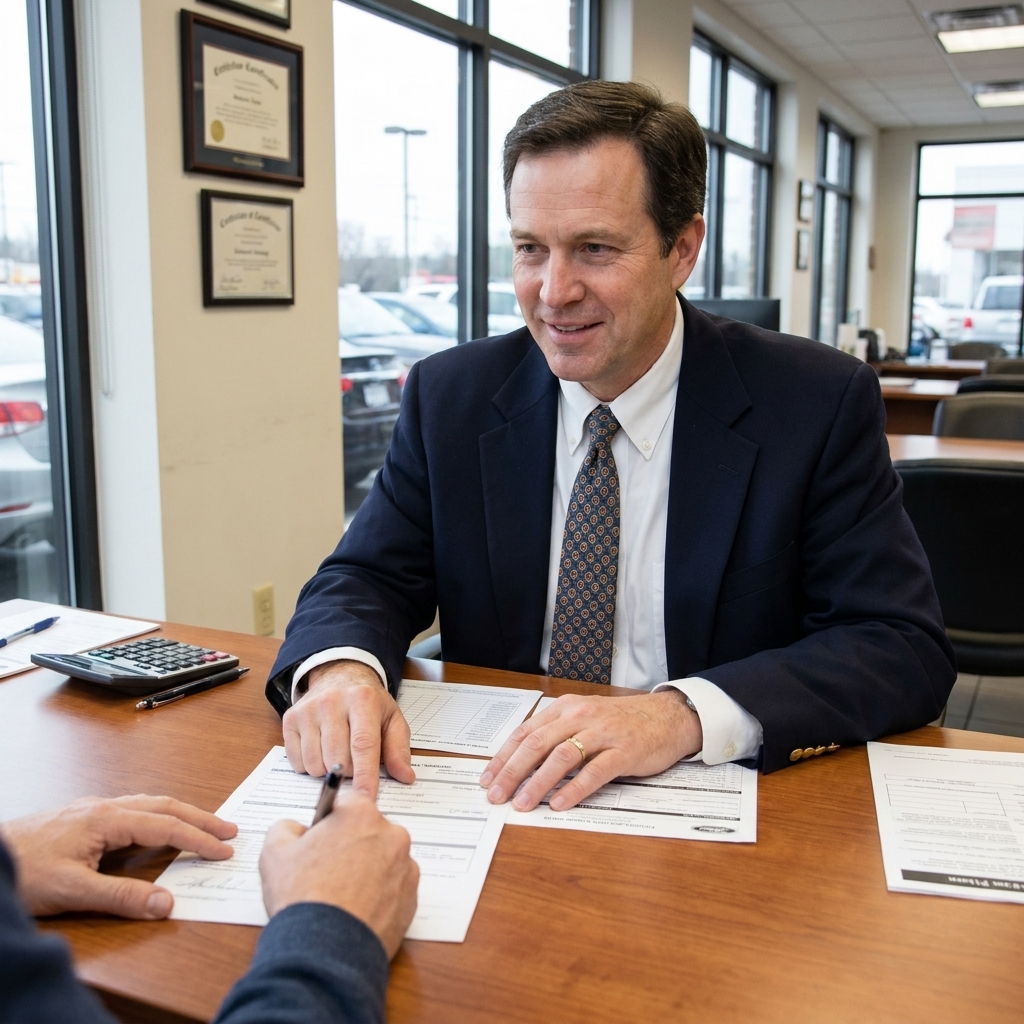
Stop negotiating monthly payments. Learn how to focus on the out-the-door price, spot common add-on tricks, and lock in a clean used-car deal.
Used Car Buying Guide
Cash vs. Dealership Financing for a Used Car
Paying cash feels powerful, but dealer financing can sometimes win you a better price if the numbers work. Here’s how each option affects leverage, total cost, and negotiation strategy.

Ben Sullivan
Ben Sullivan is a former ASE-certified mechanic with over 15 years of experience inspecting, repairing, and appraising used vehicles. He contributes to Car Wise Guide to help everyday buyers navigate the used car market with confidence, armed with the knowledge to spot hidden red flags and negotiate fair prices.
Published October 18, 2026
Updated October 18, 2026
I have watched a lot of good people walk into a dealership feeling confident because they have cash, only to walk out with a deal that is just okay. I have also seen buyers use financing strategically and end up with a lower purchase price, even if they paid the loan off quickly afterward.
The truth is simple: cash vs. dealer financing is not about pride. It is about leverage and total out-of-pocket cost. If you keep those two goals front and center, you can make either route work.

What you are negotiating
A used car deal has a few moving pieces, and dealers can shuffle them around to make the numbers look better than they are.
- Sale price of the vehicle (what the car costs)
- Trade-in value (if you have one)
- Financing terms (APR, term length, fees)
- Products and add-ons (warranty, GAP, protection packages)
- Out-the-door price (sale price plus taxes and all fees)
If you only focus on one piece, like monthly payment or “I am paying cash,” it is easy to lose money somewhere else.
One important caveat: dealer practices and rules vary by state and lender. Fee caps, doc fee rules, and whether a dealer can mark up a rate depend on where you are and who is funding the loan.
Does paying cash help?
Sometimes, but not as often as people expect.
Why cash is not automatic leverage
On many used car deals, the dealership may make meaningful profit in the finance office through dealer reserve or markup (when allowed), lender participation (when offered), and add-on products. When you pay cash, you remove a potential revenue stream, so the dealer can be less motivated to discount the car.
Also, cash does not change what the dealer owns the car for. If they are priced aggressively already, there may not be much room either way.
When cash can help
- Private party sales: Cash is genuinely attractive to a private seller because it is clean and immediate.
- Older, cheaper cars: Some dealers prefer cash on very low-dollar cars where financing is harder or less profitable.
- Fast, simple close: If a dealer is trying to hit an end-of-month target, a quick no-drama deal can sometimes get a small concession.
My rule: cash is best when it simplifies the transaction for the seller. It is not best just because it is cash.
Can financing help?
It can, especially if you negotiate in the right order.
Why financing can increase leverage
Dealers often have more ways to profit on a financed deal, which means they can sometimes accept a lower sale price and make it back on the back end. That does not mean you should overpay for the loan. It means you can use their incentives to your advantage.
Here is the key: you want the car price to come down without letting the loan terms get worse than they should be.
When dealer financing is a win
- They beat your pre-approval APR with the same term and no junk fees.
- They discount the vehicle contingent on financing, and the loan has no prepayment penalty or early termination fee.
- Manufacturer-backed CPO promotions can offer special rates when offered, but they are model, term, and time dependent, so verify current incentives.
One reality check: sometimes a “financing discount” is paired with pressure to keep the loan open for a few months. Get the discount and the terms in writing, and do not rely on verbal promises.
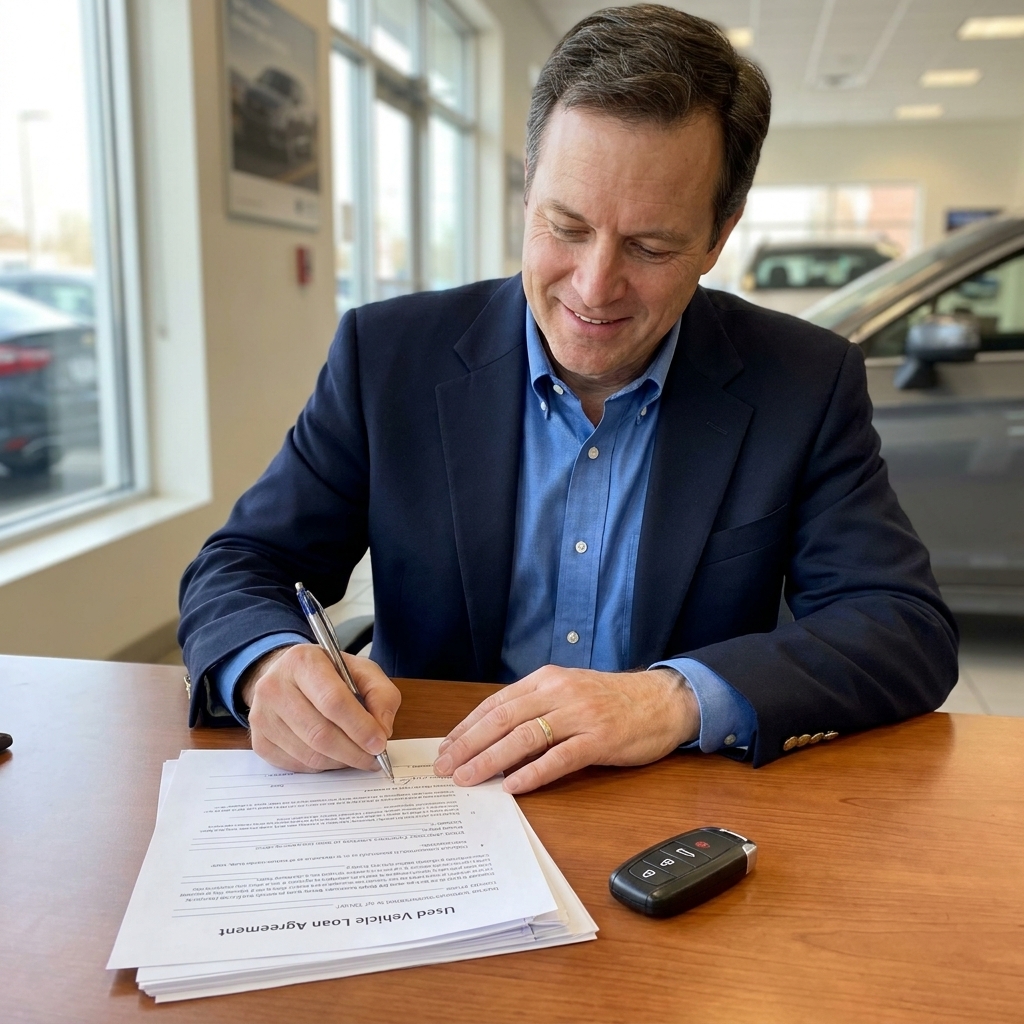
Total cost beats vibes
To compare cash vs. financing, you need two numbers written down:
- Out-the-door price (OTD) if you pay cash
- Total of payments plus down payment plus fees if you finance
Then sanity-check the financing math:
- APR: Even a small rate difference matters if the balance is large.
- Term length: A longer term lowers the payment but usually increases total interest.
- Amount financed: Watch for add-ons being quietly rolled in.
- Fees: Doc fees are common. Lender, filing, or electronic registration fees can show up on financed deals.
If the financed deal “wins” only because the payment is lower, but the term is stretched and the total paid is higher, that is not a win. That is just a reshuffle.
A quick numbers example
Say the car is $20,000, and your cash out-the-door number is $22,000 after taxes and fees.
The dealer offers $21,200 out the door if you finance, but the loan adds $300 in lender or filing fees and you pay about $250 in interest before you pay it off early.
- Cash total: $22,000
- Finance total (with early payoff): $21,200 + $300 + $250 = $21,750
That is a real win for financing. But if they “discount” the car and then roll in a $1,500 protection package, the math flips fast.
How to negotiate
Cash buyer moves
- Get the out-the-door number in writing. That means taxes, title, registration, doc fee, and any add-ons.
- Do not lead with “I am paying cash.” You can say you have payment handled and you are focused on the out-the-door price.
- If financed is cheaper, request both worksheets. Ask for OTD cash and OTD financed, plus APR, term, itemized fees, and any required products.
Financing buyer moves
- Walk in with a pre-approval. Even if you plan to use dealer financing, this is your baseline.
- Keep price and loan separate. Get the sale price and out-the-door number nailed down before you discuss term and APR.
- Ask about payoff rules. Do not just ask “prepayment penalty.” Ask how payoff is calculated and whether the contract is simple interest or precomputed, and whether there are any minimum-interest or early termination fees.
- Treat add-ons like their own negotiation. Extended warranties and GAP can be useful in specific situations, but they are also where I see buyers get hammered. Get the price in writing, ask what is covered and excluded, and compare to outside options.
One more thing: a new auto loan can temporarily ding your credit score. That is not a reason to avoid financing, but it is a reason to keep your applications tight and intentional.
What to get in writing
If you want fewer surprises, request paperwork that forces an itemized view of the deal:
- Buyer’s order or purchase agreement with itemized out-the-door pricing
- Itemized fee list (doc fee, registration, title, lender or filing fees)
- Truth in Lending disclosure showing APR, amount financed, finance charge, and total of payments
- F&I product menu or itemized add-on list with prices (warranty, GAP, protection packages)
Common traps
Payment packing
This is when the monthly payment includes products you did not clearly agree to. It is easier to hide an extra $25 to $60 per month than an extra $1,200 on the sticker.
Monthly-only negotiating
I am not anti-monthly payment. You should absolutely have a payment ceiling. But payment-only negotiations are where bad deals thrive.
Doc fee games
Doc fees vary by state and dealer. They are often treated as non-negotiable, but you can still ask. At minimum, negotiate the vehicle price to offset them.
Mandatory add-ons
If a dealer claims an add-on is mandatory, ask for it in writing and be prepared to walk. Some stores install things like tracking devices on every car. If you do not want it, that may simply be the wrong dealership for you.
So what is the better deal?
Here is my straight-shooter answer from years of watching deals get put together:
- Cash tends to win when you are buying private party, you want the simplest possible transaction, or you are avoiding interest entirely and the dealer is not offering a meaningful discount for financing.
- Dealer financing tends to win when you have strong credit, you bring a pre-approval, the dealer can beat your rate or discount the car for financing, and the loan does not add expensive fees or required products that erase the savings.
The biggest determinant is not cash or financing. It is whether you keep the negotiation anchored to one number: the out-the-door price, with every fee and add-on out in the open.

FAQ
Should I tell the dealer I am paying cash?
Not at the beginning. Stay focused on the out-the-door price first. Once the price is locked, then it is fine to be clear about payment method.
Is it smart to finance for a discount and then pay it off?
It can be, as long as the discount is real and the contract does not include a prepayment penalty, early termination fee, or other payoff gotchas. Ask whether the loan is simple interest or precomputed, and confirm the payoff process in writing before you sign.
Will a dealer refuse to sell if I do not finance?
Some may try, especially on high-demand inventory. You can either move on to another dealer or decide if the financing terms are acceptable. Do not accept a bad loan just to “win” the car.
Does paying cash lower my taxes or fees?
Usually no. Sales tax, title, registration, and many state fees are the same either way. However, financing can add lender or filing fees, and it can change your total cost if interest or optional products are rolled in.
What matters more than cash vs. financing?
Vehicle condition, verified history, and an independent pre-purchase inspection. I have seen too many buyers “negotiate” an extra $500 off and then eat a $3,000 repair the next month.
Anything cash buyers should know about paying?
Yes. Many dealers will not accept large amounts of physical cash, and some have strict cashier’s check or wire policies. Ask ahead of time what they accept, what ID they require, and whether they need funds verified before you arrive.